
A Historic Rail and Road Trip Along Quebec’s La Route des Belles‑Histoires
By Jay Kana | Published September 3rd, 2026
Photos by Jay Kana.
Subscribe to the Modern Traveller Newsletter to get terrific travel articles like this one straight to your inbox!
This post may contain affiliate links. If you purchase something through these links, I'll reinvest every penny on Canadian-owned businesses through the small commission I receive.

I sure do love a road trip and for the dozens of times I’ve been to Quebec, I hadn’t experienced this one specifically, being La Route des Belles-Histoires. It runs between Saint-Jérôme and Mont-Laurier, for a total distance of 234 kilometres.
I’d done the entire La Route des Belles-Histoires earlier this year and here, I’ll go through seven sweet spots, plus a bonus stop.
My road trip chariot was an all-new 2026 Toyota RAV4, which saw me clock nearly 2,000 km and save a ton of fuel thanks to its hybrid-only set up.
Let’s keep the intro short and get into the good stuff, shall we?
Bonus Stop Ferme-Rouge Covered Bridges
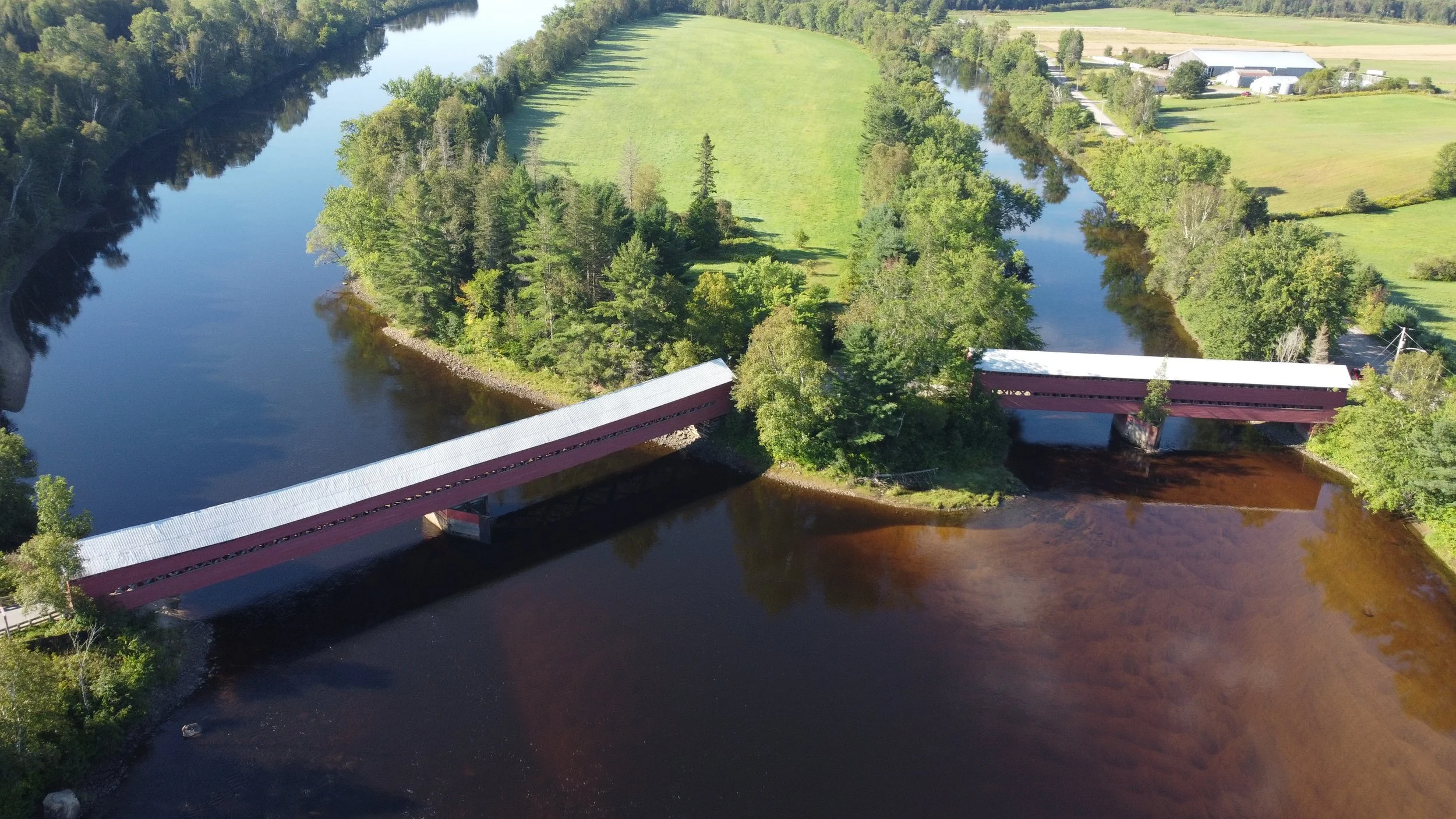
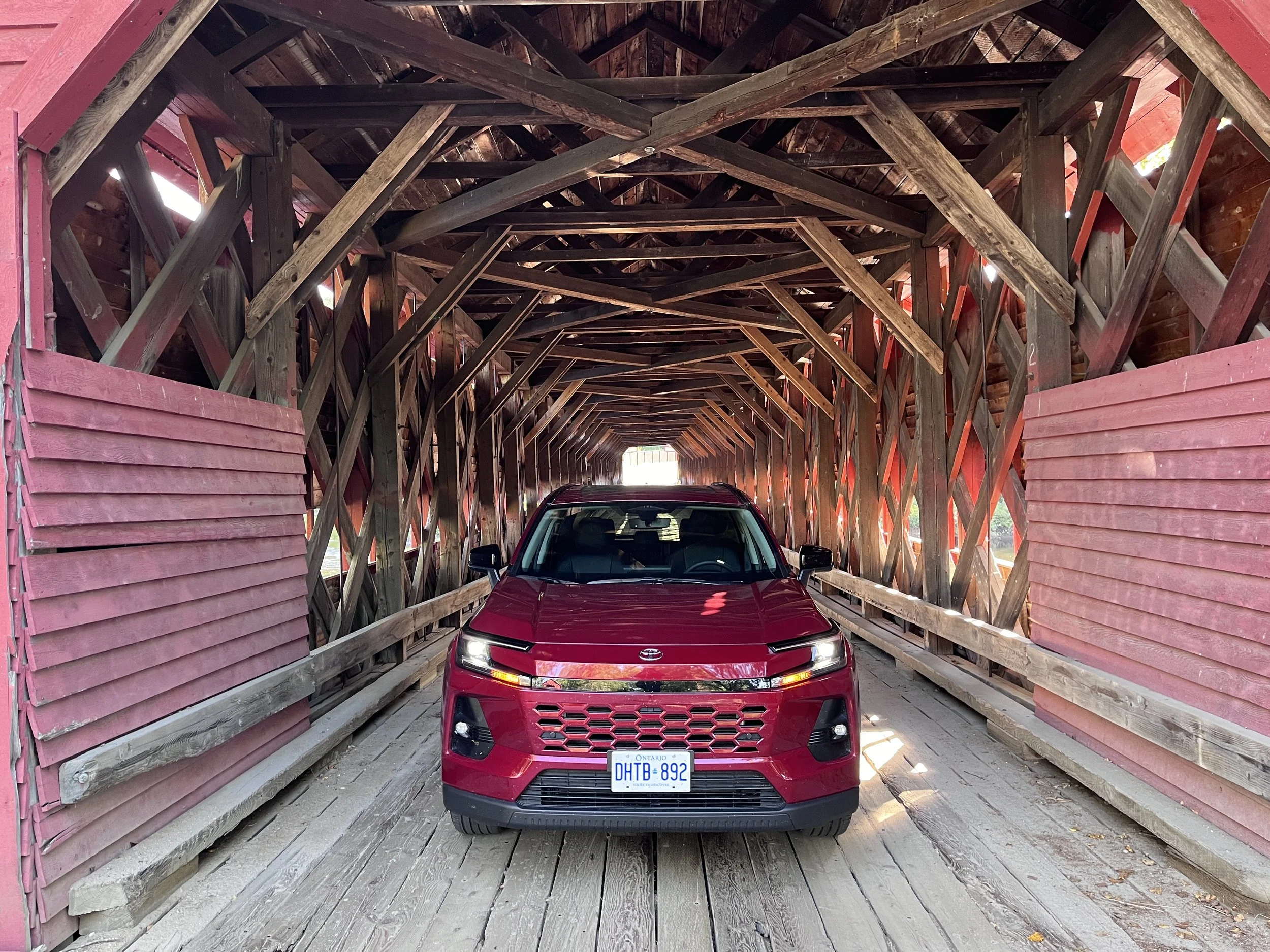
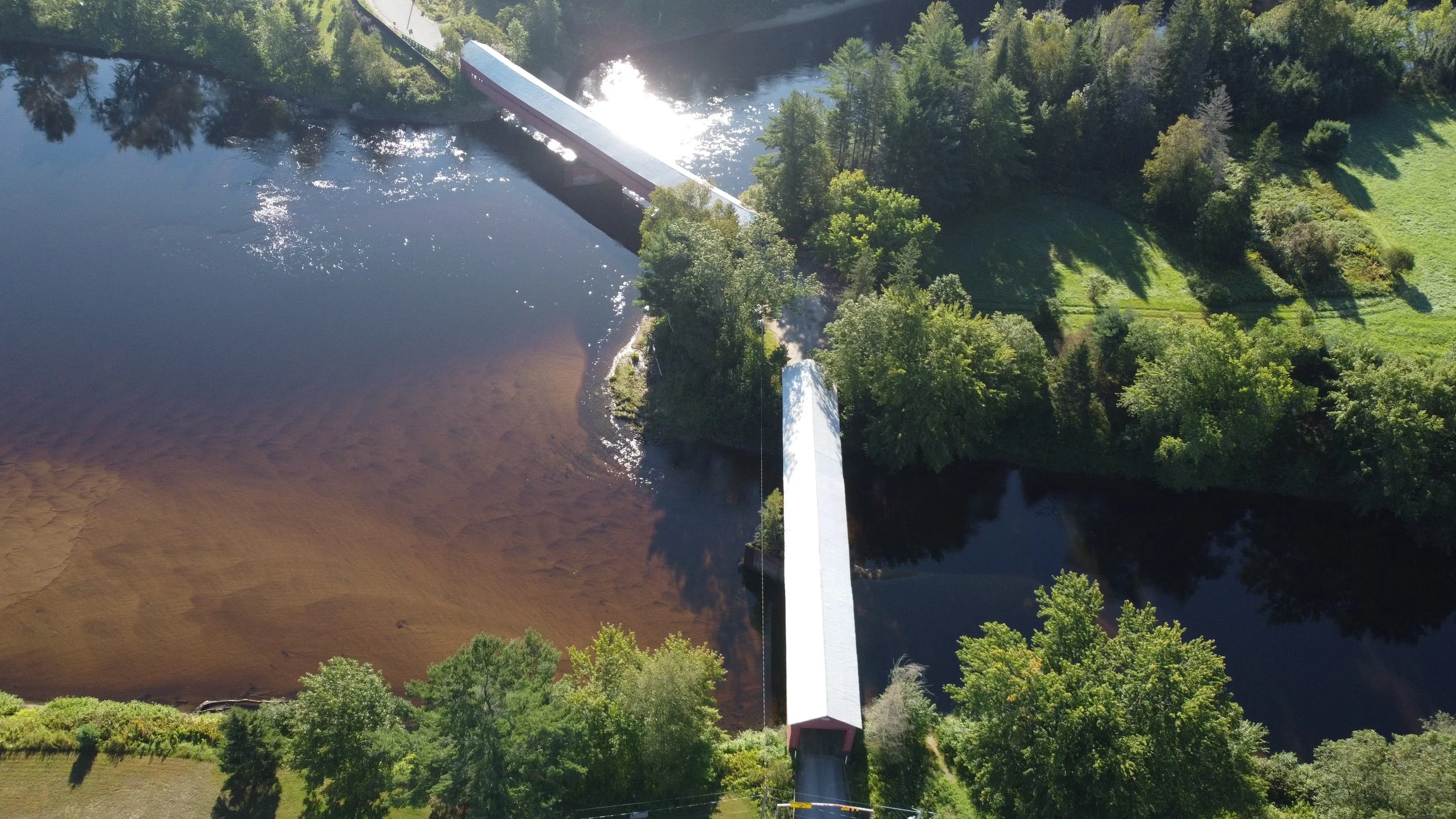
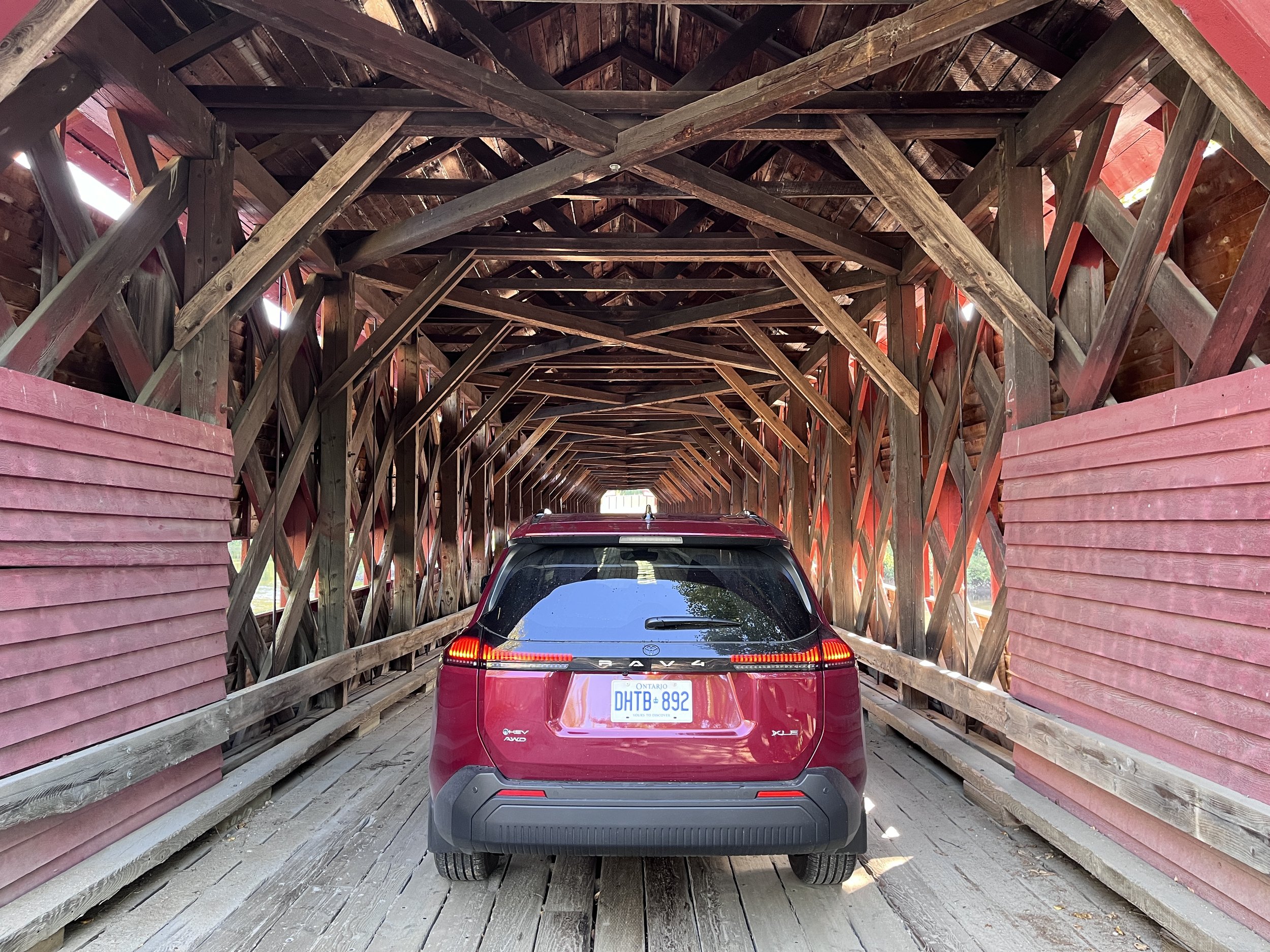
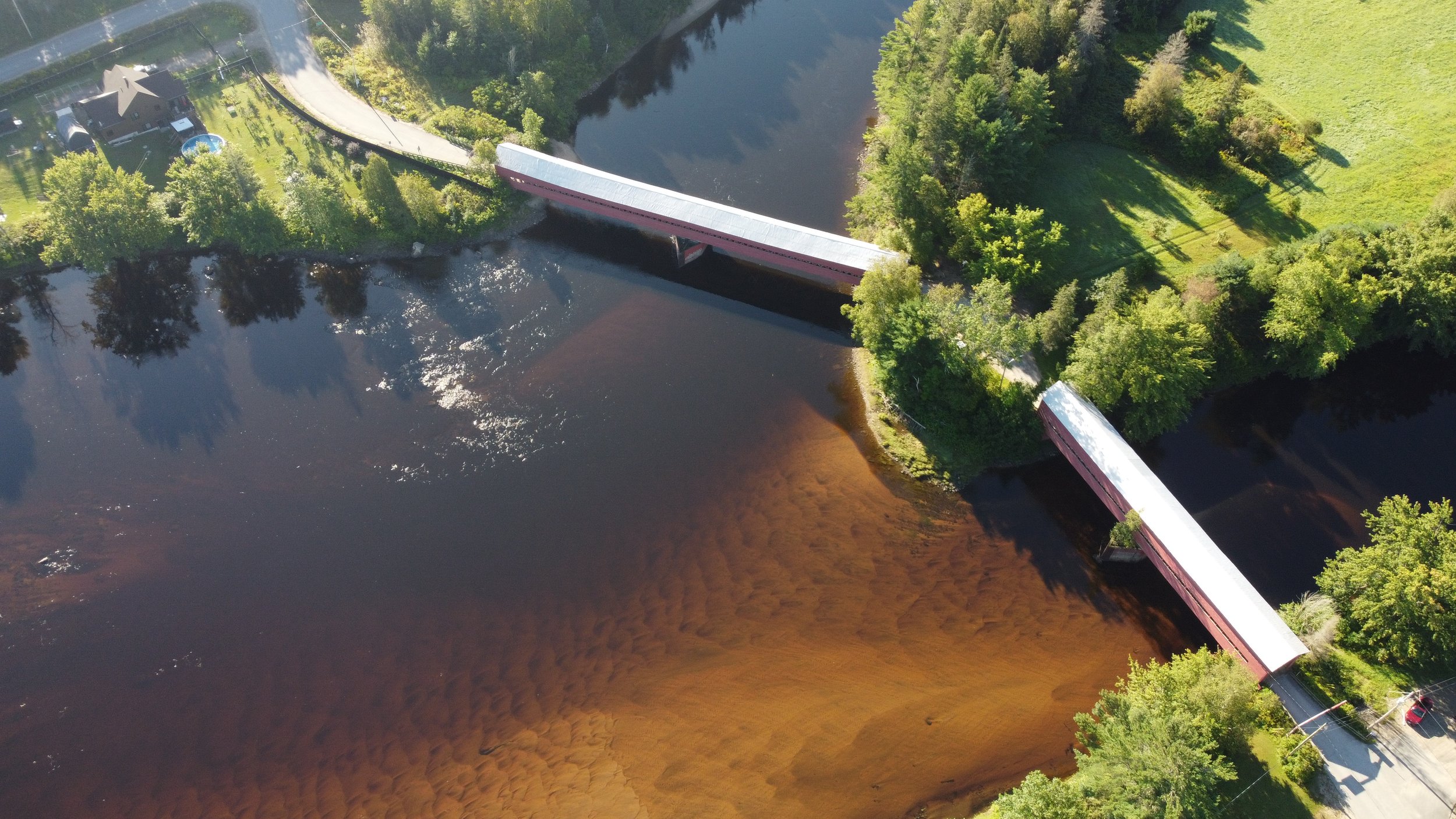
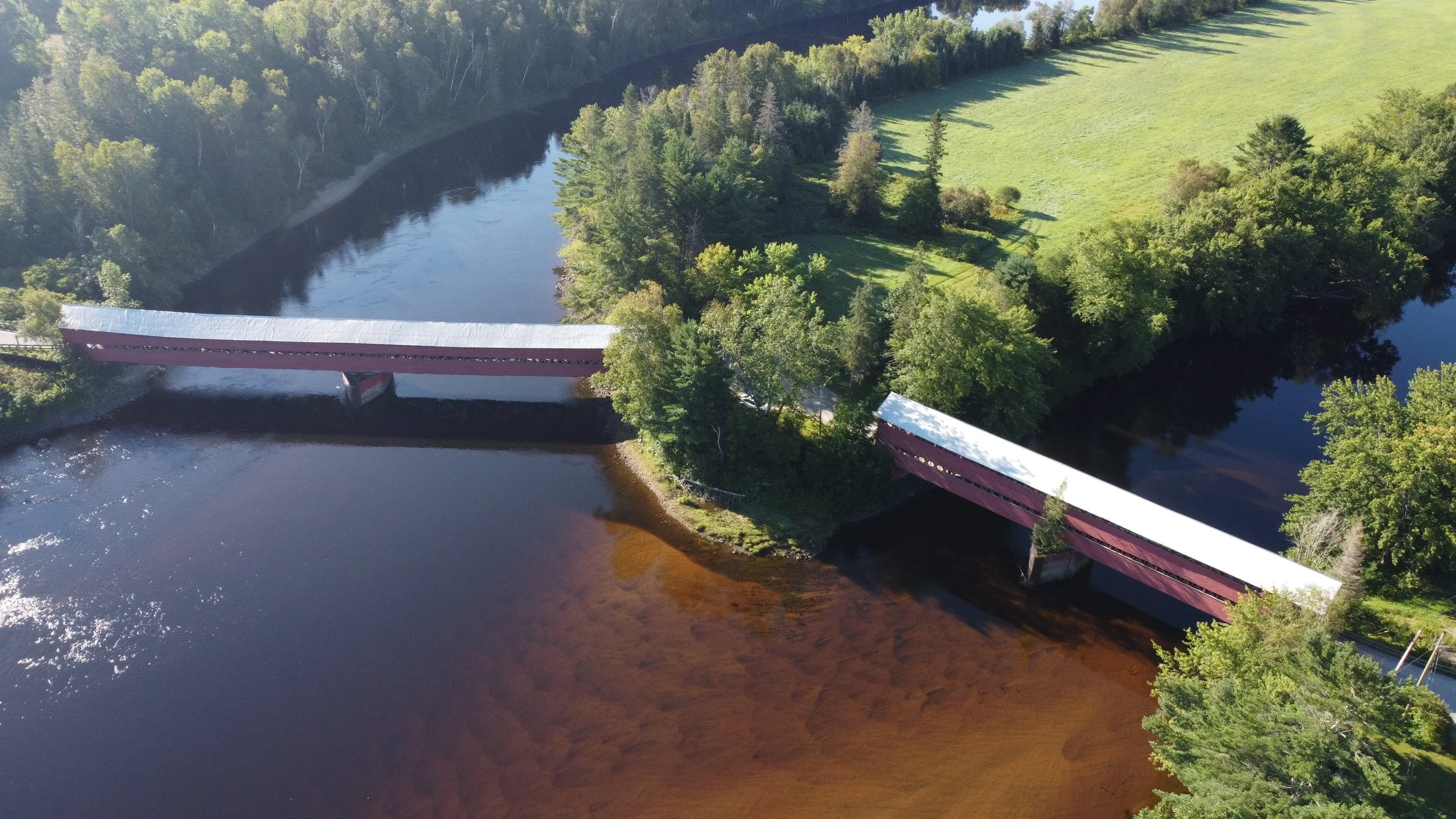
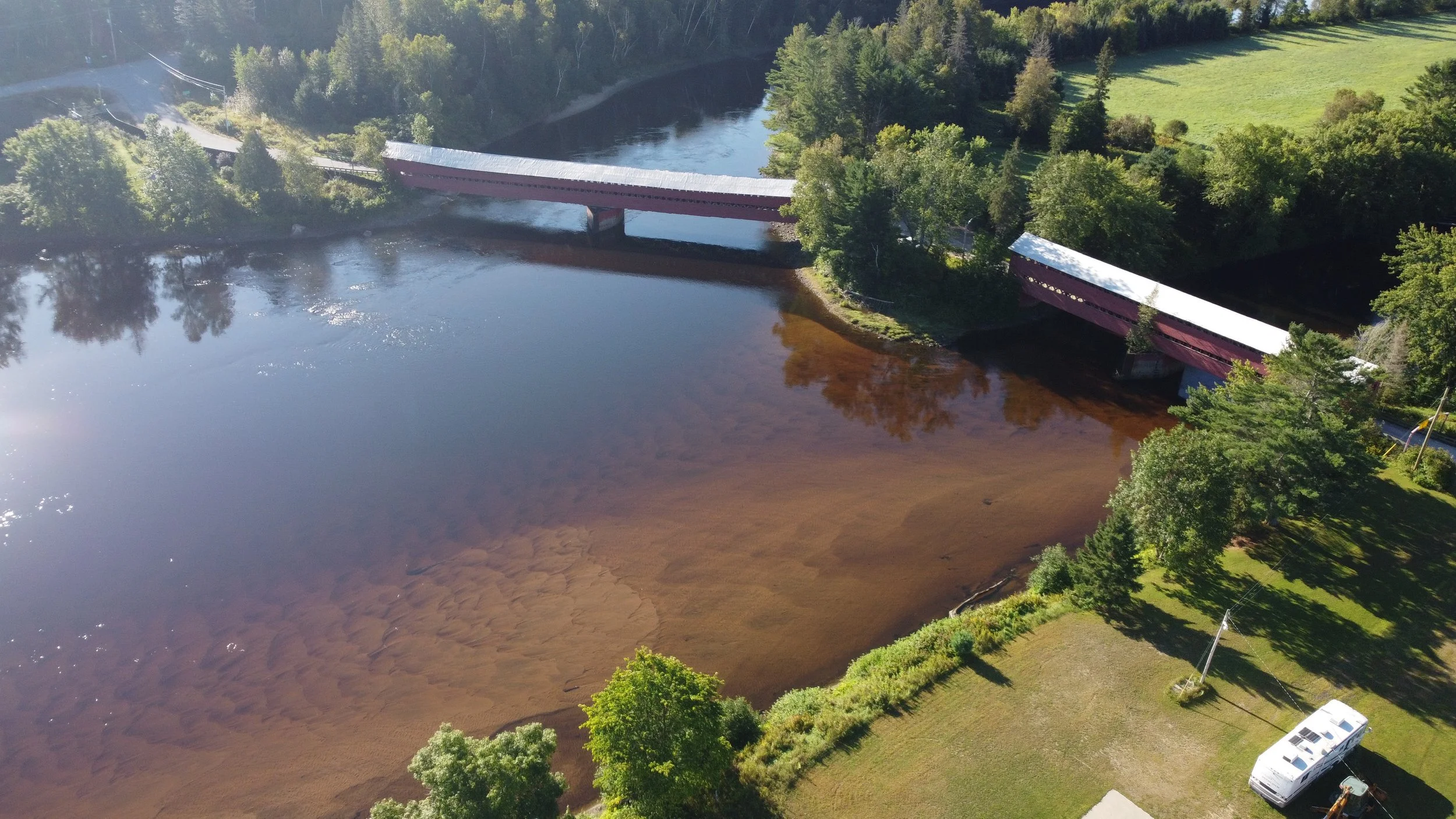
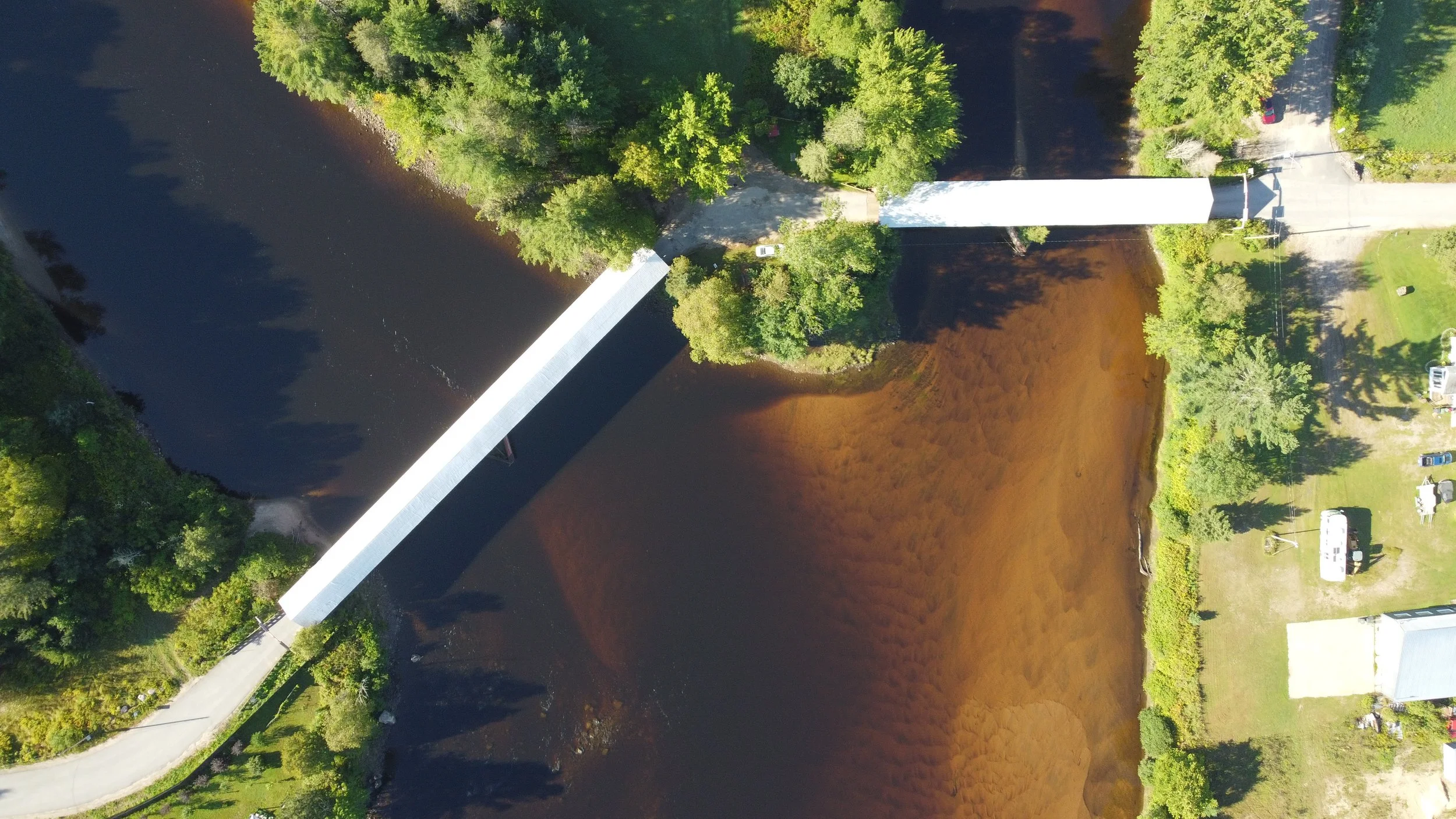
To mix things up, I’ve put the bonus stop at the top of the list because why not?
While it’s not on the official route, you’ll be close by so may as well check out Quebec's last twin covered bridges in Kiamika region.
These wonderful wooden bridges were built using the "Town" truss system.
The "West bridge," was constructed in 1903 and measures 53.49 meters in length.
The "East bridge" was constructed in 1909, with a length of 79.06 meters.
Both were officially recognized as cultural property in January 1990,
Macaza Covered Bridge

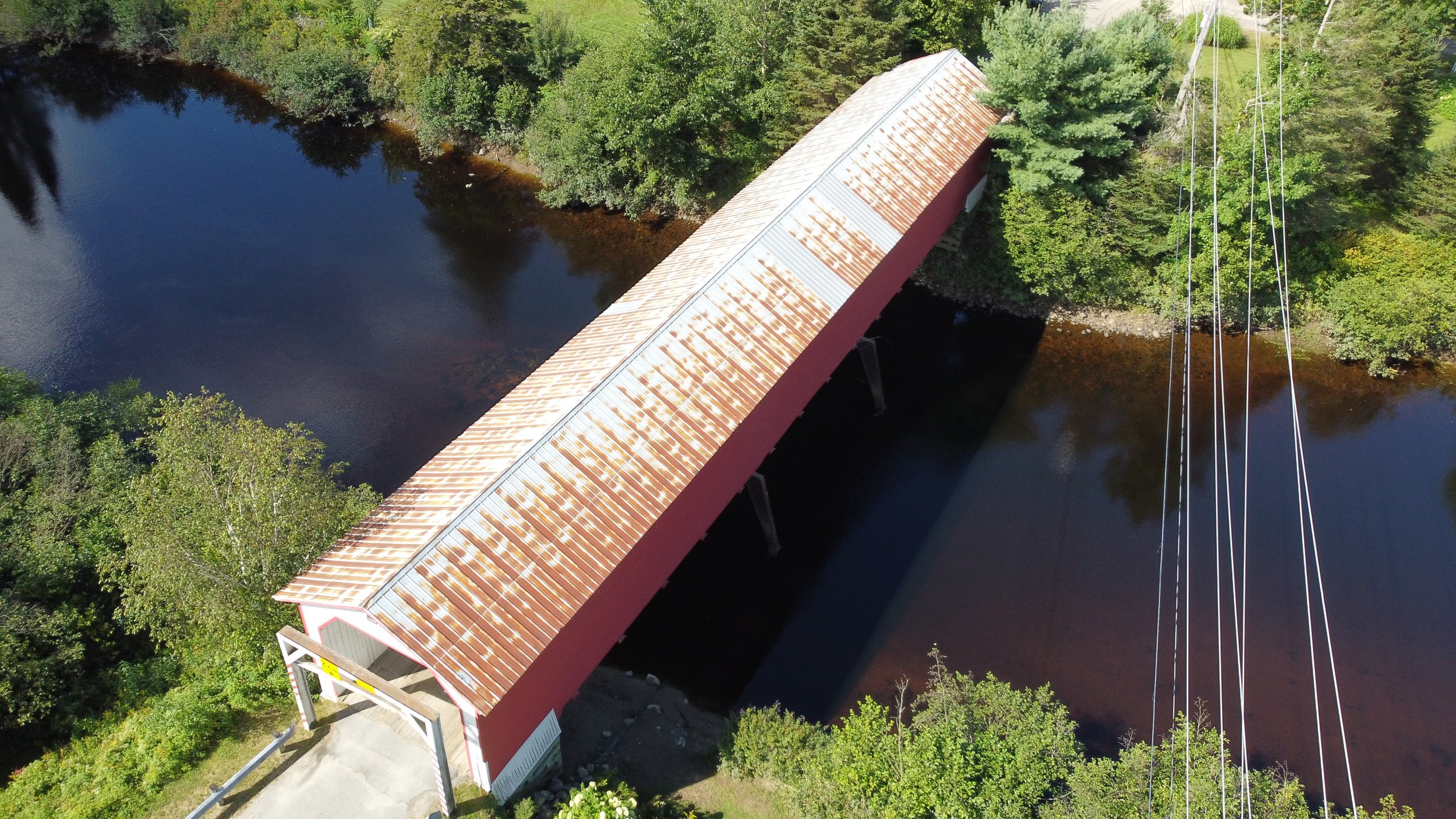
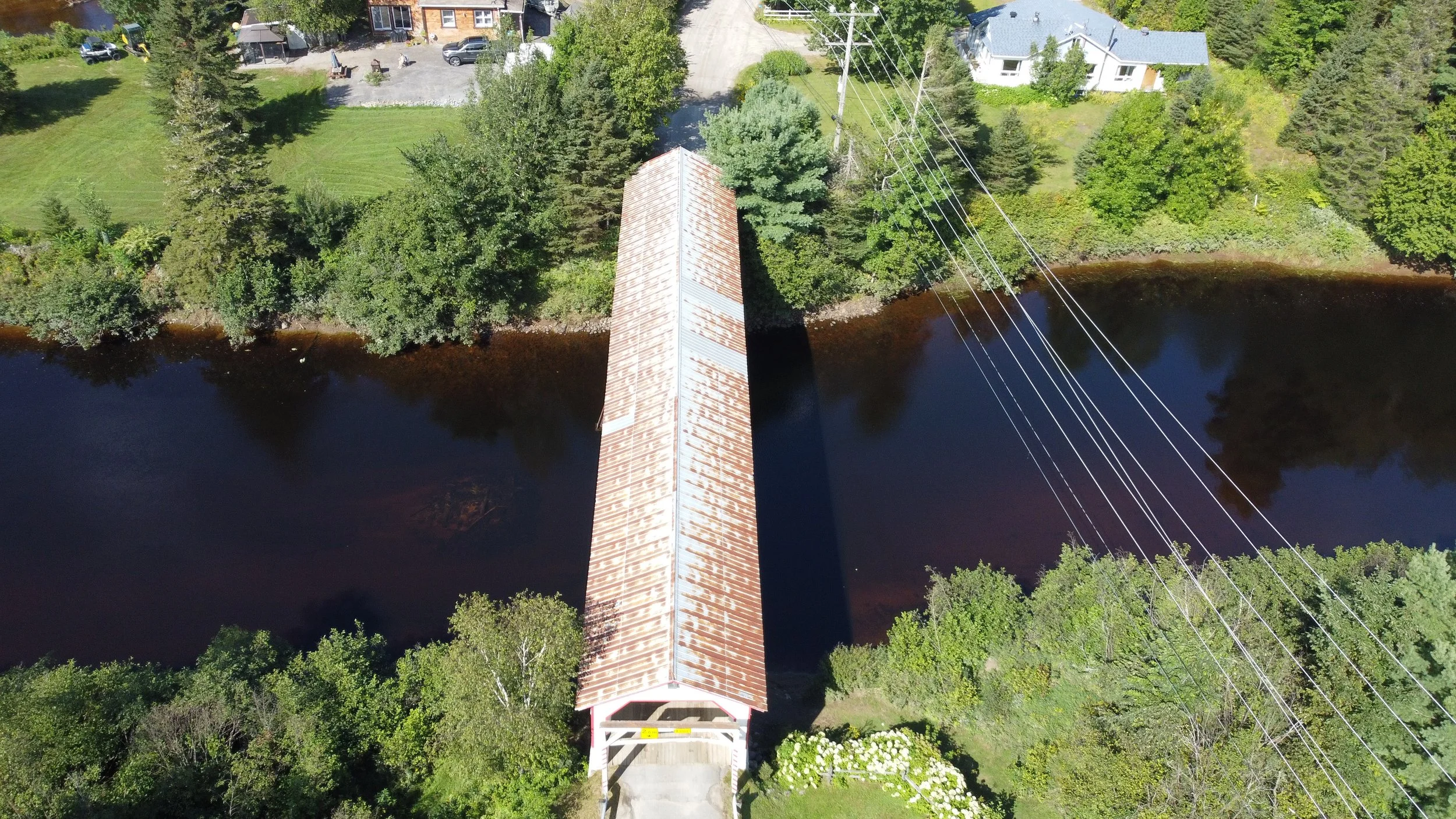
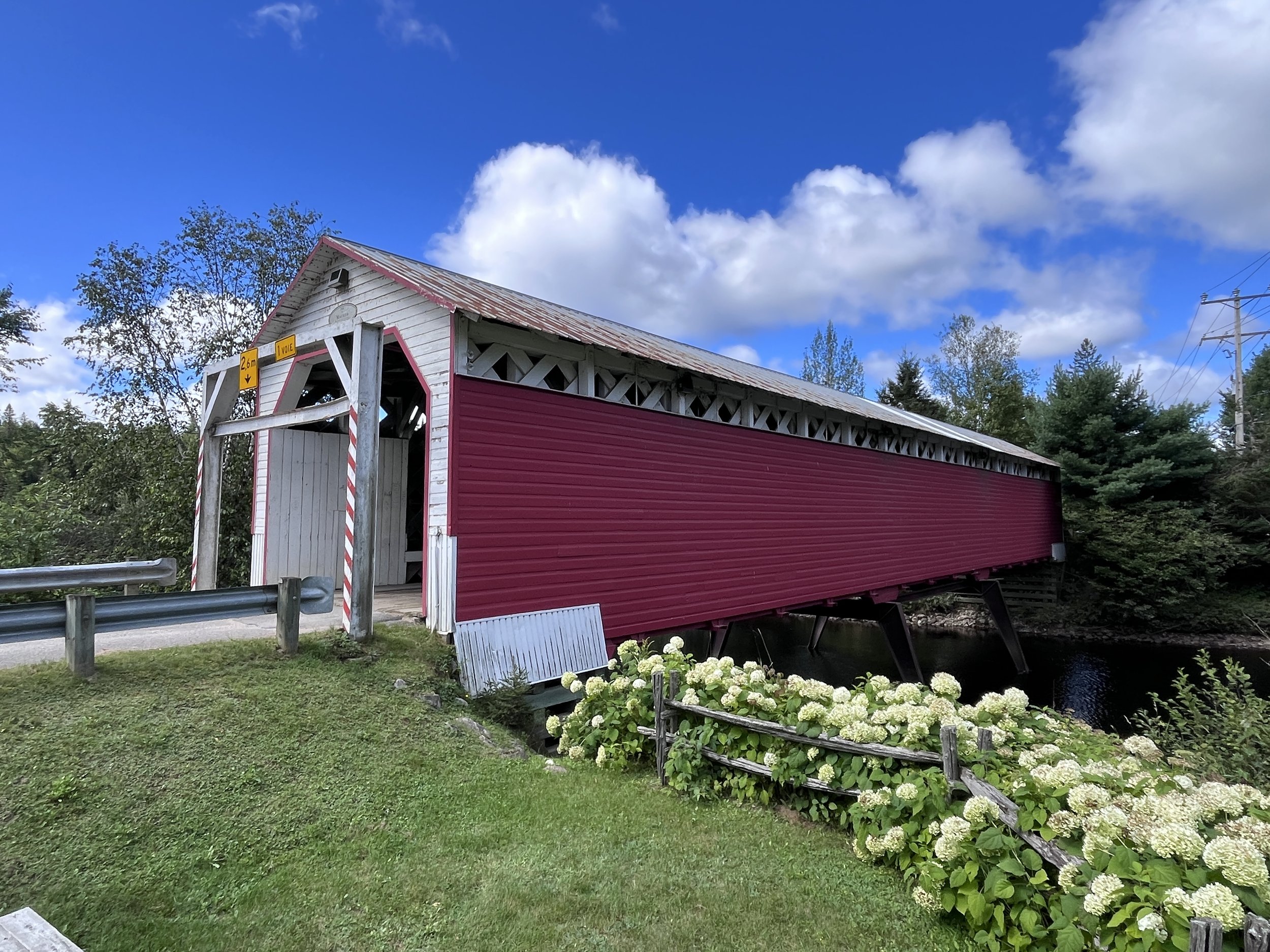
I’ve seen and traversed many a covered bridge in my life and somewhat related, I thoroughly enjoy Covered Bridge potato chips.
The La Macaza covered bridge was built in 1904, is 129 feet in length and appeared on a Canada Post stamp in 2013. In 2016, it was designated as a historical monument.
It crosses the Macaza River and features a lattice truss.
Interestingly, it was created via a petition from settlers who felt crossing the river by flat-bottomed boat wasn’t safe.
Sainte-Agathe-des-Monts Train Station
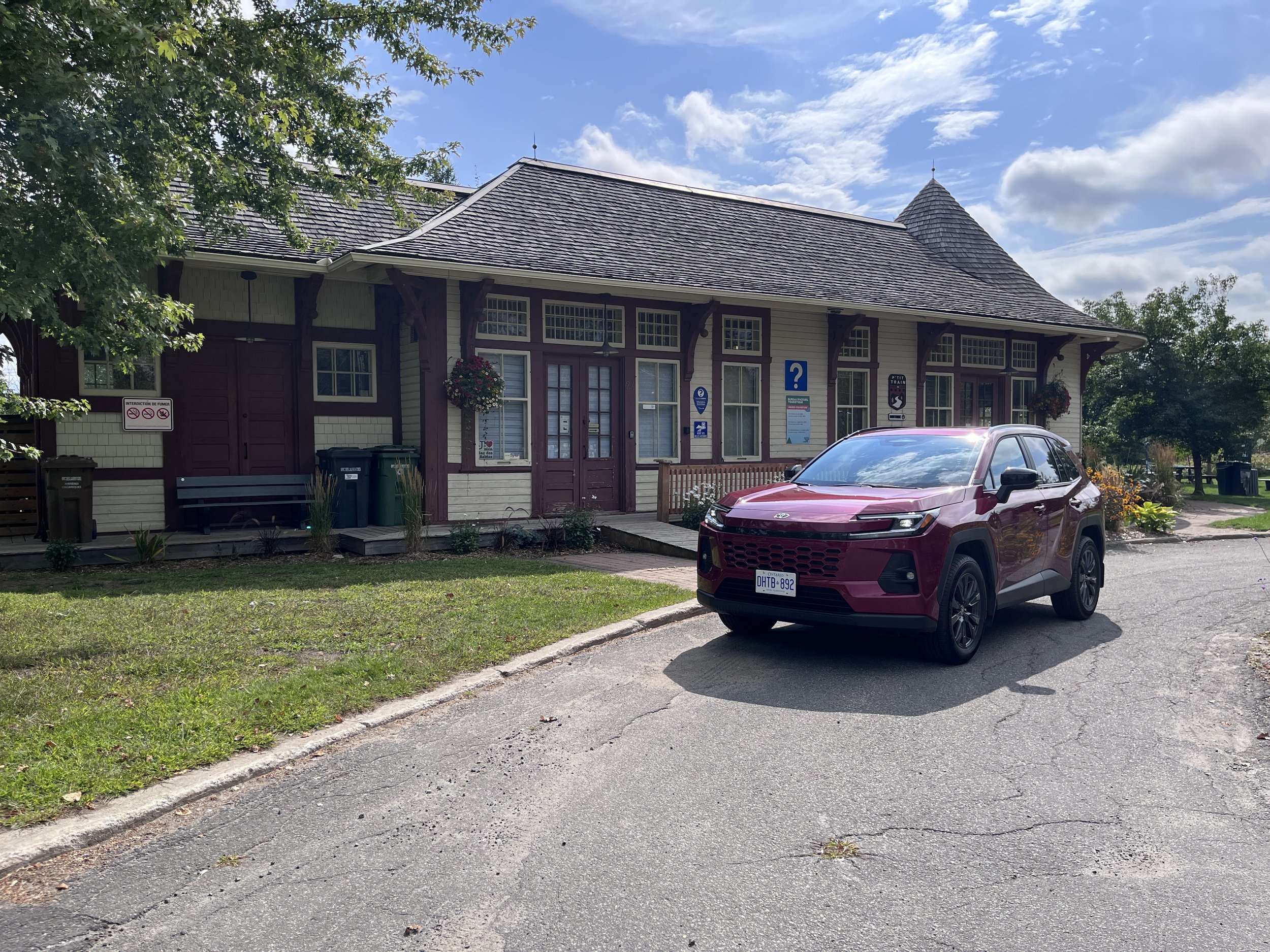
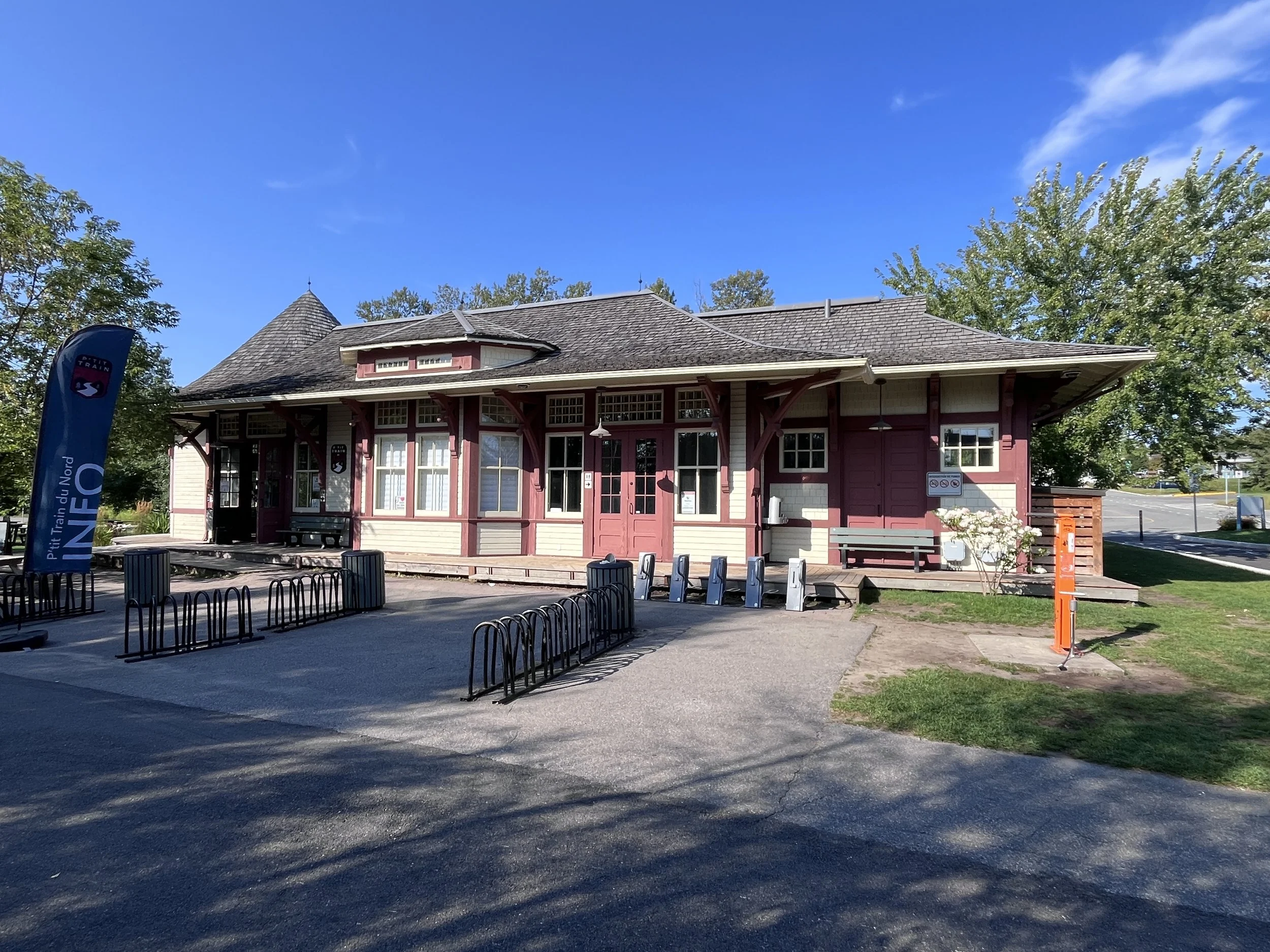
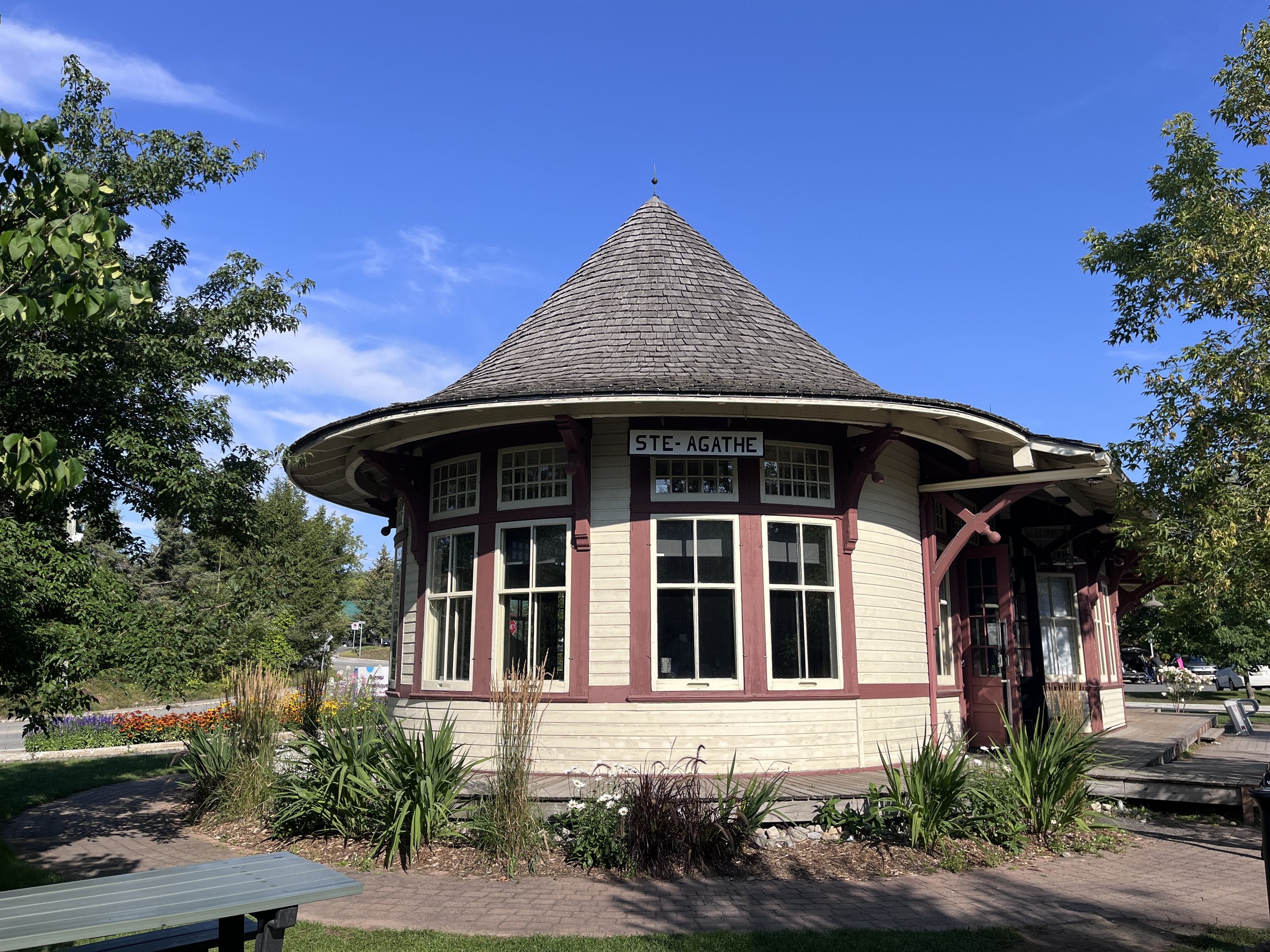
The first thing I noticed was the “witches hat” style roof on one side. It appealed to me so much that I filmed my intro for the video on the route bell history here.
Here’s the timeline for this station:
It was built in 1902, on Rue Demontigny, then relocated to its current location and expanded in 1913.
Train service was discontinued in 1960 due to road improvements Montreal and Mont-Laurier.
It resumed in 1978 and then fully discontinued in 1981 for passengers, and in 1989 for freight. The rails were dismantled in 1991and the building was designated a “Heritage Railway Station” by the government of Canada.
The government of Quebec acquired in 1994 and is now part of the P’tit Train du Nord, as of 1996.
On October 14, 2008, it saw severe damage by fire, then restored and reopened on June 28, 2010.
StoneHaven Le Manoir


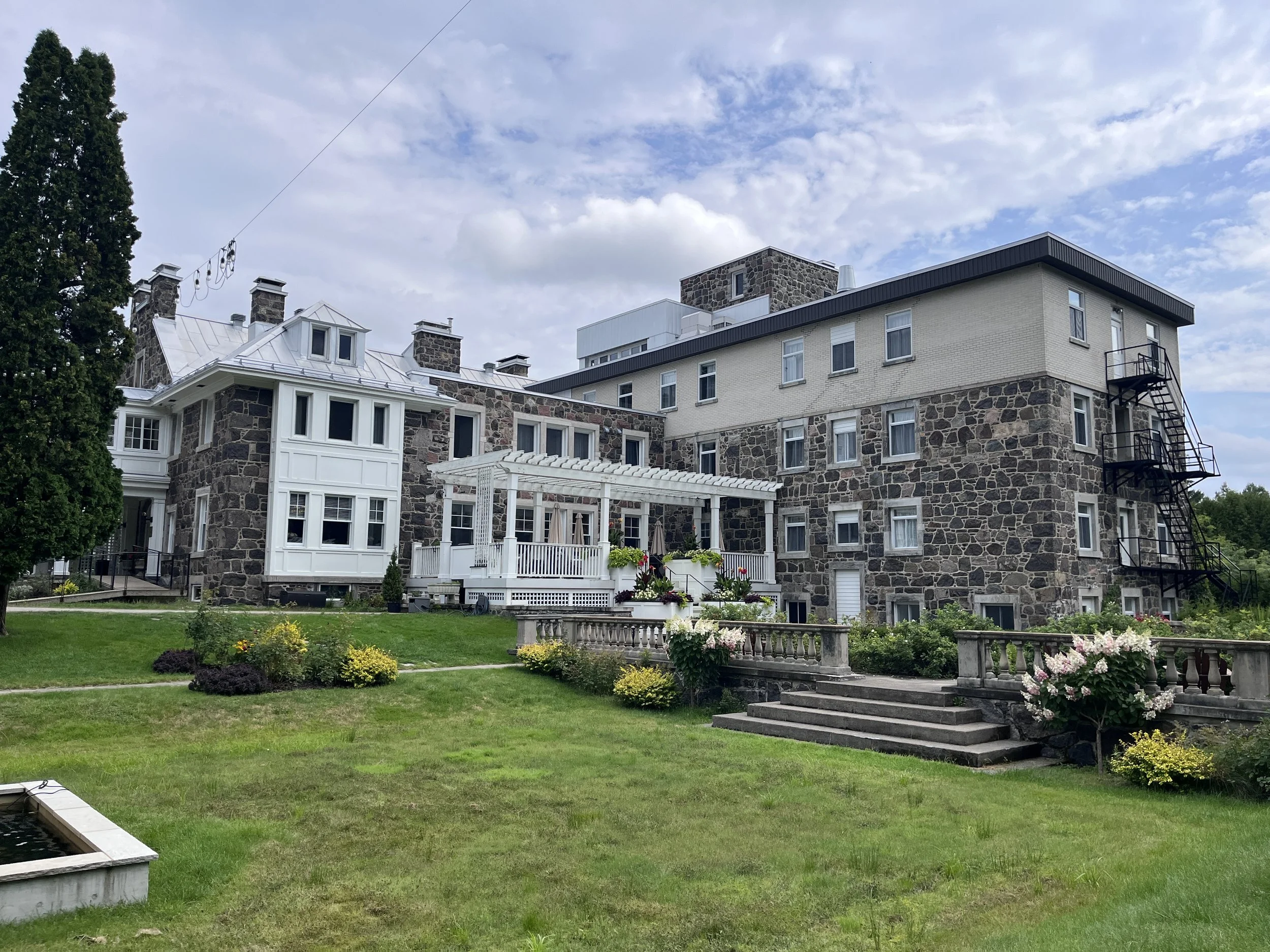
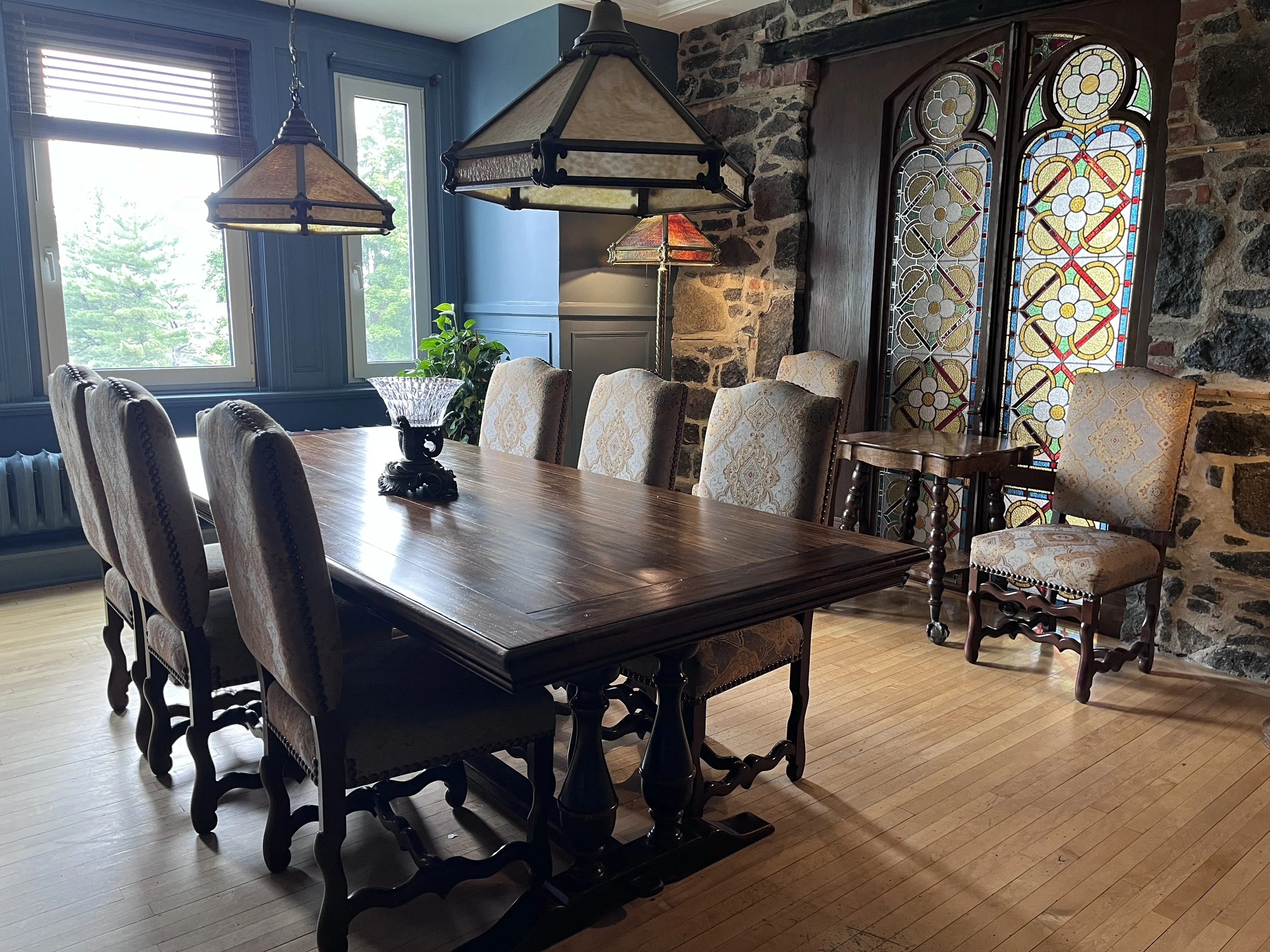
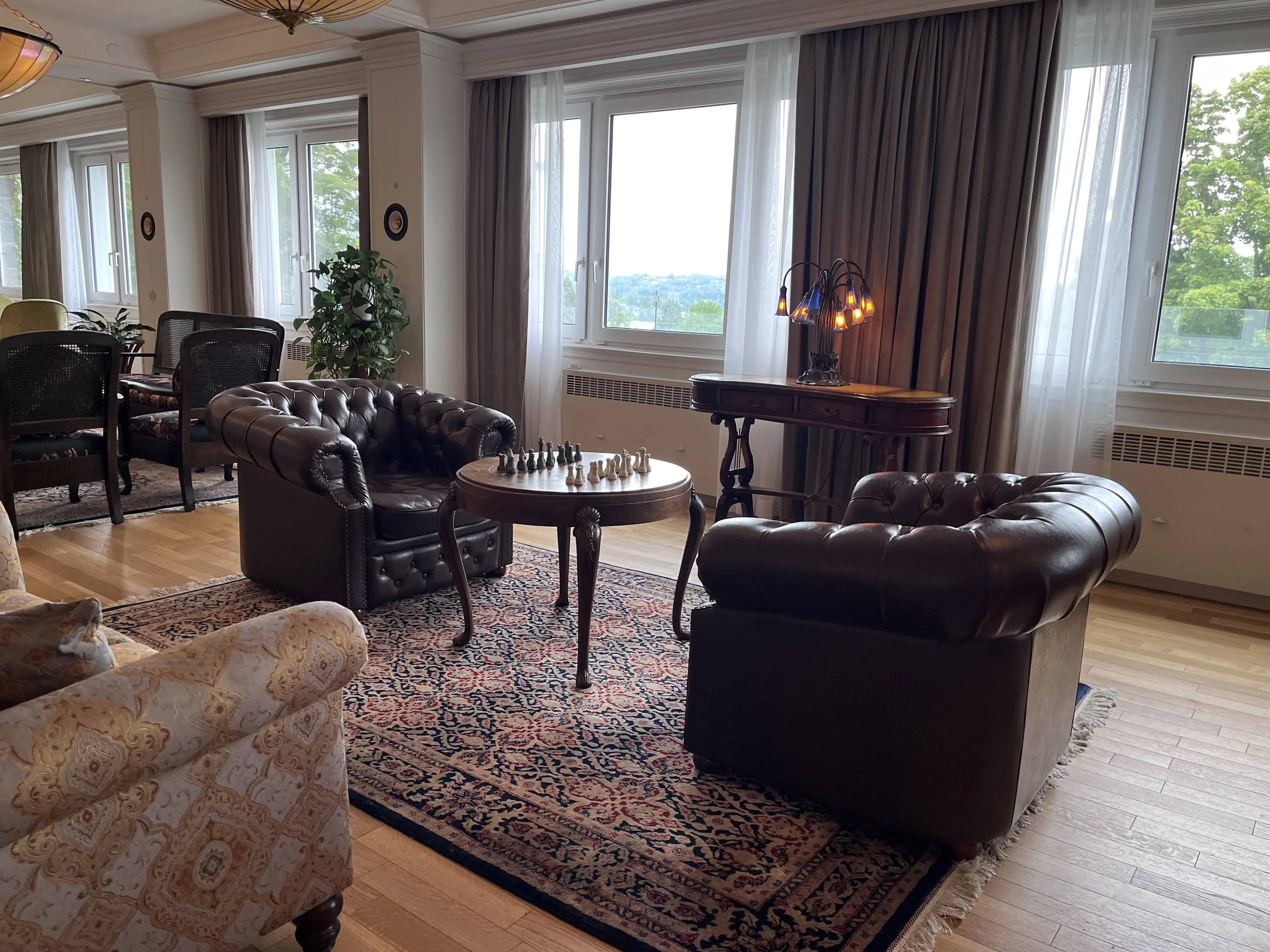
Is the air fresher here? Montrealer Douglas Lorne McGibbon thought so. As his private residence, this magnificent building was built in 1908 and as he was suffering from tuberculosis at the time, the wealthy fellow decided to set up shop in Sainte-Agathe-des-Monts, which is where StoneHaven is.
Originally a resort of health and wellbeing, it became a health care facility for elderly Priests and a retreat centre for Catholics in 1927 and today, it’s grandeur lives on across 140 acres with vivacious views of Lac Des Sables.
Saint-Jérôme Train Station
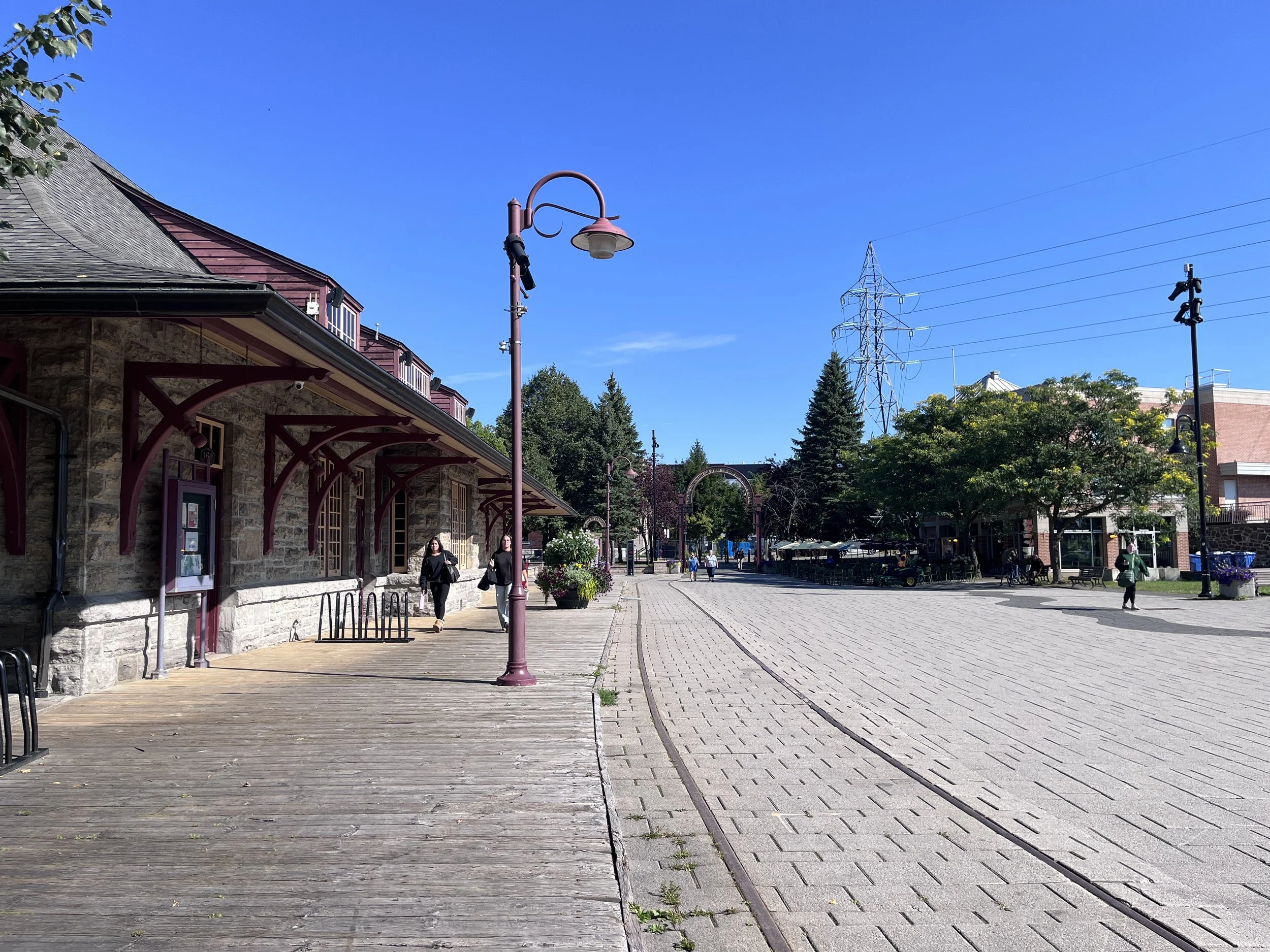
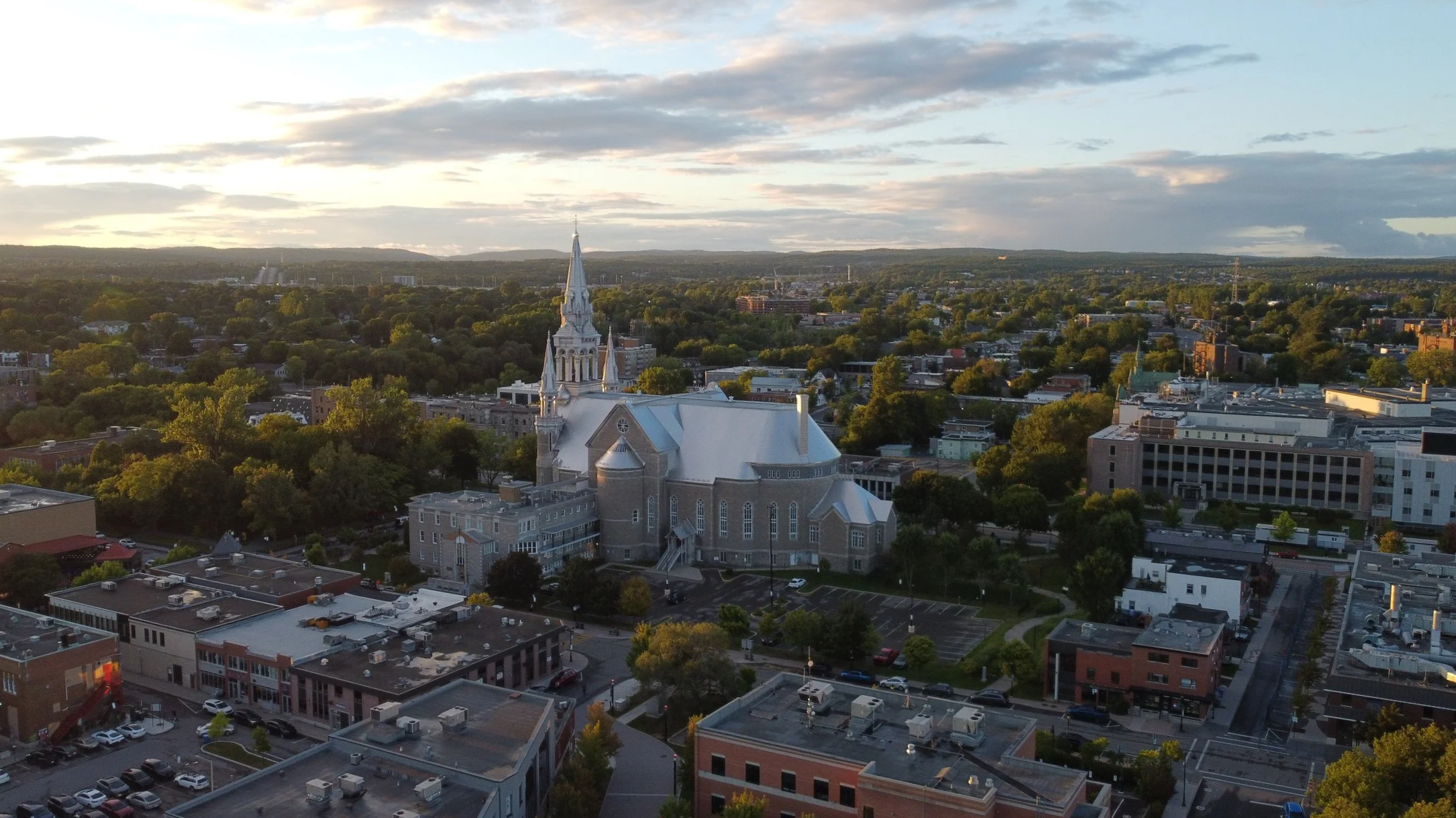
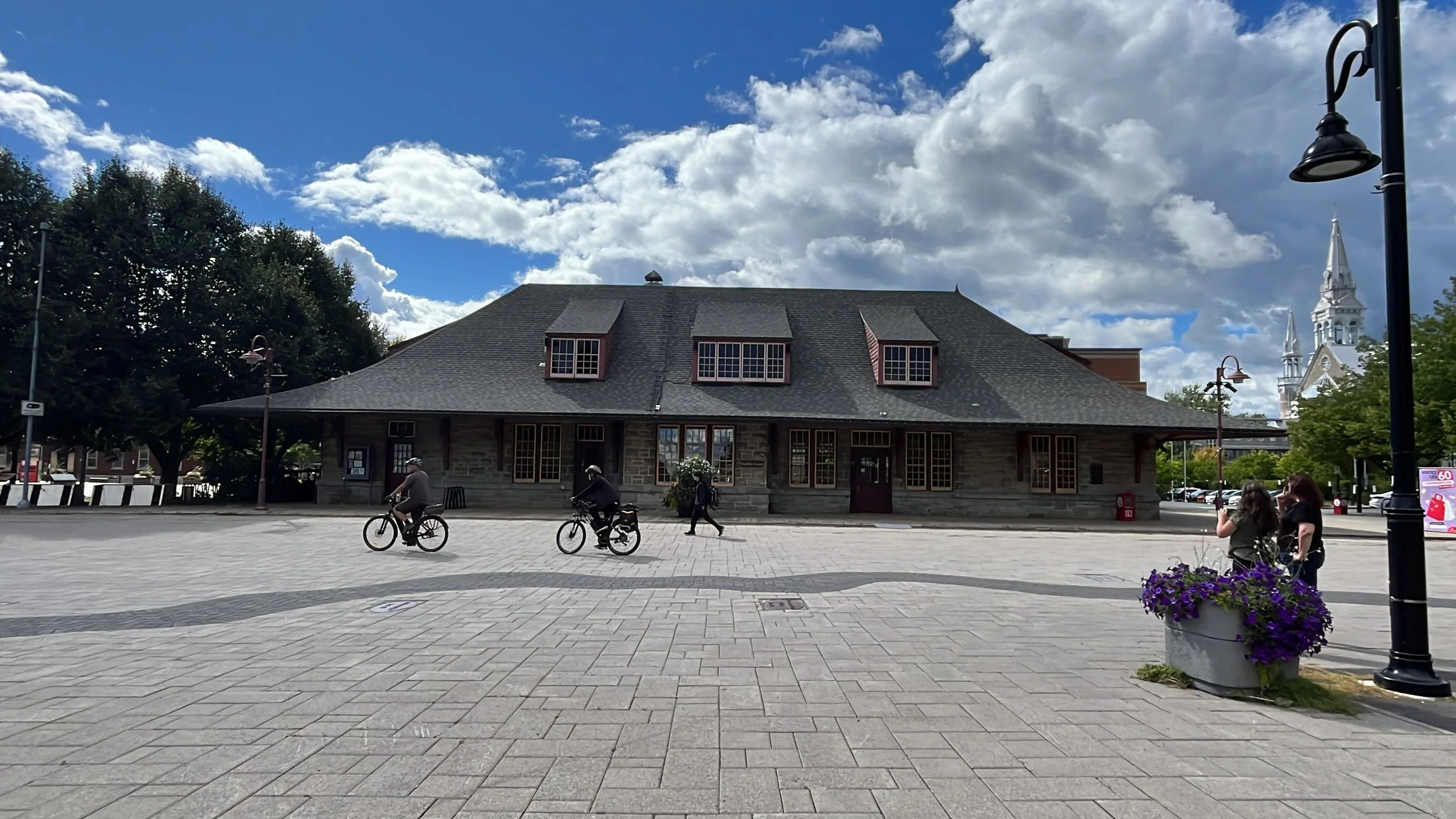
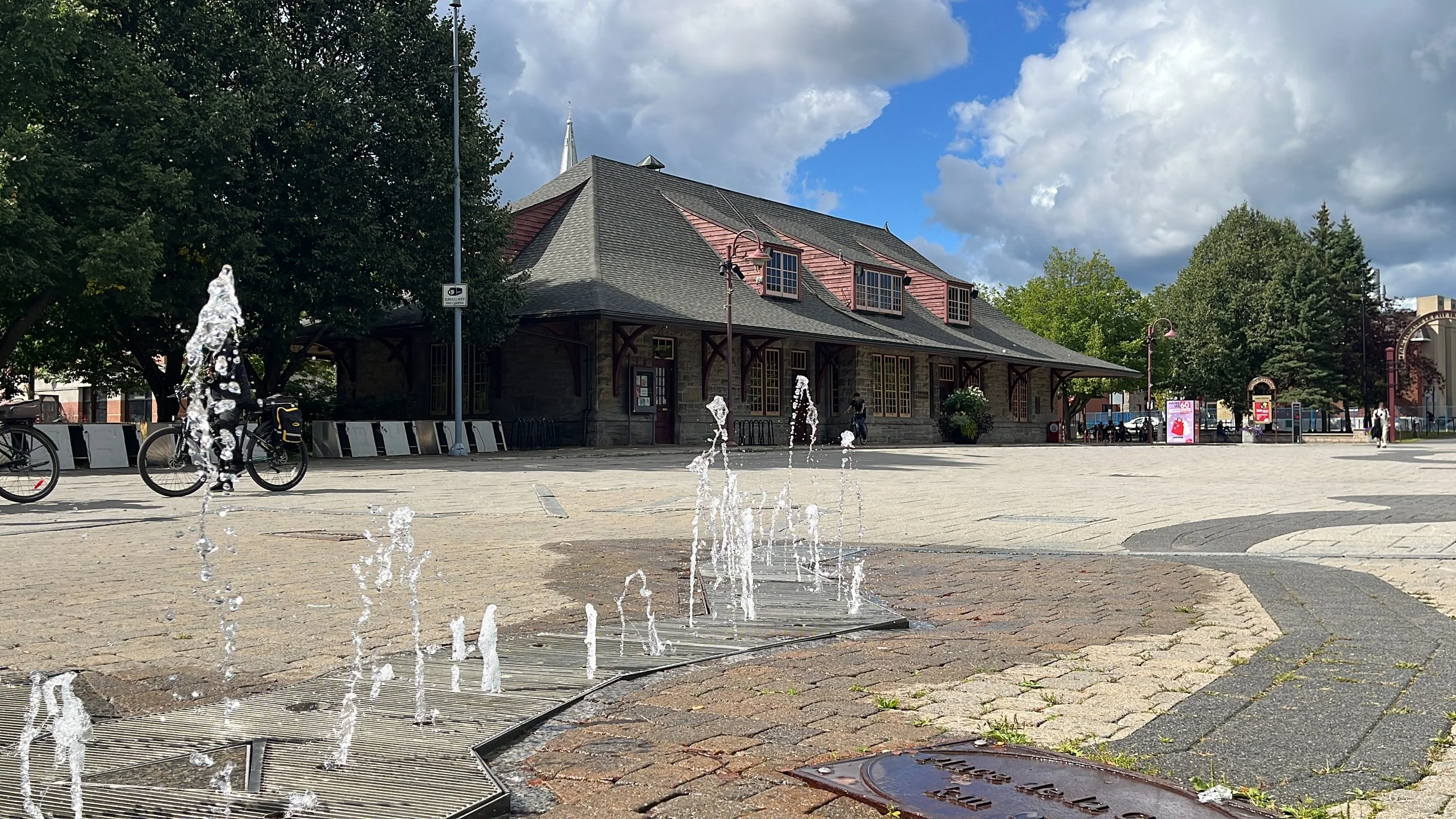
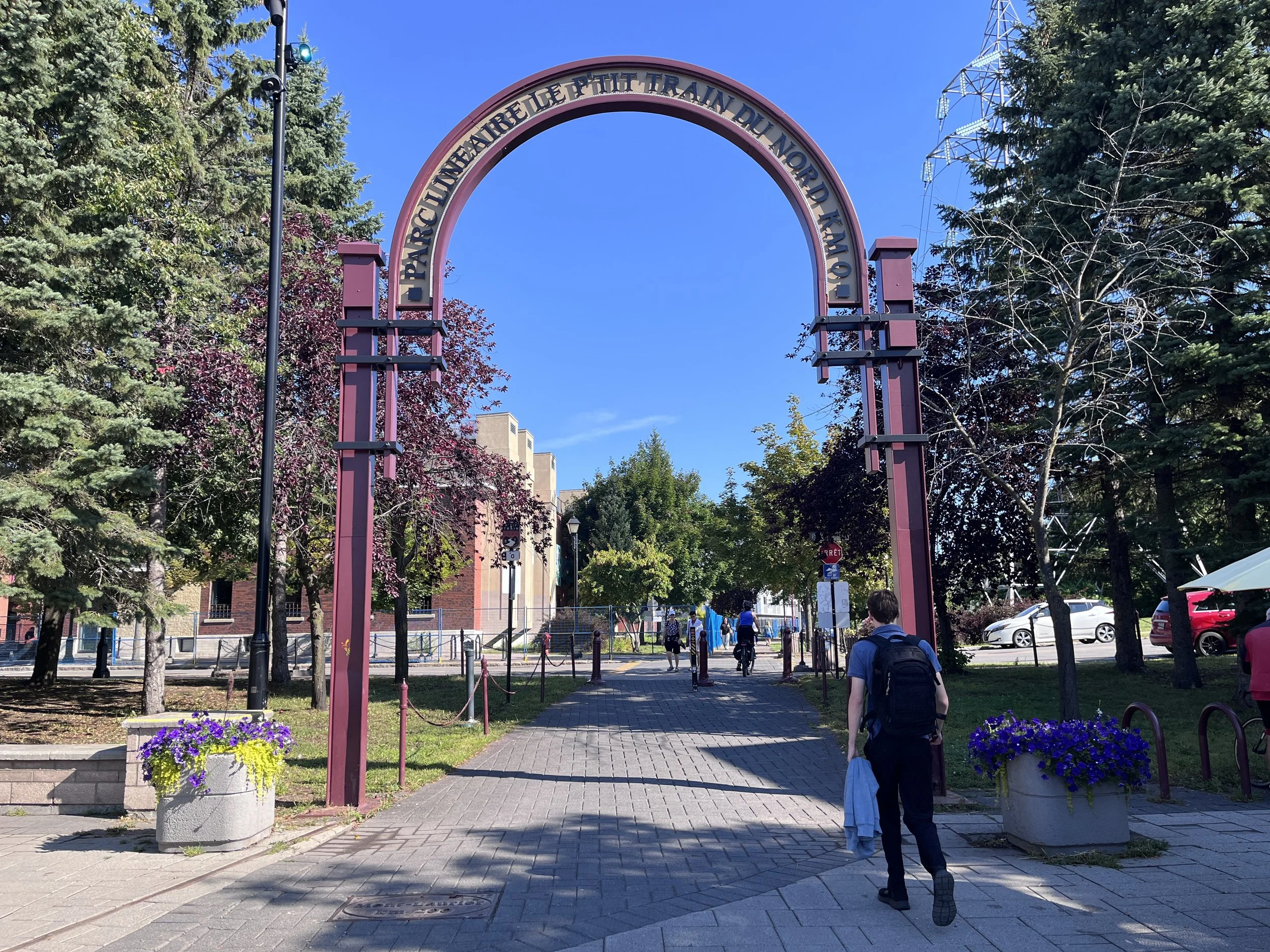
This doubles as two starting points, over a century apart. The starting point of La Route des Belles-Histoires and also kilometre zero for small train.
This was the first station to appear in the Laurentians, it was built as part of the growing demand for bringing those from Montreal. It also brought firewood to Montreal during a firewood shortage in 1872.
The architecture is beautiful, the stonework surrounding it is intriguing and the amount of history enveloped her deserves a dedicated visit.
Val David Train Station
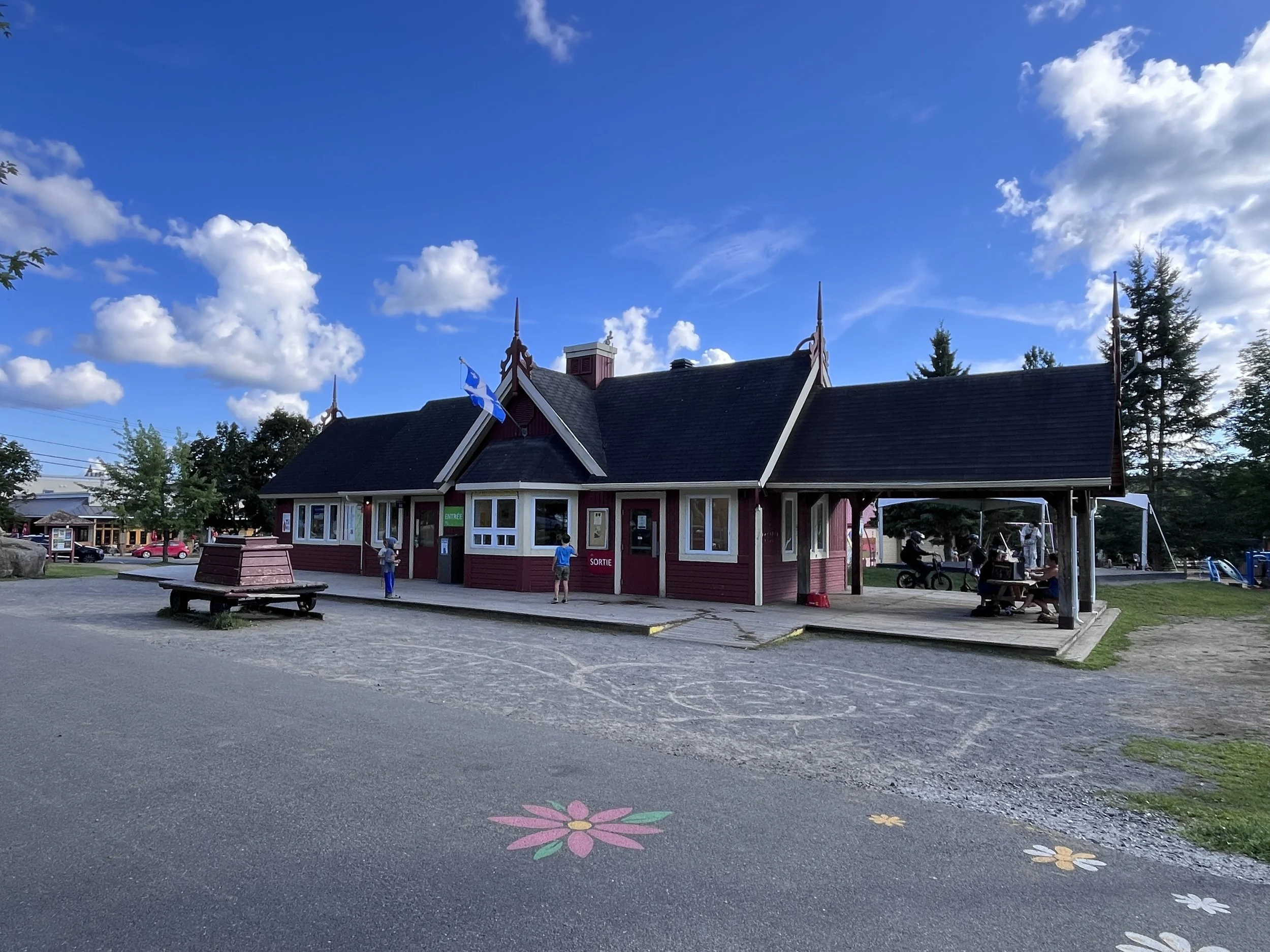
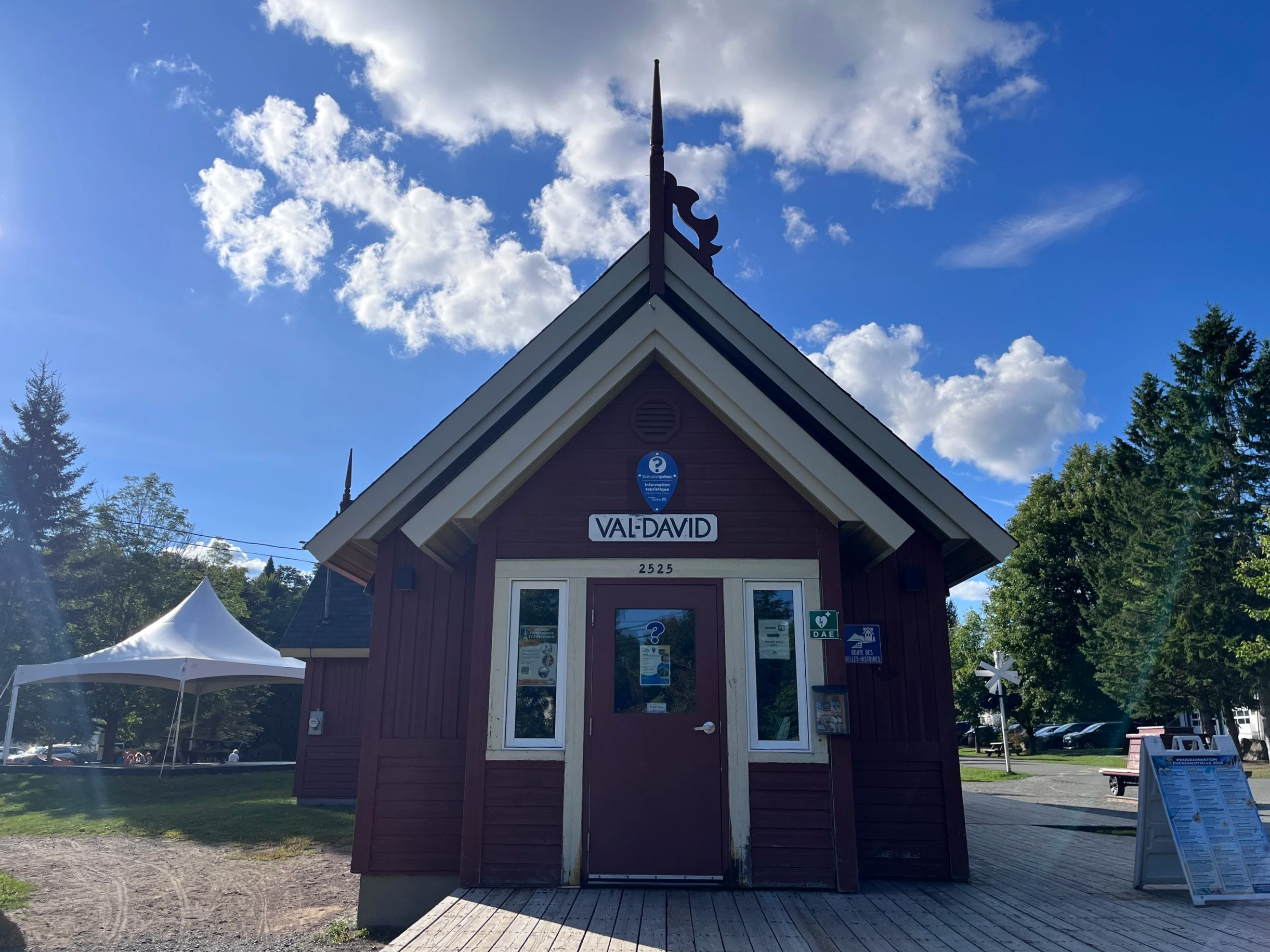
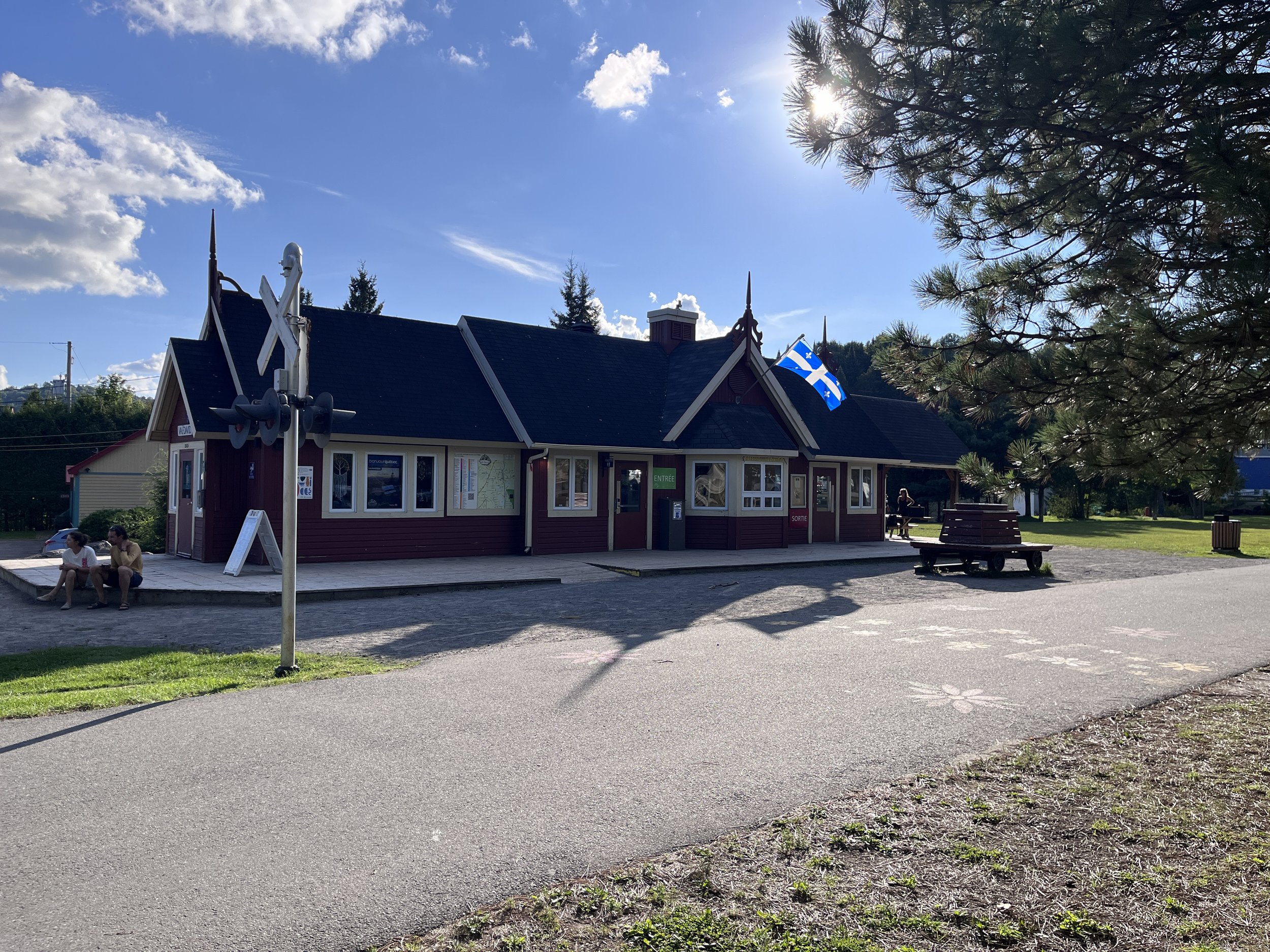
Some history to get this train in motion:
The railroad reached the village of Val-David, formerly called Saint-Jean-Baptiste-de-Bélisle, in 1891. In 1892, Canadian Pacific built a station to consolidate its transportation operations, as it was next to the village sawmill, carding mill and gristmill. It was called Bélisle’s Mill Station, after the village water mill. The Swiss architecture inspired building was home to the stationmaster and his family on the second floor.
Originally designed for freight, in 1927 “snow train” trips were created to cater to the increase in skiers.
In 1921, it was expanded and in 1950, it was restored and solidified.In 1955, “snow trains” ended with the popularity of the car and improved roads.
It was demolished in 1985 and then rebuilt in 1997 and is part of Le P’tit Train du Nord.
It’s also a short walk from MacTaverne, a spectacular restaurant in boutique inn, with fabulous food and mesmerizing views of the Rivière du Nord.
Labelle Train Station
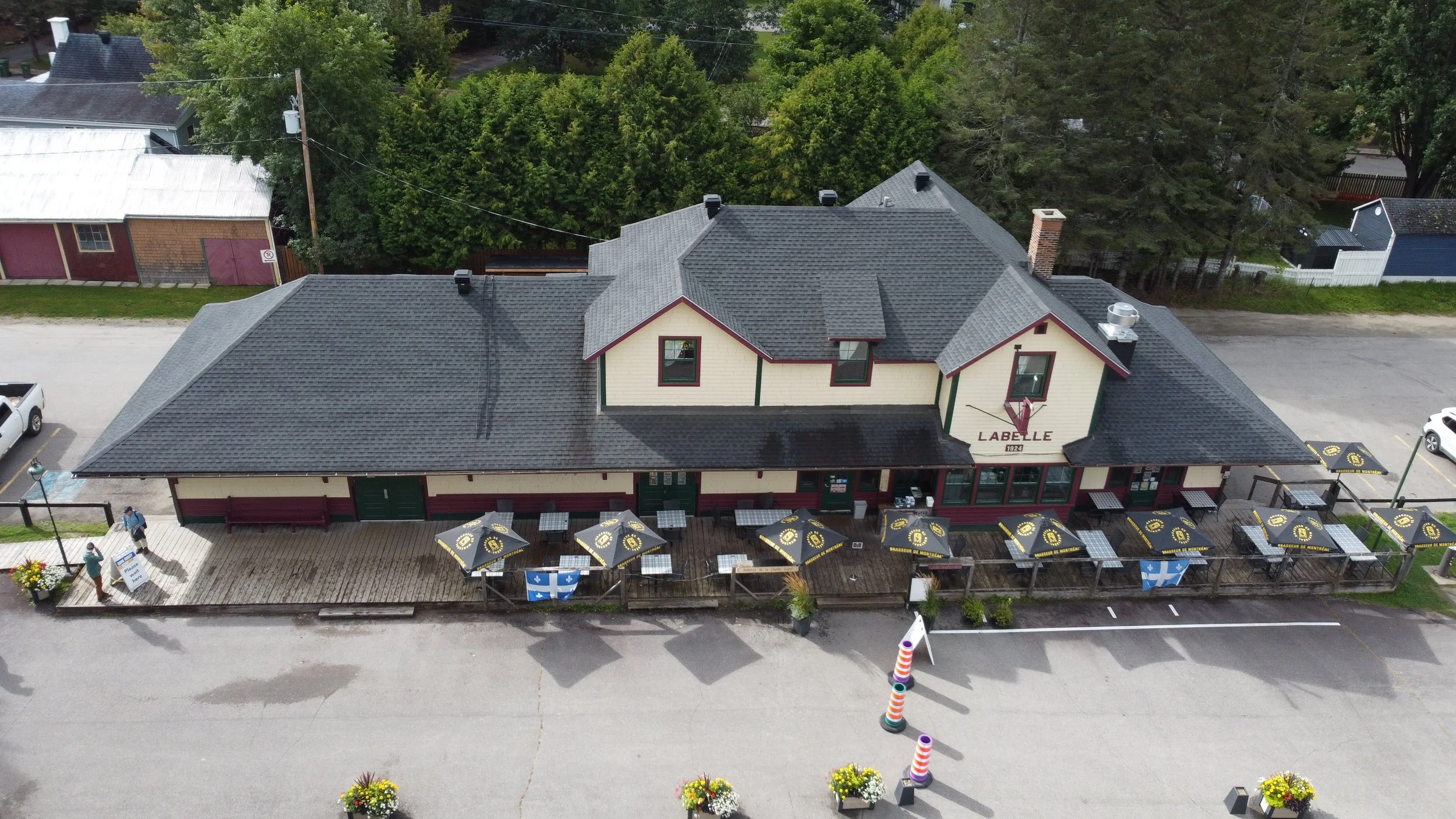
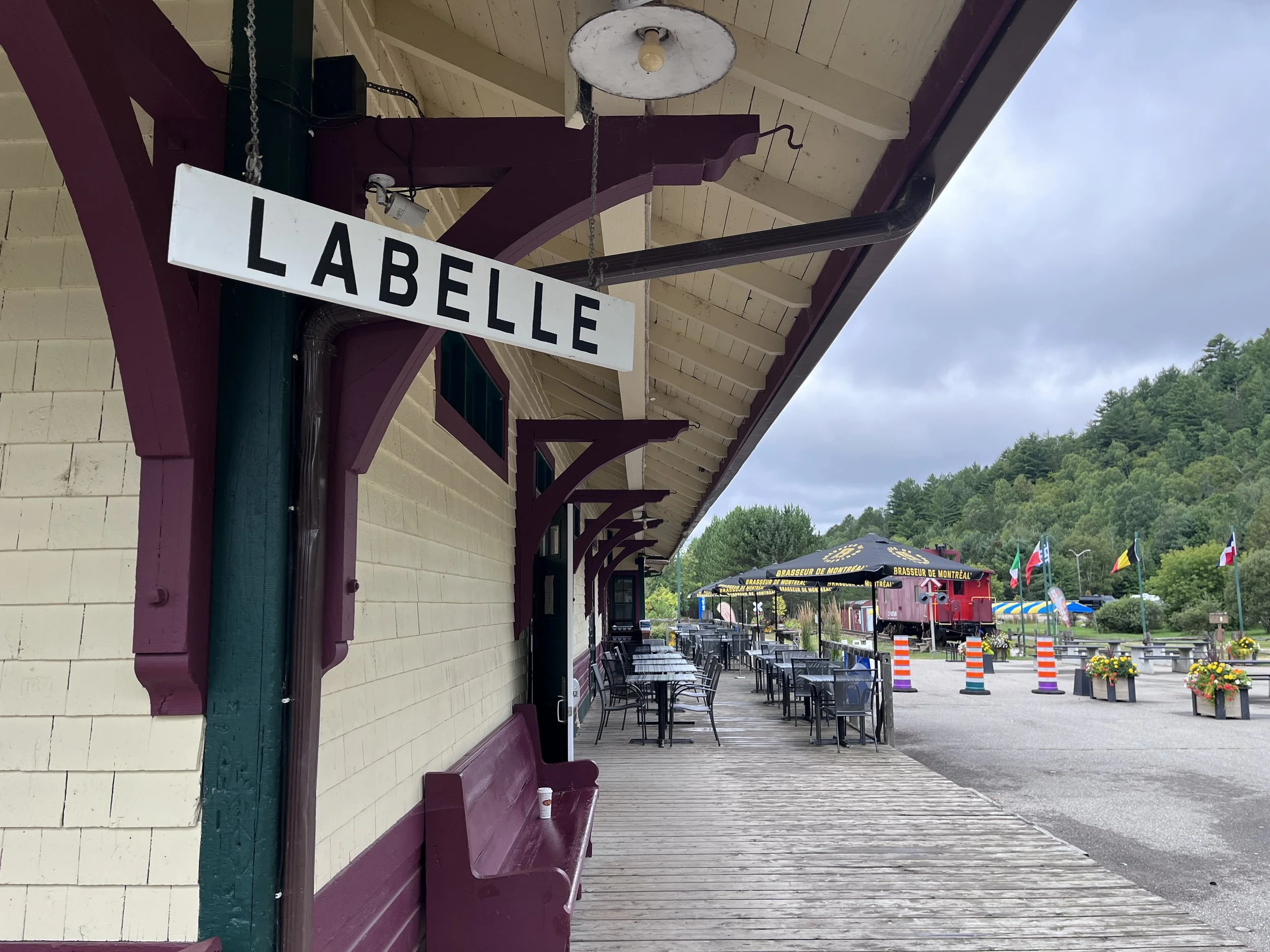
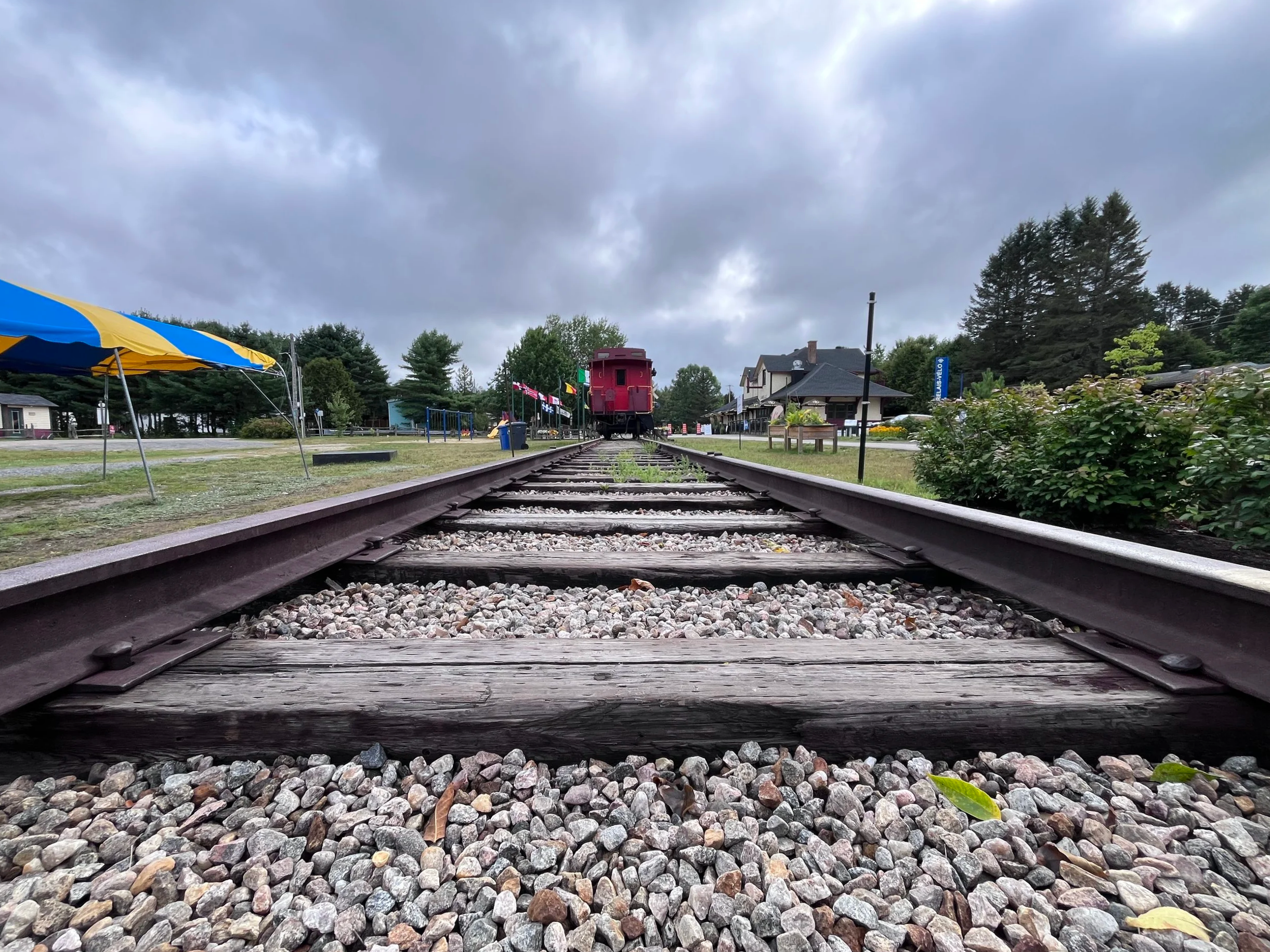
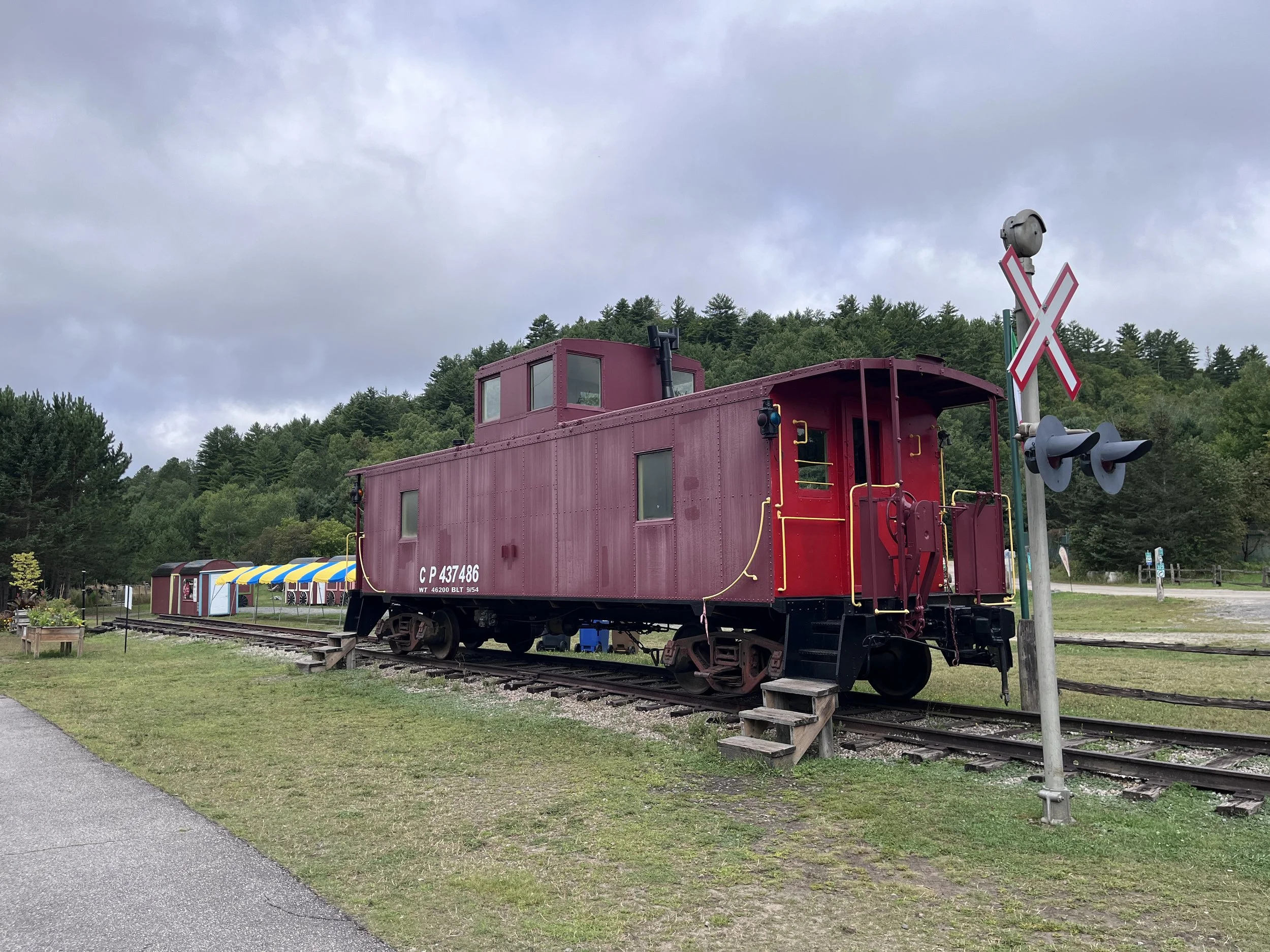
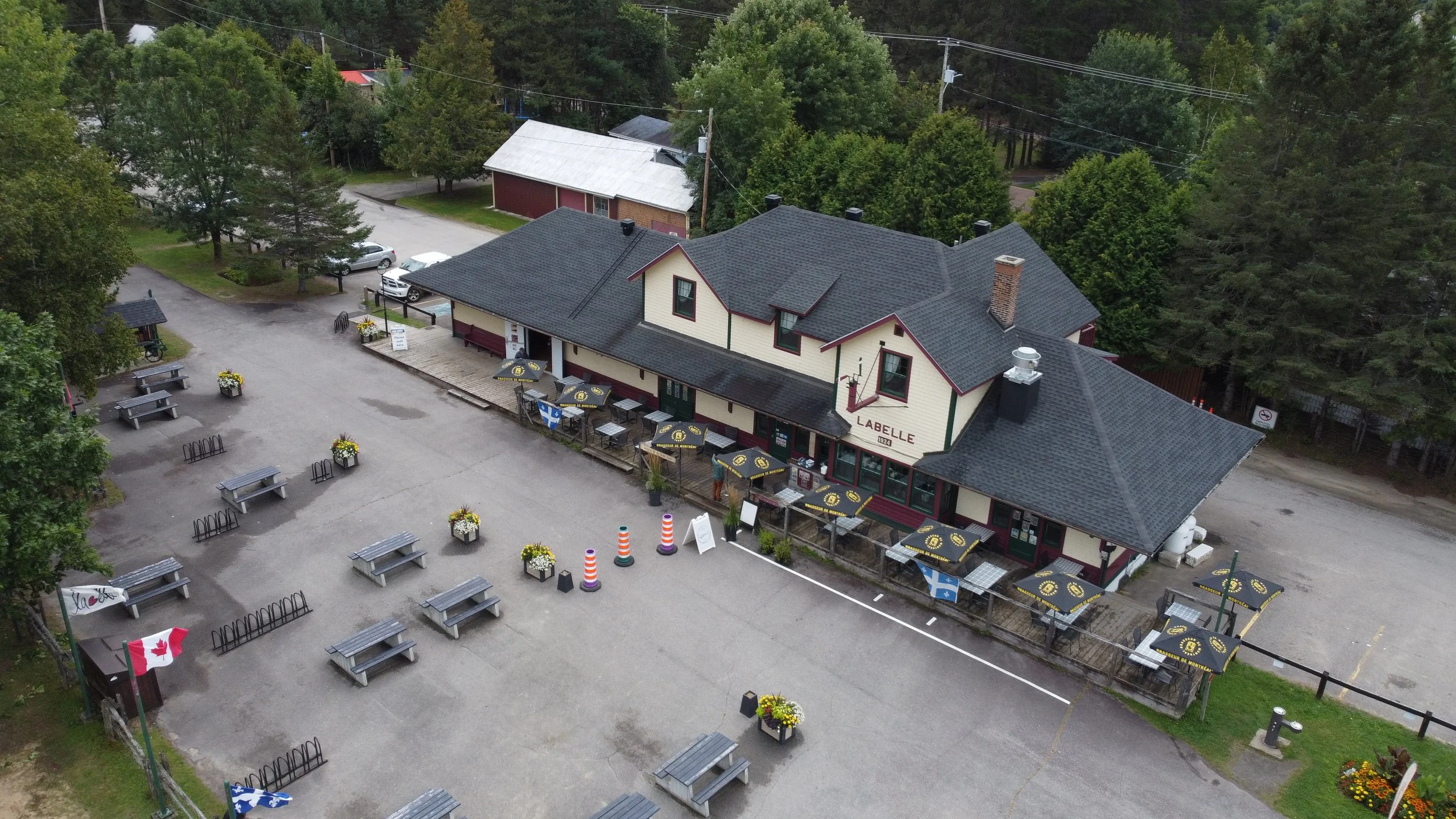
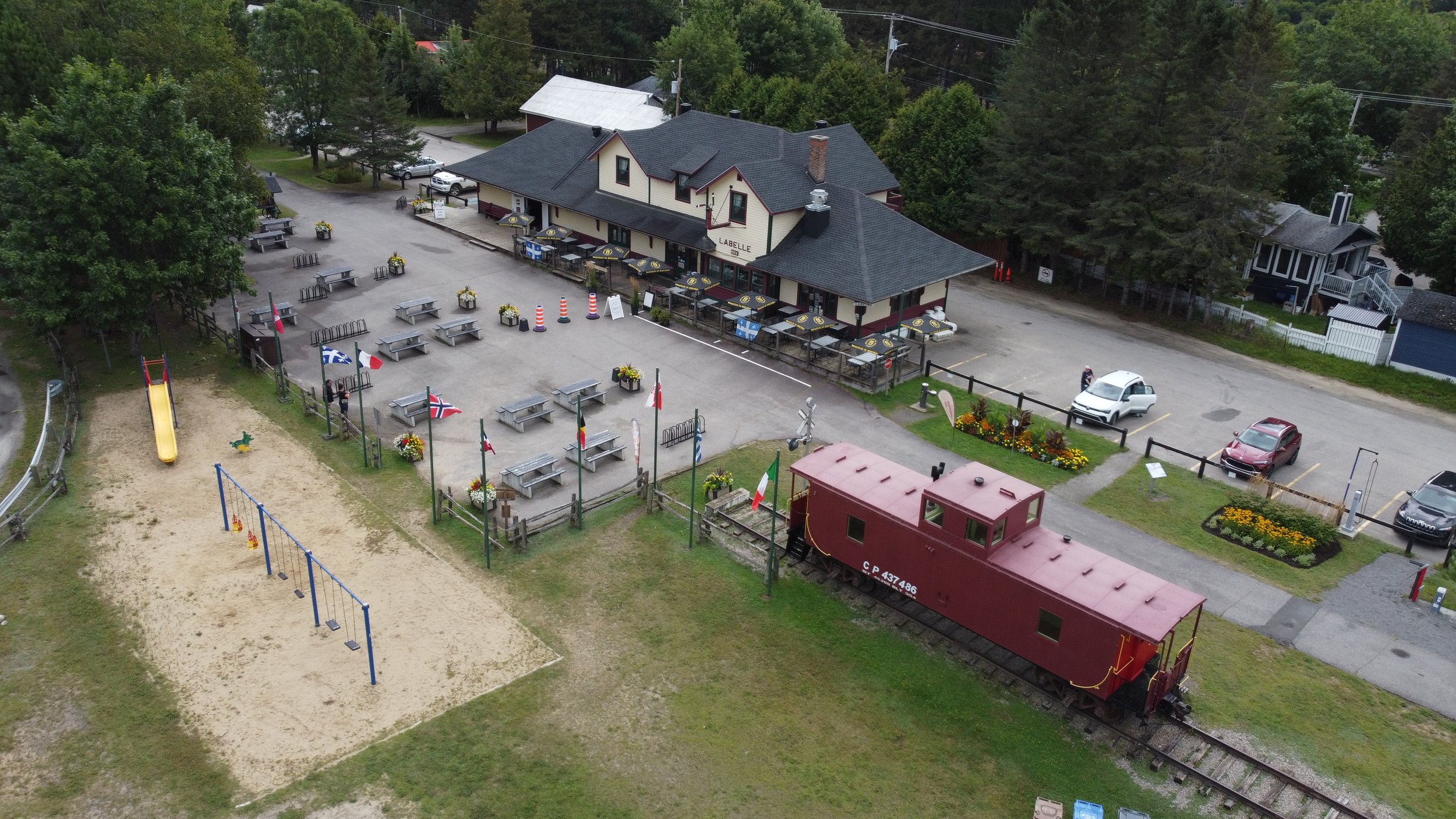
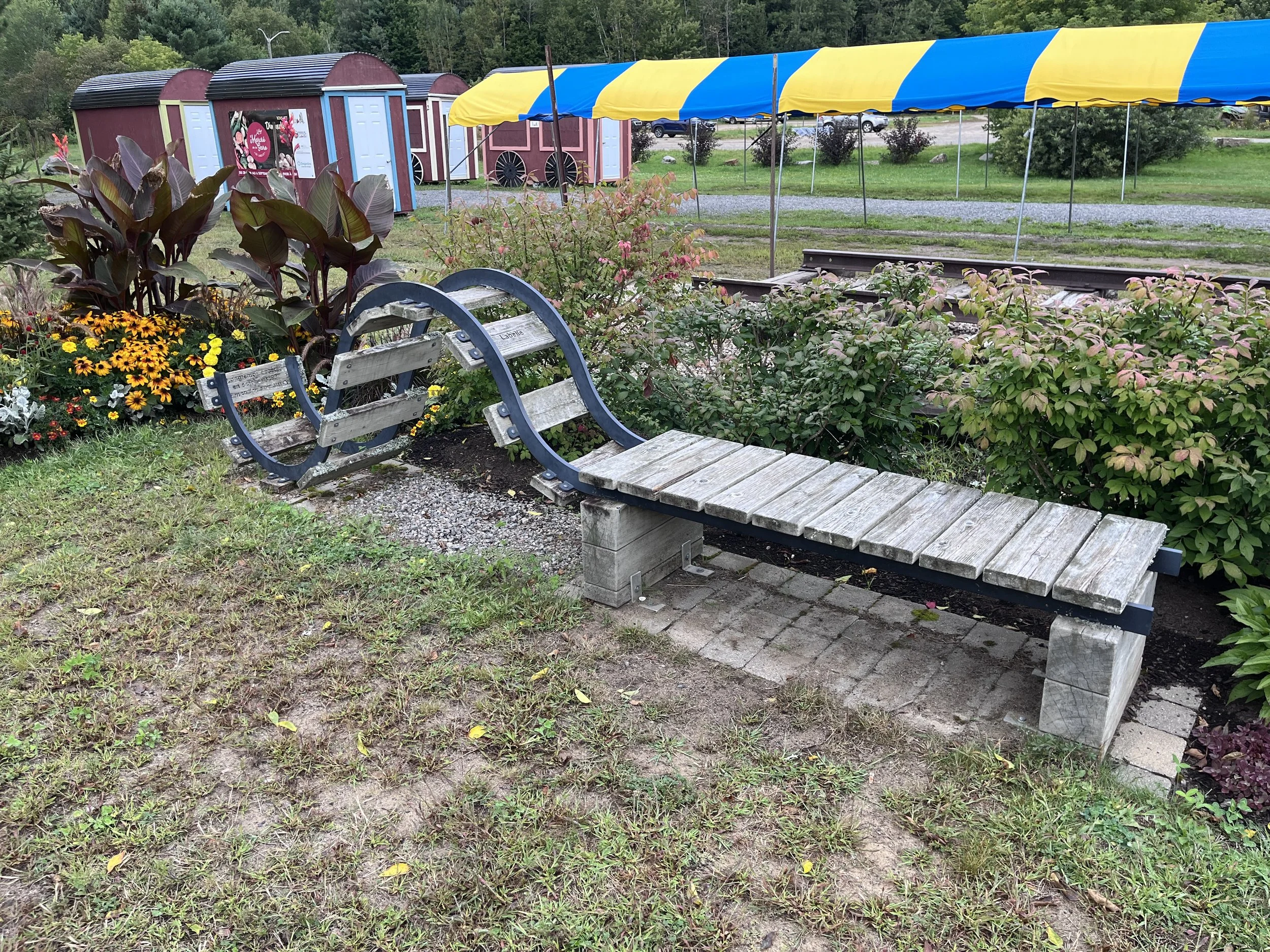
I’d been here two years ago as a meeting point to go side-by-side ATV-ing in winter, so there was instant familiarity when I stopped here.
There’s a museum, places for kids to play, an old caboose on site and it’s a stop along Le P’tit Train du Nord.
The village of then-named Chute aux Iroquois served as a rail terminal until 1894 before becoming a key railway depot when it was extended to Mont-Laurier.
Mont-Rolland Train Station
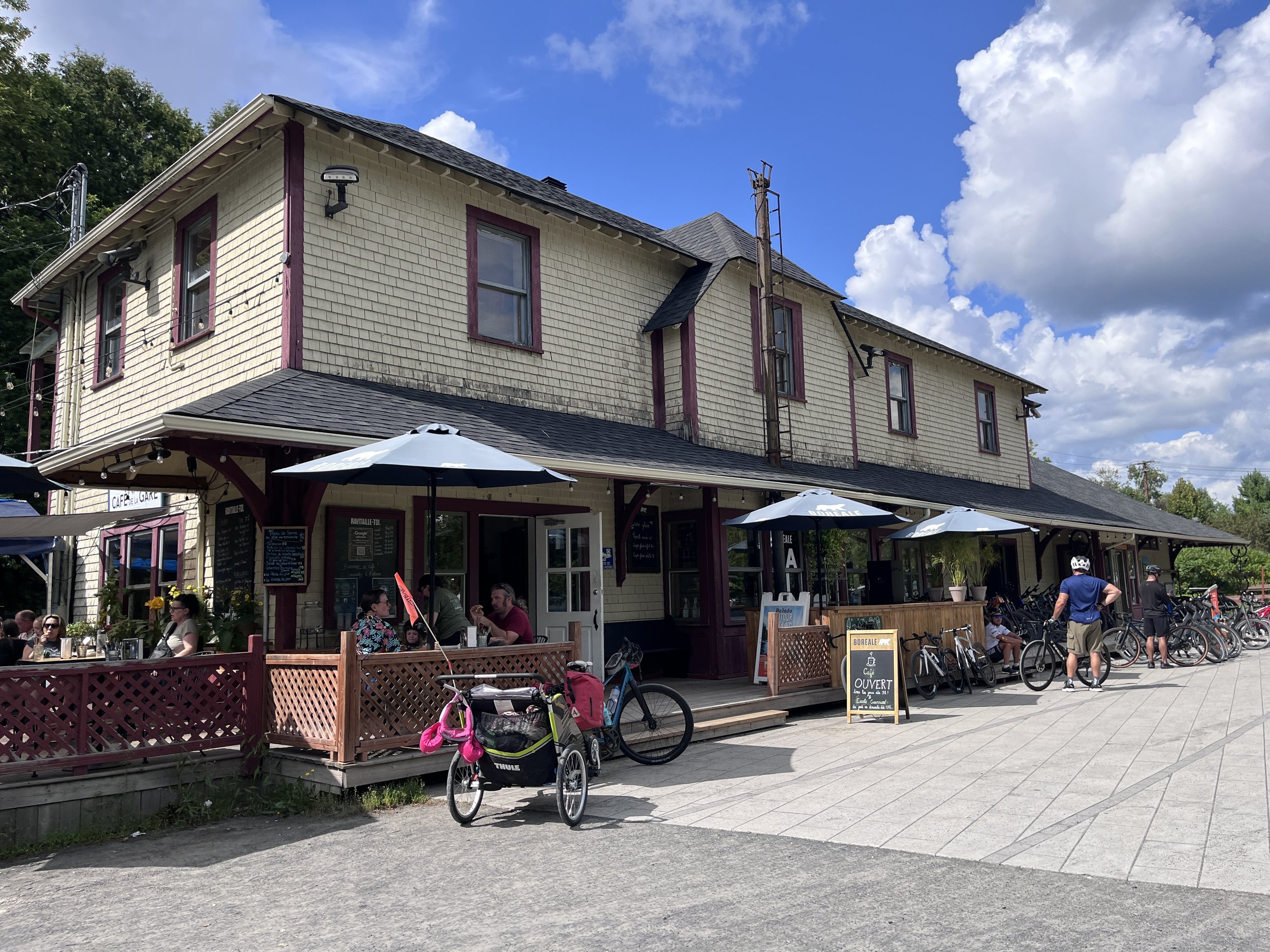
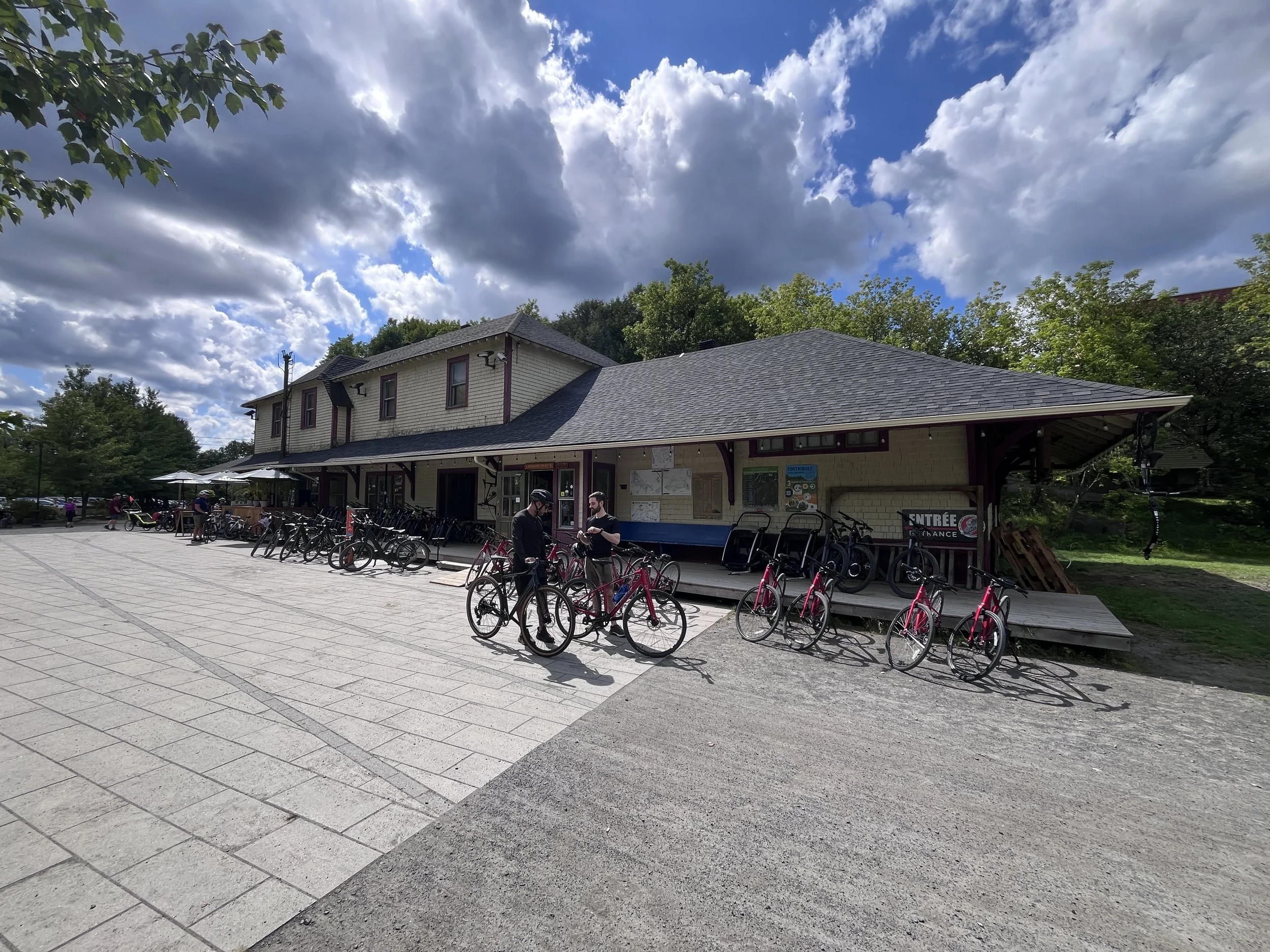
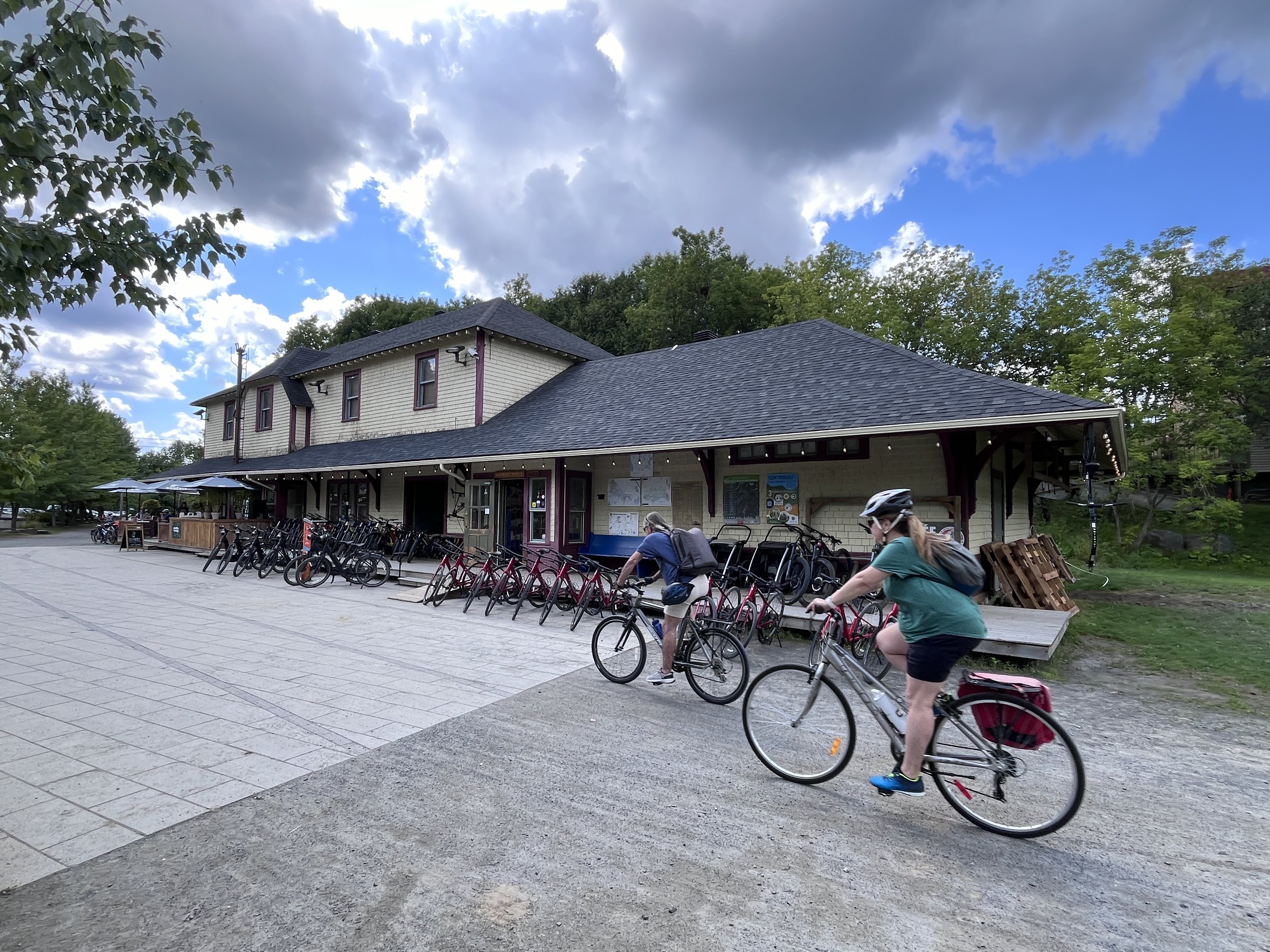
Another familiar place for me as it was my starting and ending spot during a day on Le P’tit Train du Nord via e-bike in August, 2026.
I also recorded a video intro here!
$10,000 was allotted by the village of Sainte-Adèle in 1887 toward construction of the railroad, with the inaugural train arriving in 1891.
The current train station was built in 1928 and now features a cafe and a bike rental and repair shop.