
Bain There, Done That: Fish Tales From a New Brunswick Ice Hut
By Jennifer Bain | Published March 23, 2026
Bain There, Done That is Jennifer Bain’s bi-weekly column about travelling Canada in search of quirk.
Subscribe to the Modern Traveller Newsletter to get terrific travel articles like this one straight to your inbox!
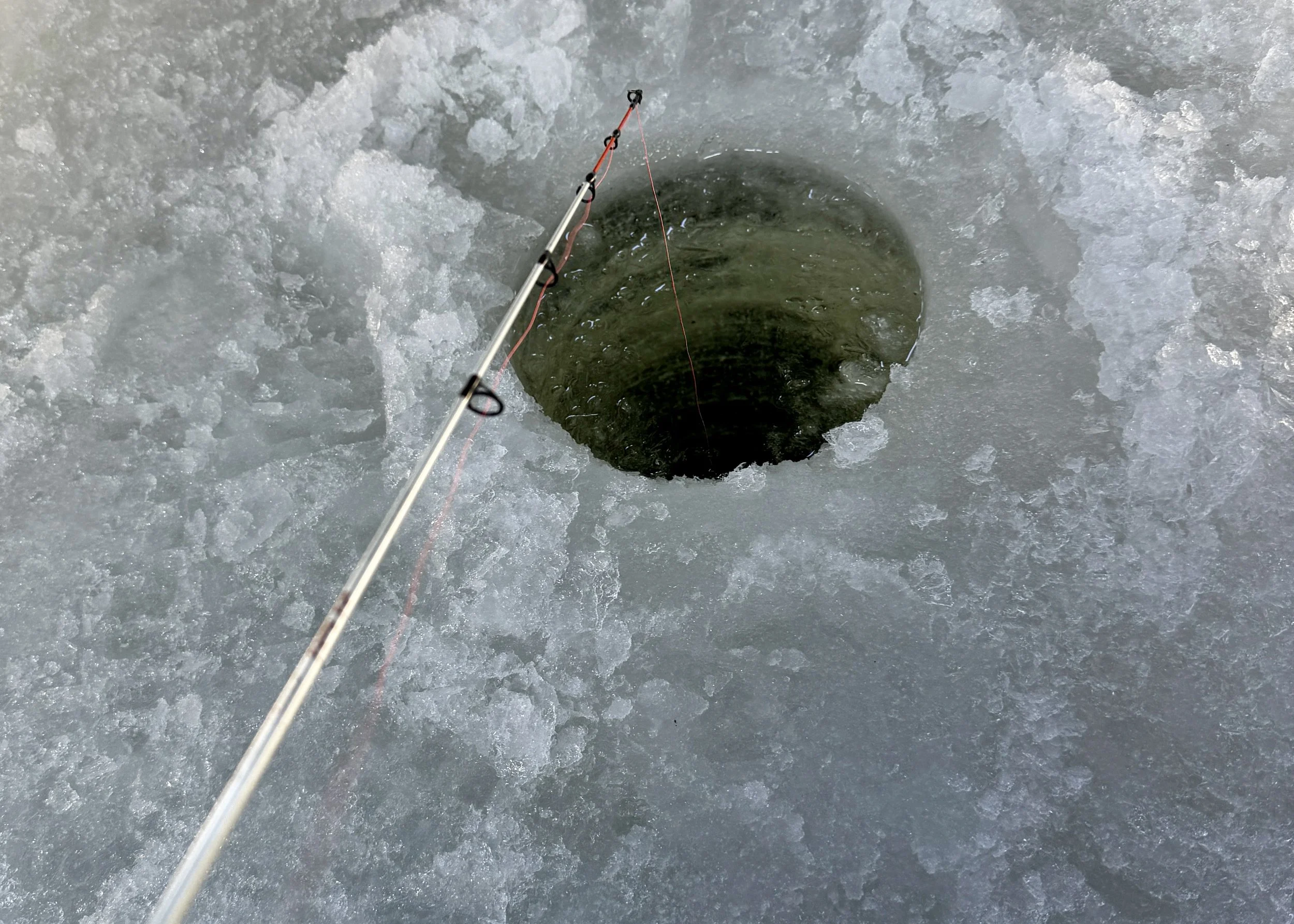
During a day of icefishing on East Grand Lake in New Brunswick, this was the rod I used to try to catch burbot and whitefish/Jennifer Bain
With apologies to my late father, I’ve become a lousy fisherman.
Throw me on a snowmobile and drive me to an ice hut on a frozen lake and I can still happily while away hours just waiting for the fish to bite. But I honestly don’t care whether I catch anything and the fish clearly sense my indifference.
So that explains why I was just skunked in New Brunswick — and why it was still a great day.
The choice was to set up my line one way for highly desirable landlocked salmon and lake trout, or another way for less desirable whitefish and burbot. I went for the underdogs (underfish?) that gorgeous February day on East Grand Lake.
“You’re going to want to work it with little jigs like that because ideally you catch a whitefish,” Fins & Feathers Outfitting guide Patrick Pellerin advised. “We’ve got a little minnow on there, so little jigs. They love that, right — just like a panicked minnow kind of motion.”
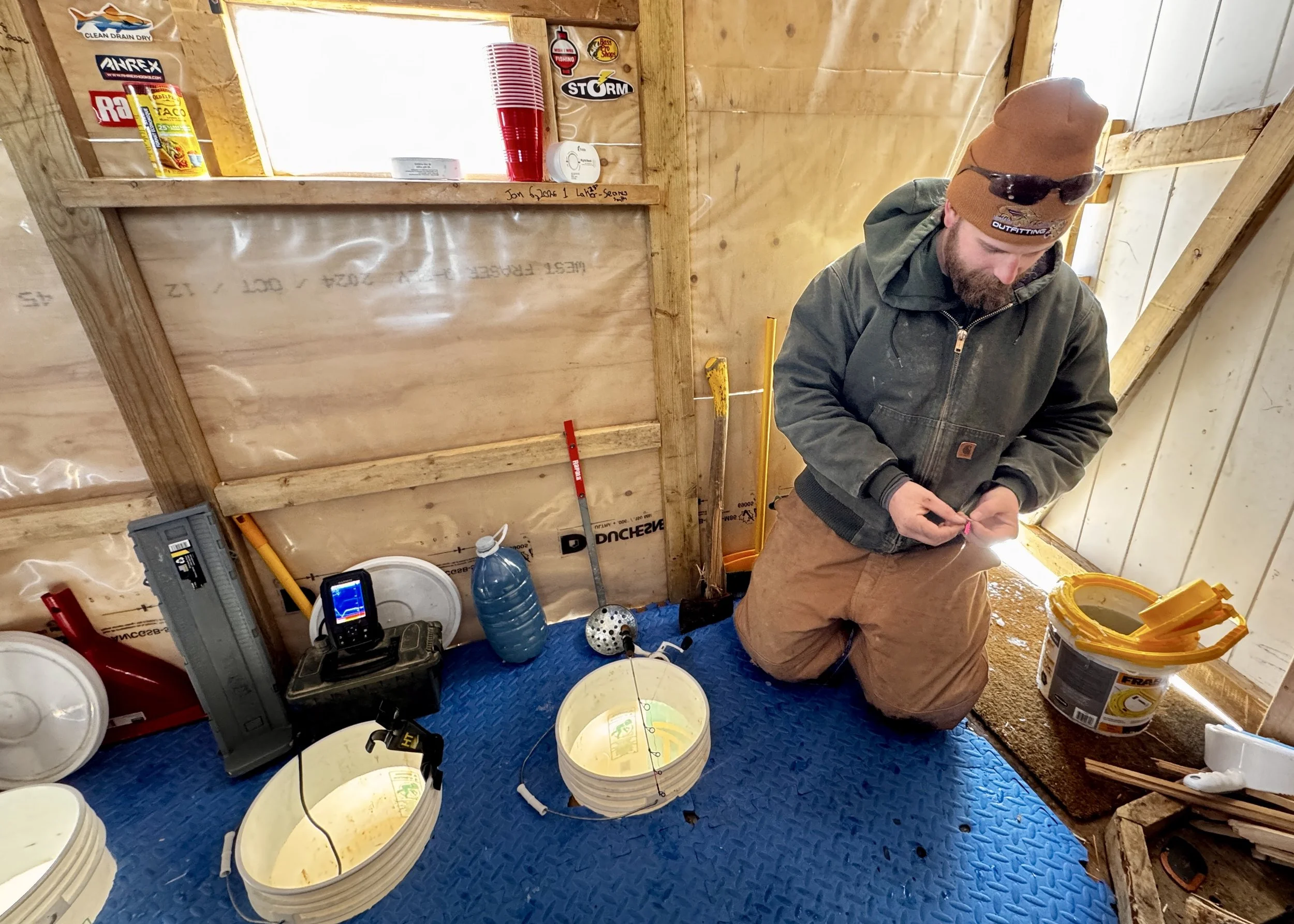
Patrick Pellerin, a guide with Fins & Feathers Outfitting in New Brunswick, gets icefishing rods ready on East Grand Lake/Jennifer Bain
I secretly set my sights on burbot — the unloved species with an eel-like body, catfish-like barbel and slimy sheen. Back in Ontario circa 1970s and 1980s, we called it ling and considered it a garbage fish.
I’m still working through the shame of how we threw ling on the ice to die instead of releasing them like we did pike or eating them like we did pickerel. (Nothing beats my late mom’s pan-fried pickerel.) Little did we know that once you peel off the creepy skin, ling/burbot becomes the poor man’s lobster.
“They’re so good, I don’t know why they’re considered trash,” mused Pellerin. “Here, most people eat all the burbot they catch. We’ve got 50-something burbot in a day here.”
He did his best to provide an angling refresher, explaining how burbot have poor eyesight and usually nose the bait to smell and feel it before biting hard and fast.
“That’s what I want — that’s my dream for today,” I confessed. “I wish every fish bit like that instead of just nibbling or checking it out and leaving.”
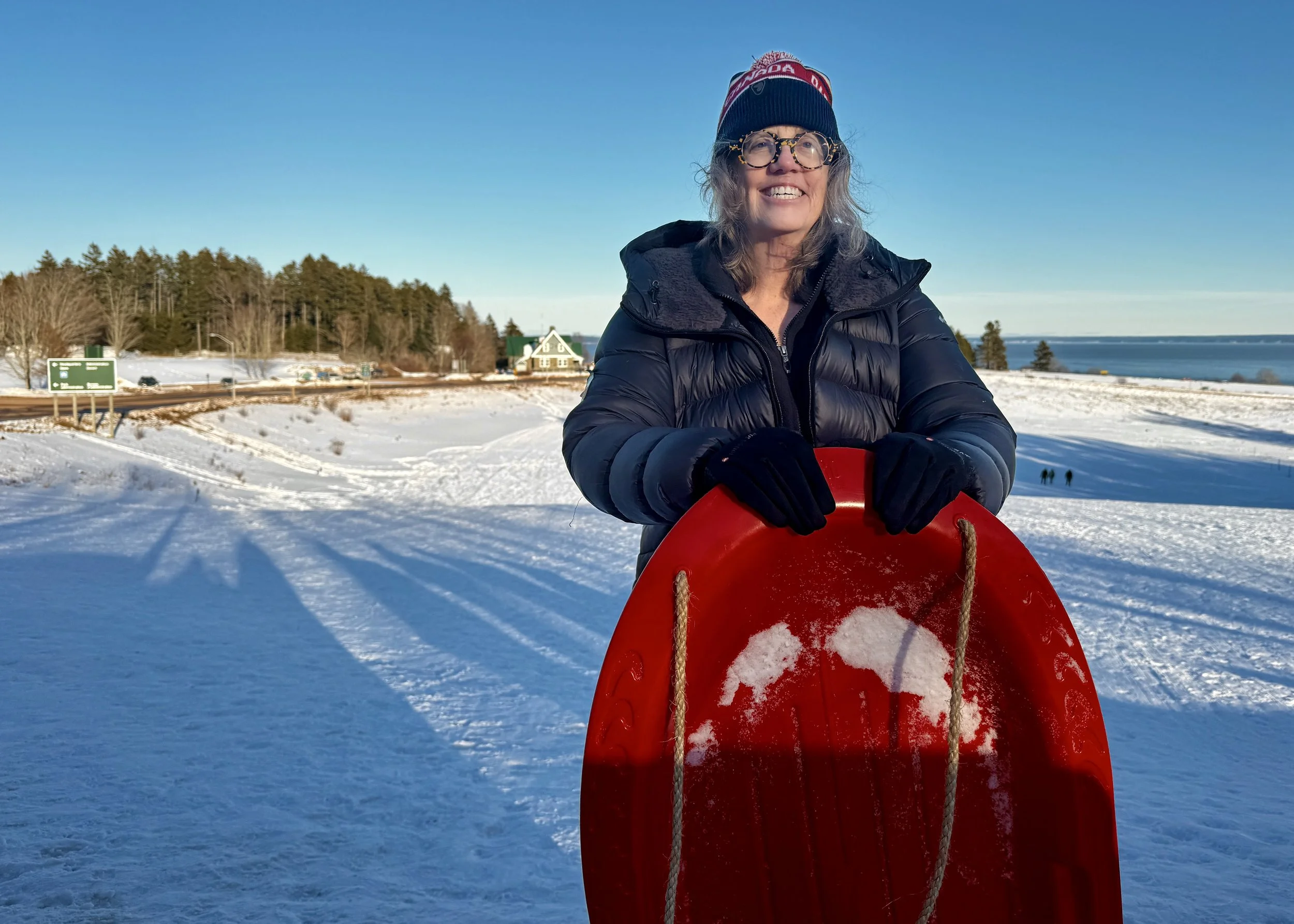
Travel writer Jennifer Bain goes tobogganing at Fundy National Park in New Brunswick in February/Photo courtesy of Jennifer Bain
I was in New Brunswick for a fully, completely Canadian winter.
That meant sleeping in a yurt in Fundy National Park and a refurbished train car in Florenceville-Bristol, watching the World Pond Hockey Championships, feasting on maple taffy at a maple sugar shack, snowmobiling, snowshoeing, ski-shoeing, sleigh riding, tobogganing, hiking and walking the ocean floor in the Bay of Fundy. All in five days.
Icefishing on East Grand Lake was quirkier than expected. Part of the lake is in Canada and part in the United States so you can access it from New Brunswick or Maine and might get slapped with roaming charges. We didn’t take passports and didn’t stray over the invisible border.
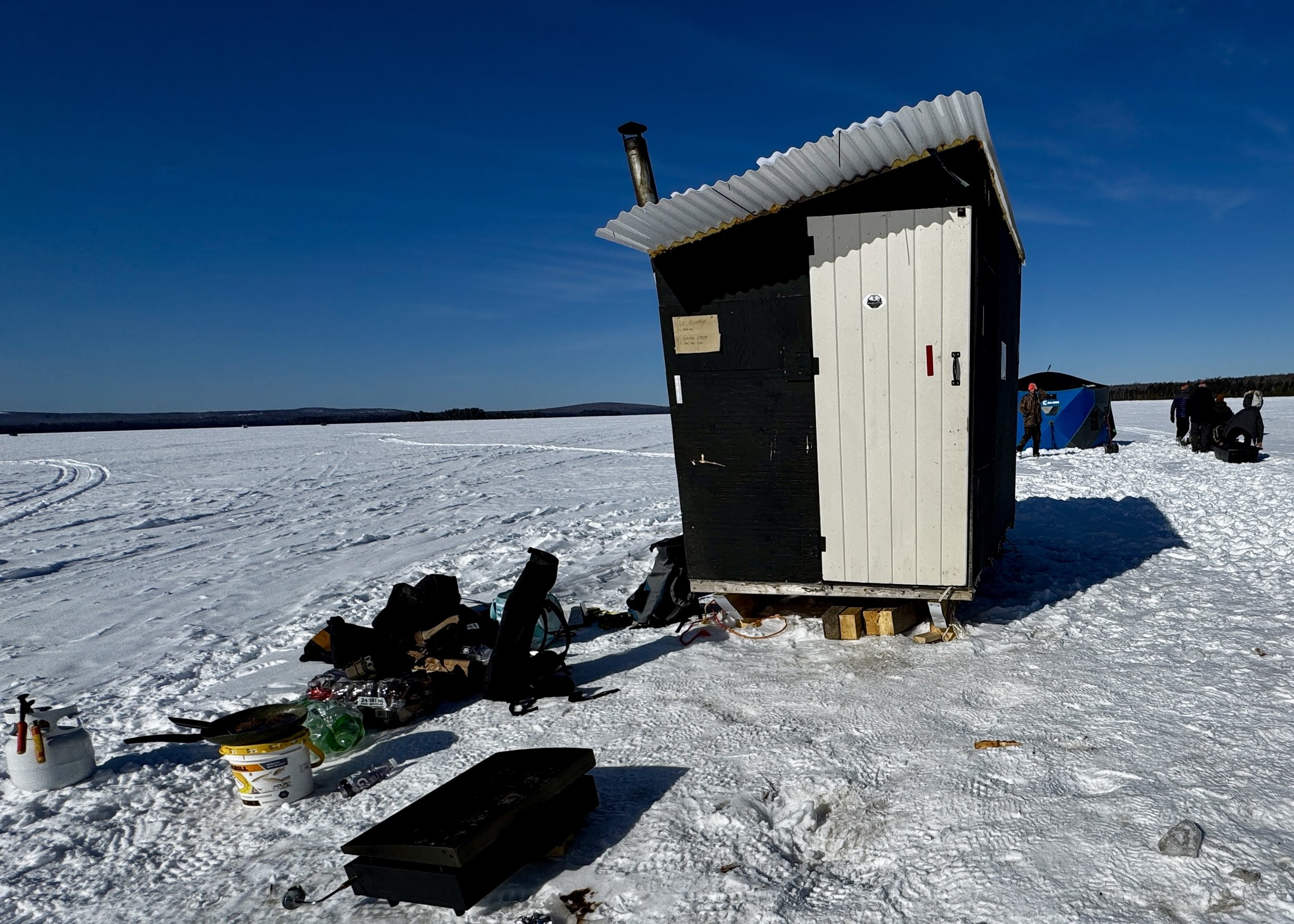
An exterior view of the ice hut we fished in with Fins & Feathers Outfitting on East Grand Lake in New Brunswick in February/Jennifer Bain
A random Canadian fisherman barged into our ice hut, though, to chat about how someone had just tried to steal one of Fins & Feathers ice huts.
Who would do that and why? And how would they disguise it?
“I thought it was odd, too,” the stranger agreed. “We’ve fished here for over 30 years and I never saw an ice hut go missing. But there’s so many people fishing now compared to years ago. Social media kind of changed things. Once you start posting where you’re getting lots of fish and having good luck, well it draws people, right?”
To make a strange story even stranger, Pellerin actually followed snowmobile tracks into the woods at the north end of the lake near the U.S. border and found the hut tipped over and abandoned in deep snow. It took five hours to dig it out, and he’ll now anchor huts with chains instead of ropes, but what a fish tale he has to tell.

A view inside the ice hut we fished in on East Grand Lake in New Brunswick with Fins & Feathers Outfitting/Jennifer Bain
Speaking of fish tales, sitting by the wood stove that day, I reminisced like mad about all the things my dad taught me about fishing and all the wacky experiences I’ve had around the world ever since. So what if many of those tales are fishless?
There was the fishing adventure book I abandoned because it just wasn’t the same fishing without my dad. There was the time I tried to go tuna feeding in Prince Edward Island but the captain made me go tuna fishing instead. There was the time I actually reeled in a giant prehistoric sturgeon — the biggest fish of my life — in British Columbia.
“A bad day fishing is better than a good day at work,” is how the old angling proverb goes.
“You’ve got to have faith — that’s the most important thing with fishing,” is what Pellerin sagely says. “You’ve got to believe in what you’ve got down there.”
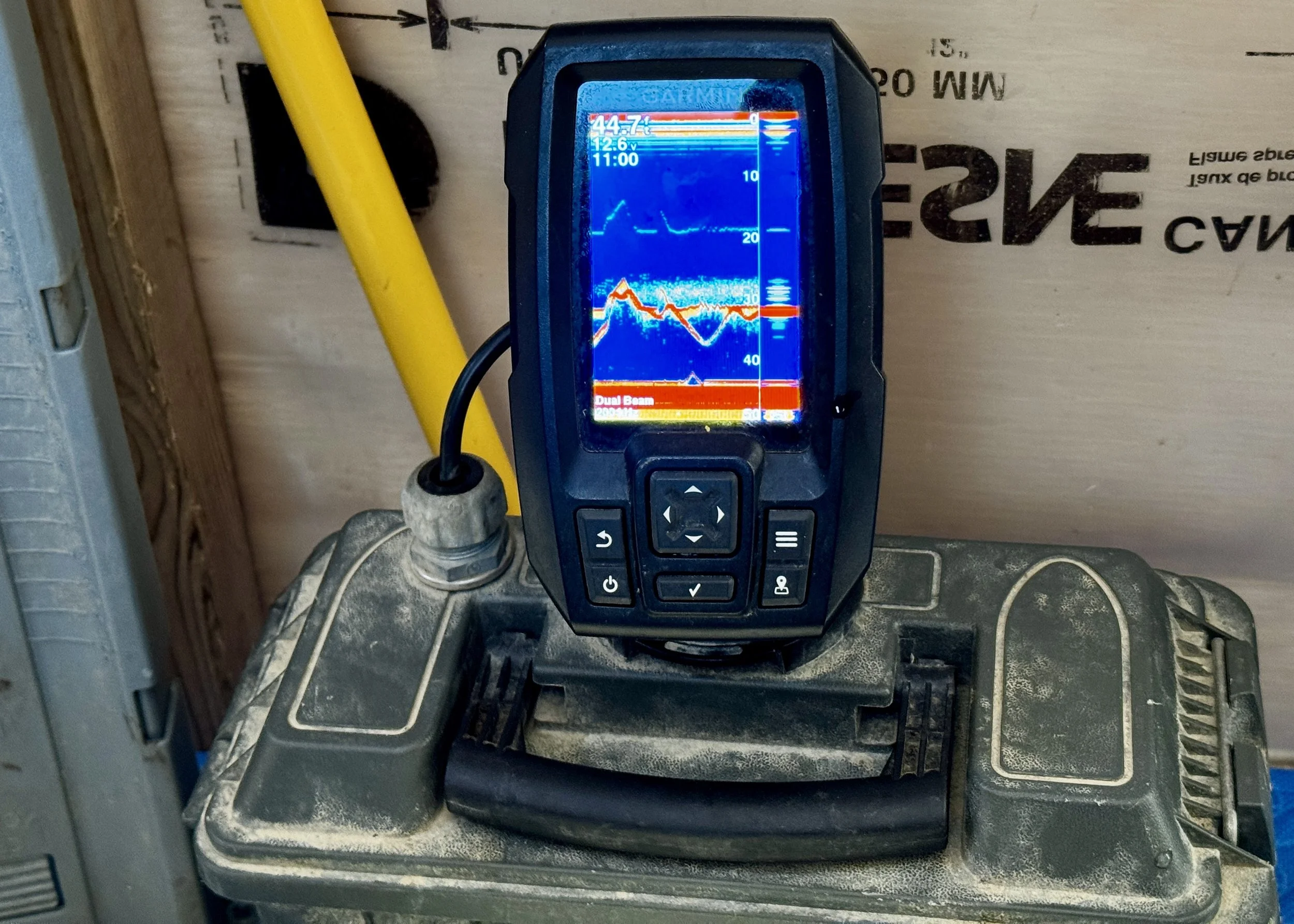
Nowadays, you’re supposed to keep an eye on fish finders to see what’s happening underwater by your lure and bait/Jennifer Bain
The East Grand Lake fish kept stealing my bait without so much as a gentle nudge on the line — I swear. The newfangled fish finder stressed me out so I ignored it. The other guide, Seamus Smith, said he’d once let some ladies pee into the ice holes instead of out on the ice for all to see. That seemed like something strange to do once in case it brought good luck — until I thought it through and realized it was gross.
Eventually I remembered a ritual my dad called “blooding the fish.” A usually law-abiding doctor, he’d pack Labatt Blues for himself and my mom, and pop for me and my brother, and when we caught a fish, we’d get swigs for good luck. This was back in the 1970s and early 1980s. But if we weren’t catching anything, we’d have to “blood the fish in advance.”
Weirdly, nobody I’ve met since has ever heard the term “blooding the fish.” Let me know if you have.
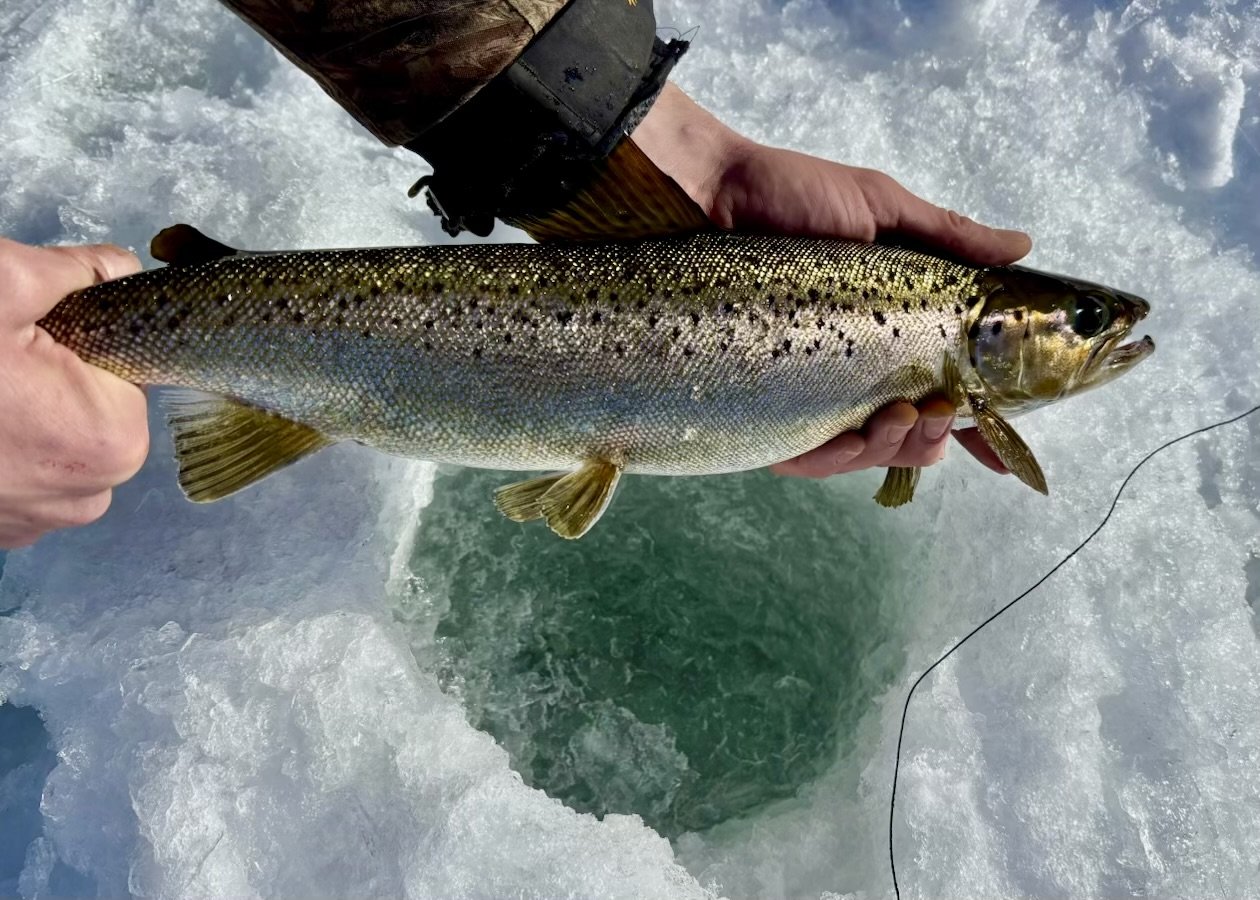
The landlocked salmon that my fishing companion caught and returned to East Grand Lake/Guy Thériault
Part way through our day on East Grand Lake, Smith snowmobiled to the door with urgent news.
“We’ve got a flag up on a tip-up over here if one of you guys wants to come and check it out,” he said. Parks Canada’s Guy Thériault, one of my four fishing companions, jumped on the snowmobile and went to reel in a landlocked salmon.
“It was too nice of a fish to bring it back,” Thériault claimed when he returned empty-handed. “It was gorgeous.” It sounded like another fish tale but he had the stinky hands and photos to prove it.
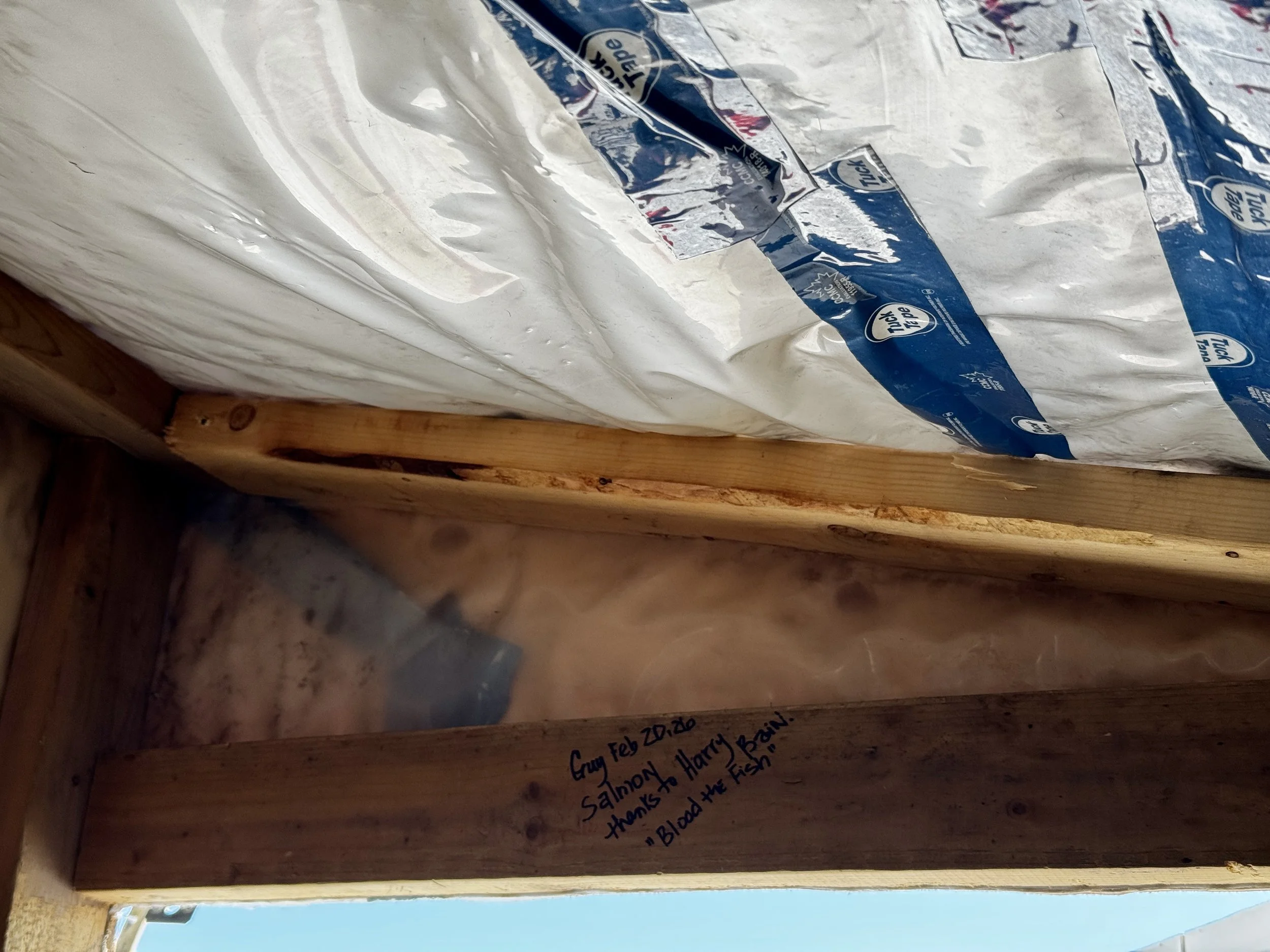
Above the door in a Fins & Feathers Outfitting ice hut in New Brunswick, my dad is honoured/Jennifer Bain
Since Thériault caught the only fish of the day, he got to sign and date the ice hut wall with a Sharpie.
“Salmon thanks to Harry `Blood the Fish’ Bain,” he wrote, and I know my dad would have been secretly tickled to know his name lives on in an ice hut somewhere in New Brunswick.
For a split second I felt bad that I couldn’t honour my dad by drinking Canadian beer, but as I took a swig of licorice tea from my insulated water bottle, I remembered how much he loved black licorice and realized that my drink actually made perfect sense.
Coming Apr. 6: Bain There, Done That shares YYZ hacks.
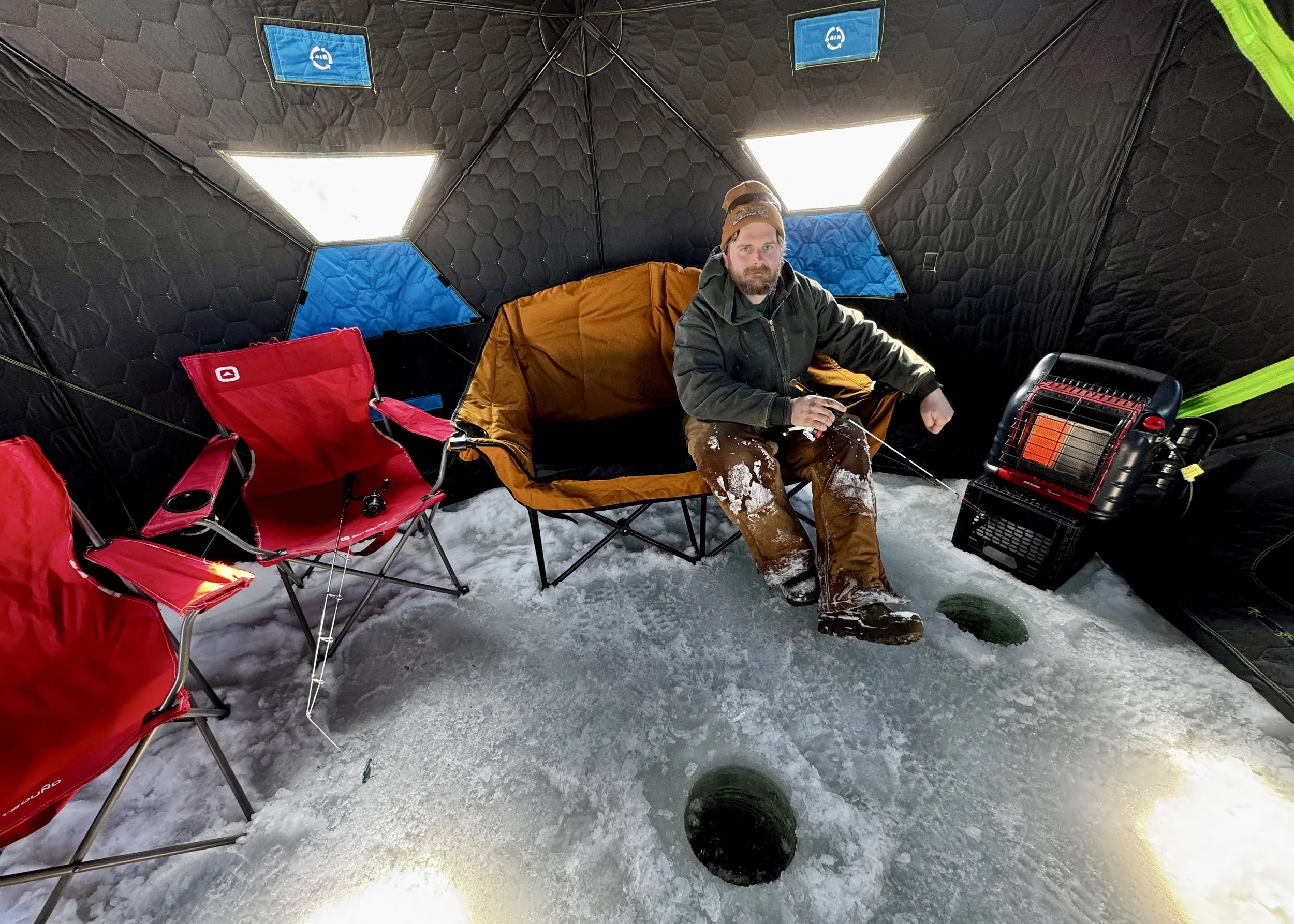
Fins & Feathers Outfitting guide Patrick Pellerin spends a moment in a portable ice fishing shelter/Jennifer Bain