
Bain There, Done That: Hiking to La Manche Suspension Bridge
By Jennifer Bain | Published June 1, 2026
Bain There, Done That is Jennifer Bain’s bi-weekly column about travelling Canada in search of quirk.
Subscribe to the Modern Traveller Newsletter to get terrific travel articles like this one straight to your inbox!
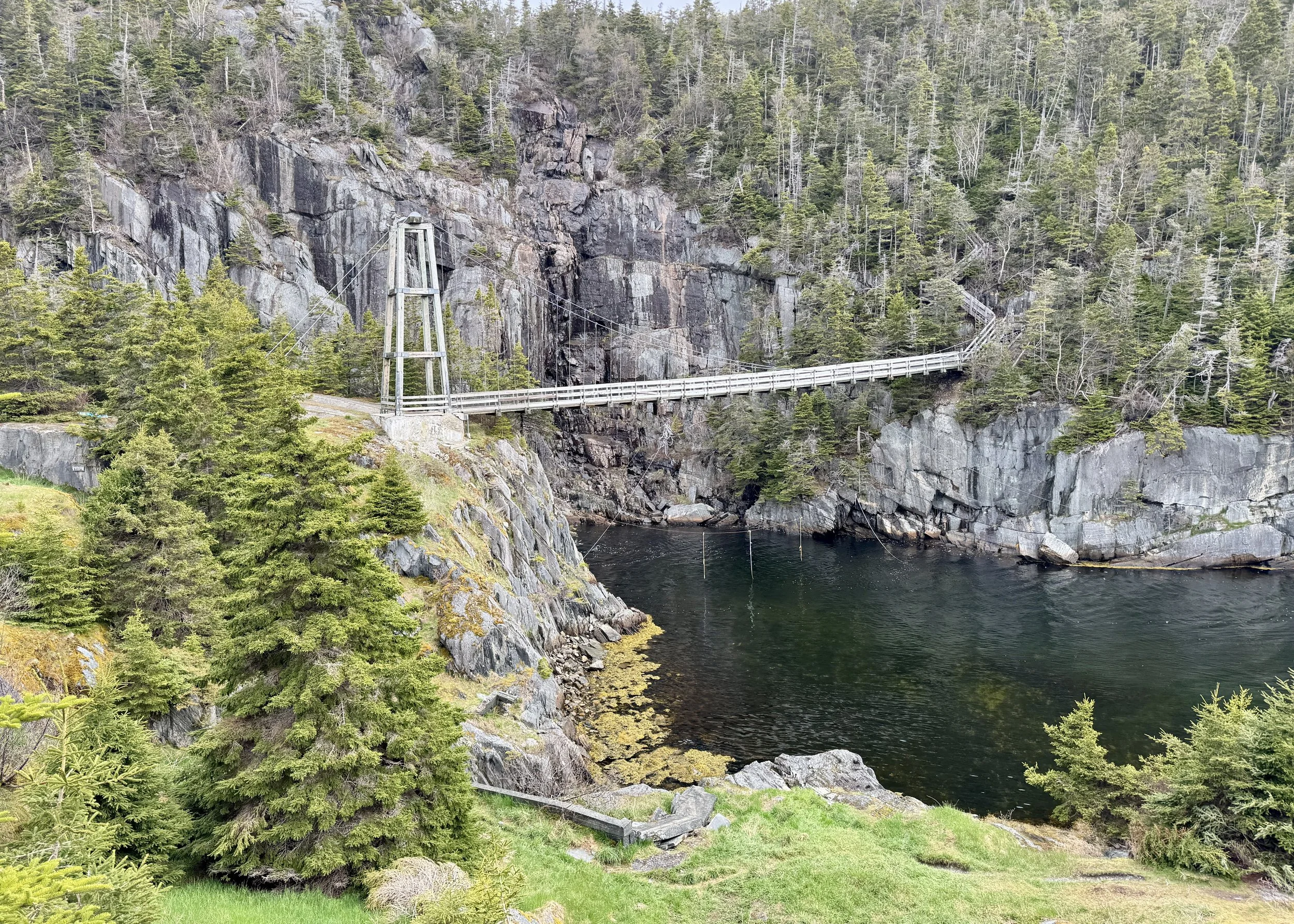
La Manche Suspension Bridge is the star of La Manche Provincial Park south of St. John’s, Newfoundland along the Irish Loop/Jennifer Bain
Early one morning during Newfoundland’s iceberg season, in between a miserable day of rain and an unwelcome blizzard, I sauntered alone through a boreal forest looking for a suspension bridge.
My friend Merlin (yes, the bird ID app) told me there were exotic-sounding Golden-crowned Kinglets nearby, but I didn’t stand still long enough to spot any and the only songbirds I recognized without help were Black-capped Chickadees.
Wrong turns, I’ve made a few. So when I came to a wooden East Coast Trail sign bolted into rock, I obediently started in the direction the arrow pointed, defiantly doubled back realizing the sign didn’t say “bridge,” and then flip-flopped again and let myself trust the confusing signage.
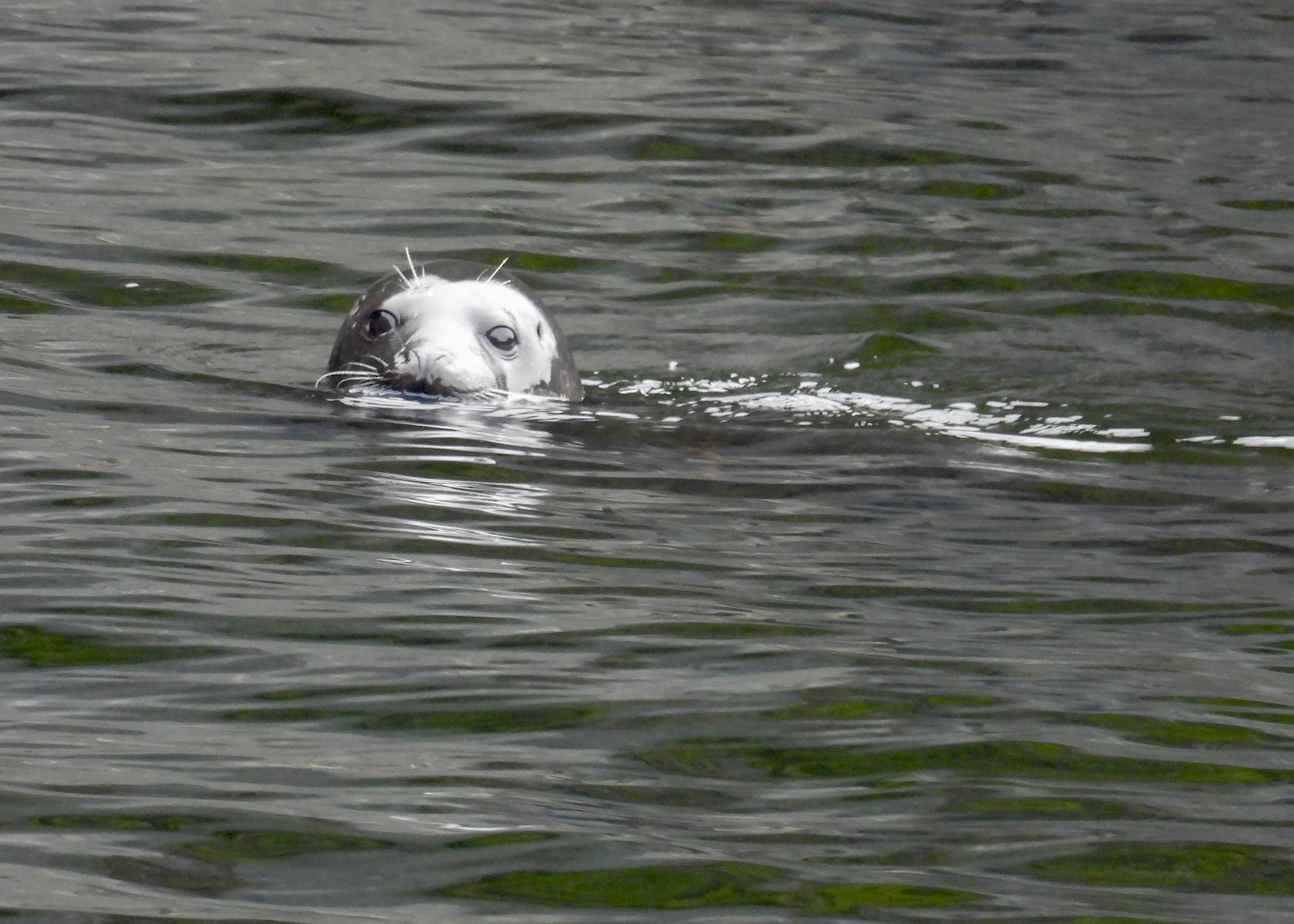
A curious harbour seal frolics in the sea beneath La Manche Suspension Bridge/Jennifer Bain
La Manche Suspension Bridge — spanning a gorge and separating the bay of an ocean and the mouth of a river — stood ready to greet a new day’s worth of walkers. It swayed as if with delight as I crossed over it to read a plaque that quotes a Scottish poet.
“There are things we will never see, unless we walk to them.”
If only Thomas A. Clark, author of the prose poem “In Praise of Walking,” were here to enjoy this beautiful bridge and the sea dog under it.
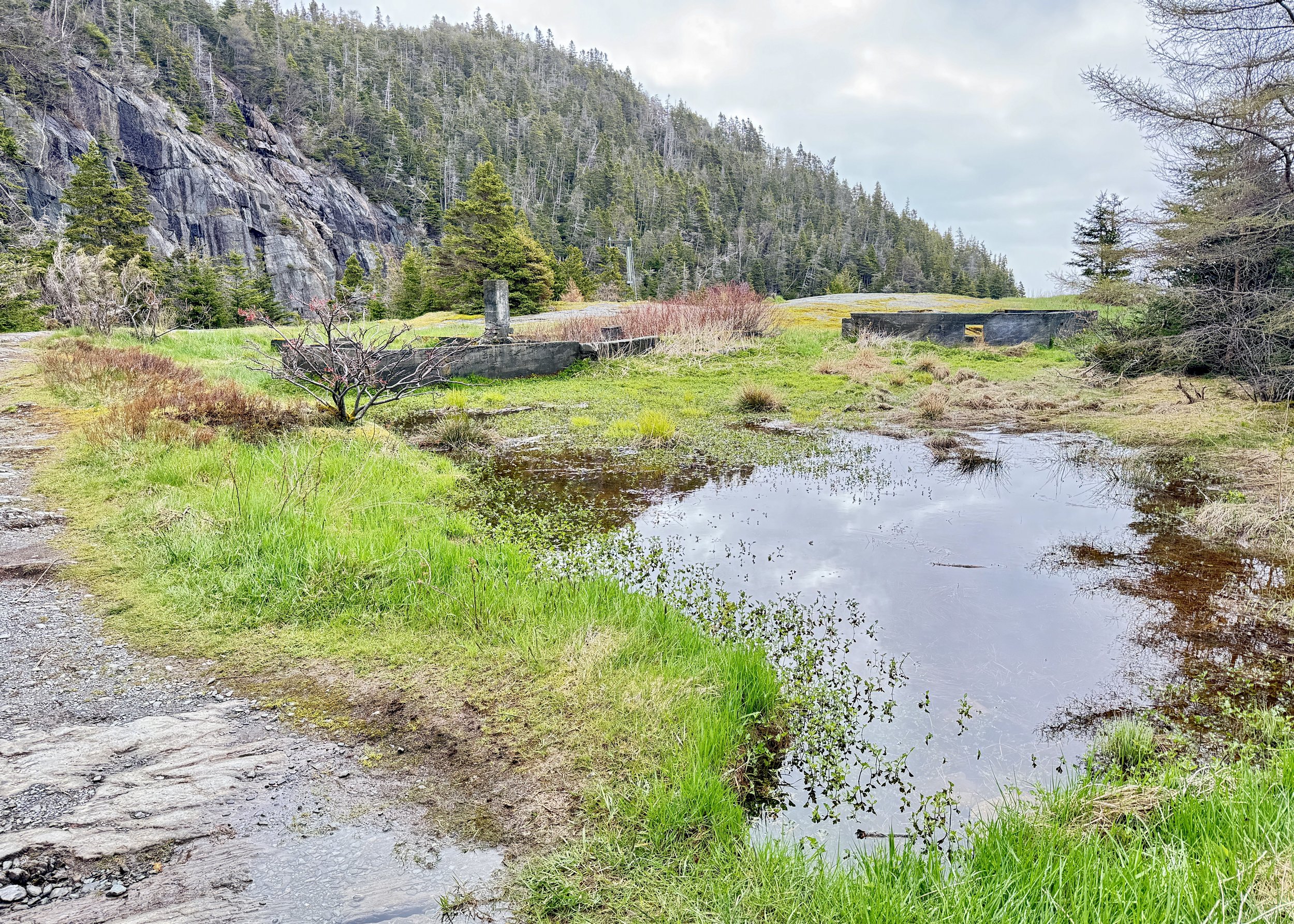
On the south side of La Manche Suspension Bridge are the remains of a fishing village called La Manche/Jennifer Bain
The East Coast Trail Association plaque describes how waves destroyed the original suspension bridge here during a fierce winter storm on Jan. 28, 1966. It erected this 50-metre bridge in 1999, officially opened it June 17, 2000, and dedicated it to former La Manche village residents, many of whom resettled in nearby communities.
More on resettlement shortly, because I know you’re curious about the sea dog.
I spotted it enjoying a solitary swim on the ocean side of the bridge, and identified it as a harbour seal because of its dark, soulful eyes and dog-like snout. It tolerated me long enough for a few photos and then skedaddled as three more humans arrived.
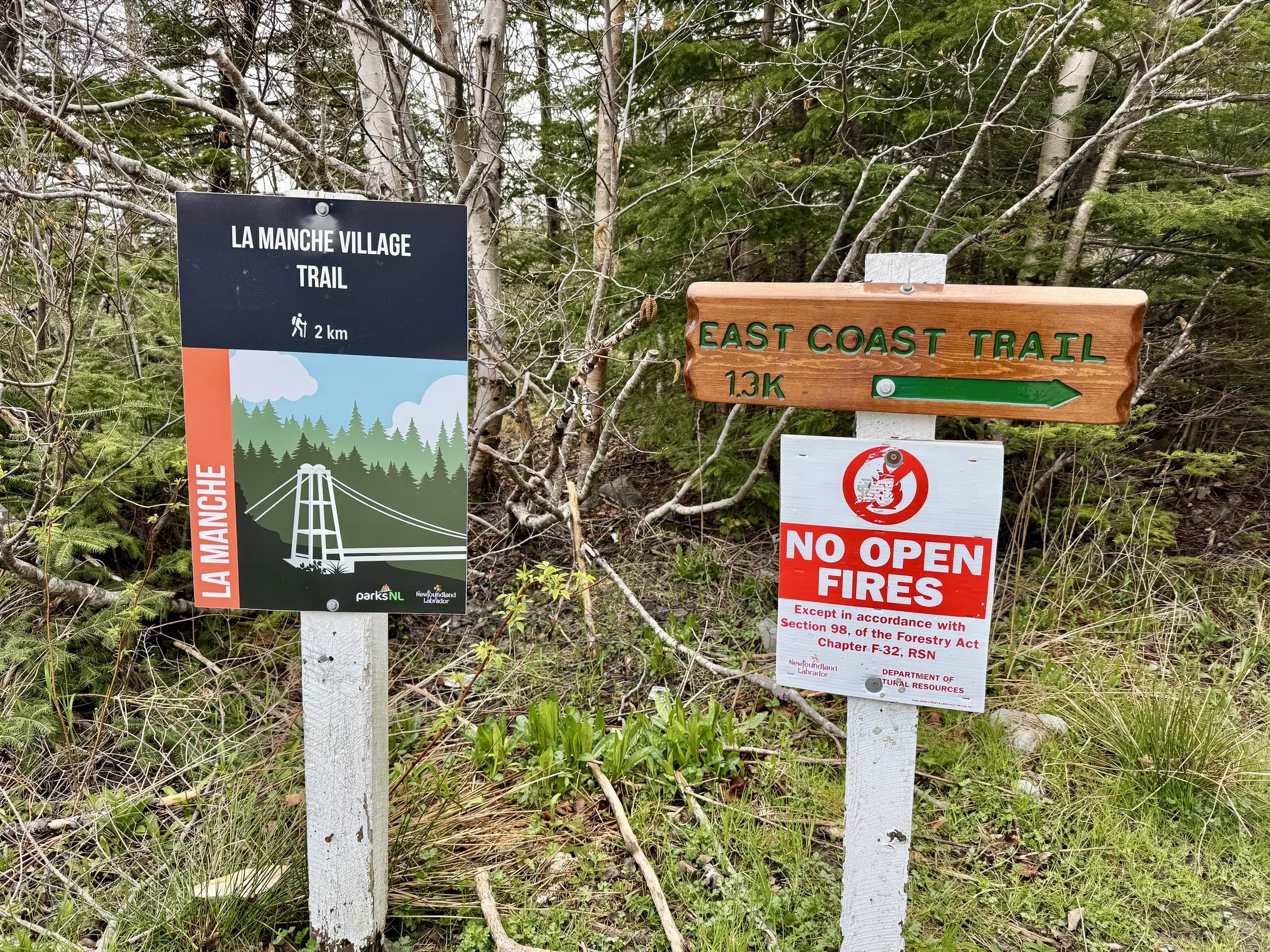
The easiest way to see La Manche Suspension Bridge is via what La Manche Provincial Park calls La Manche Village Trail (not to be confused with the East Coast Trail’s La Manche Village Path)/Jennifer Bain
To think, I almost gave up on one of Newfoundland and Labrador’s iconic walks before it began, even though it’s readily accessible from St. John’s along the Irish Loop.
See, I feared hiking a 6.4-kilometre chunk of the East Coast Trail called La Manche Village Path from Tors Cove to La Manche Village — and then having to hike it back for another 6.4 kilometres. Alone. In shoulder season’s mucky weather. When the trails might be empty.
“Expect uneven terrain, steep climbs and descents,” warn the East Coast Trail folks. “Wear hiking boots/shoes with good ankle support. Wear clothing in layers. Use of maps or GPS is strongly advised. Cell service is intermittent — do not rely on it. Be prepared for emergencies. Bring water, snacks and basic fire aid supplies.”
Yeah, no.
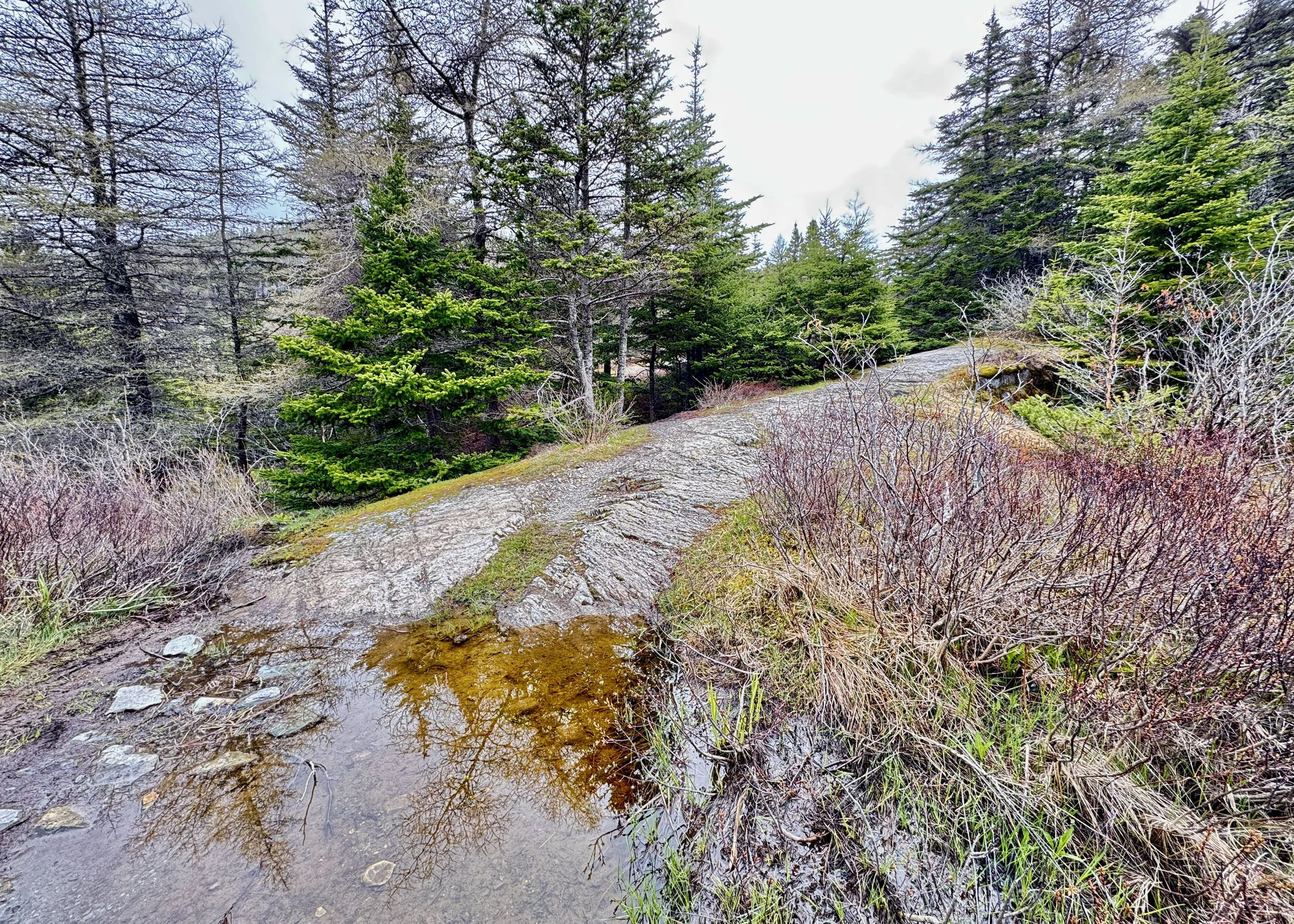
The trail to La Manche Suspension Bridge meanders through boreal forest/Jennifer Bain
But once I was settled into Cliffs Edge Retreat and was ruminating from my deck about the lost opportunity, I realized I could start from where I was in Bauline East (aka Bauline South) for a manageable 5.4-kilometre return hike.
Still, the lack of a map and conflicting information on how long this version of the hike takes gave me pause.
EventuallyI figured out you can start south (not north) of the bridge for an even shorter and more popular hike from either La Manche Provincial Park or — better yet — the free gravel parking lot at the end of La Manche Road.
Yes b’y (absolutely).
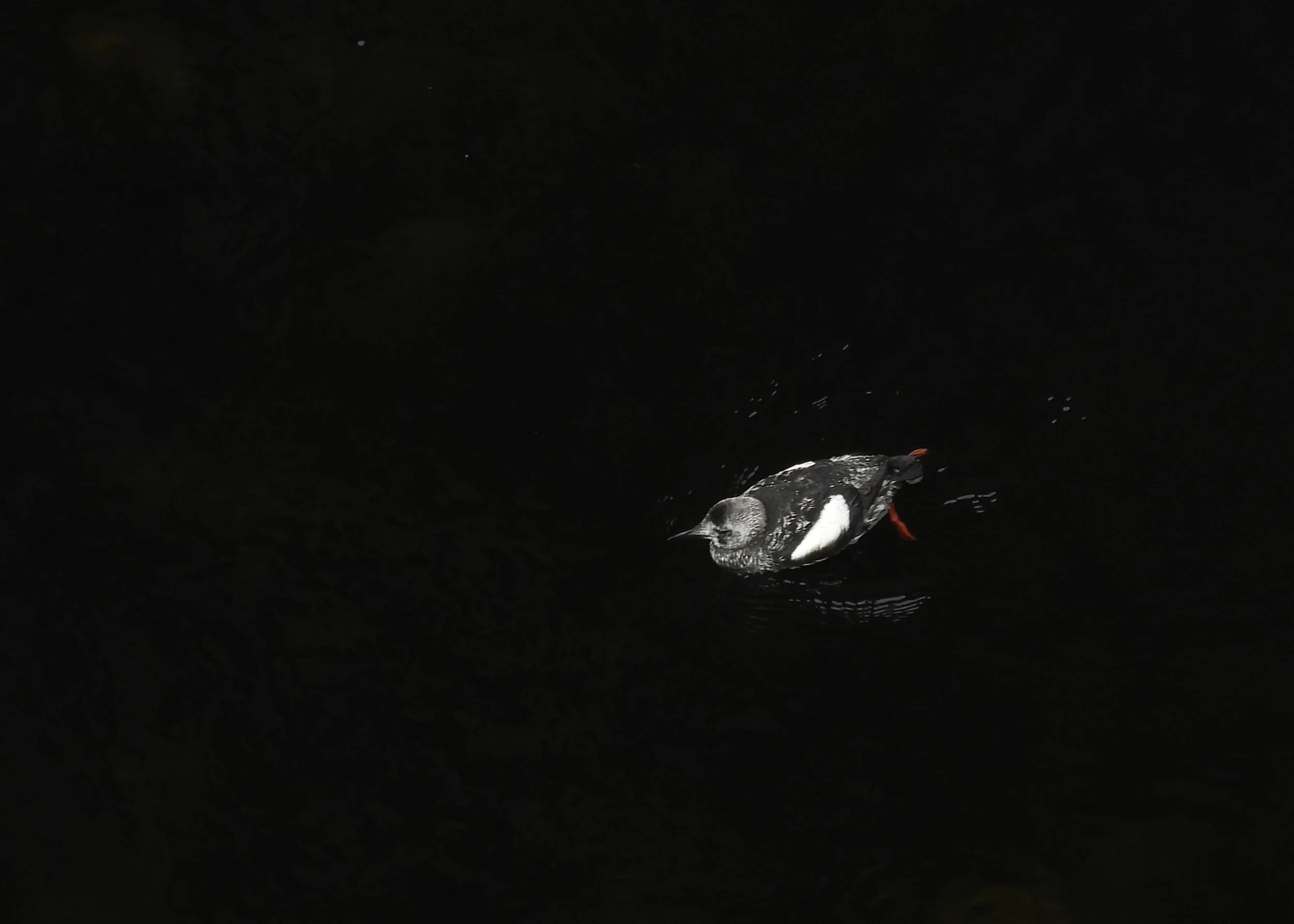
A juvenile Black Guillemot is observed in the sea beneath La Manche Suspension Bridge/Jennifer Bain
Standing on that swaying suspension bridge less than 30 minutes into my solo walk in the woods, I regaled those three fellow walkers with the story of my sea dog as we watched a plucky juvenile Black Guillemot ride the current below us.
Then I wandered among the remnants of the fishing village that once anchored this challenging location.
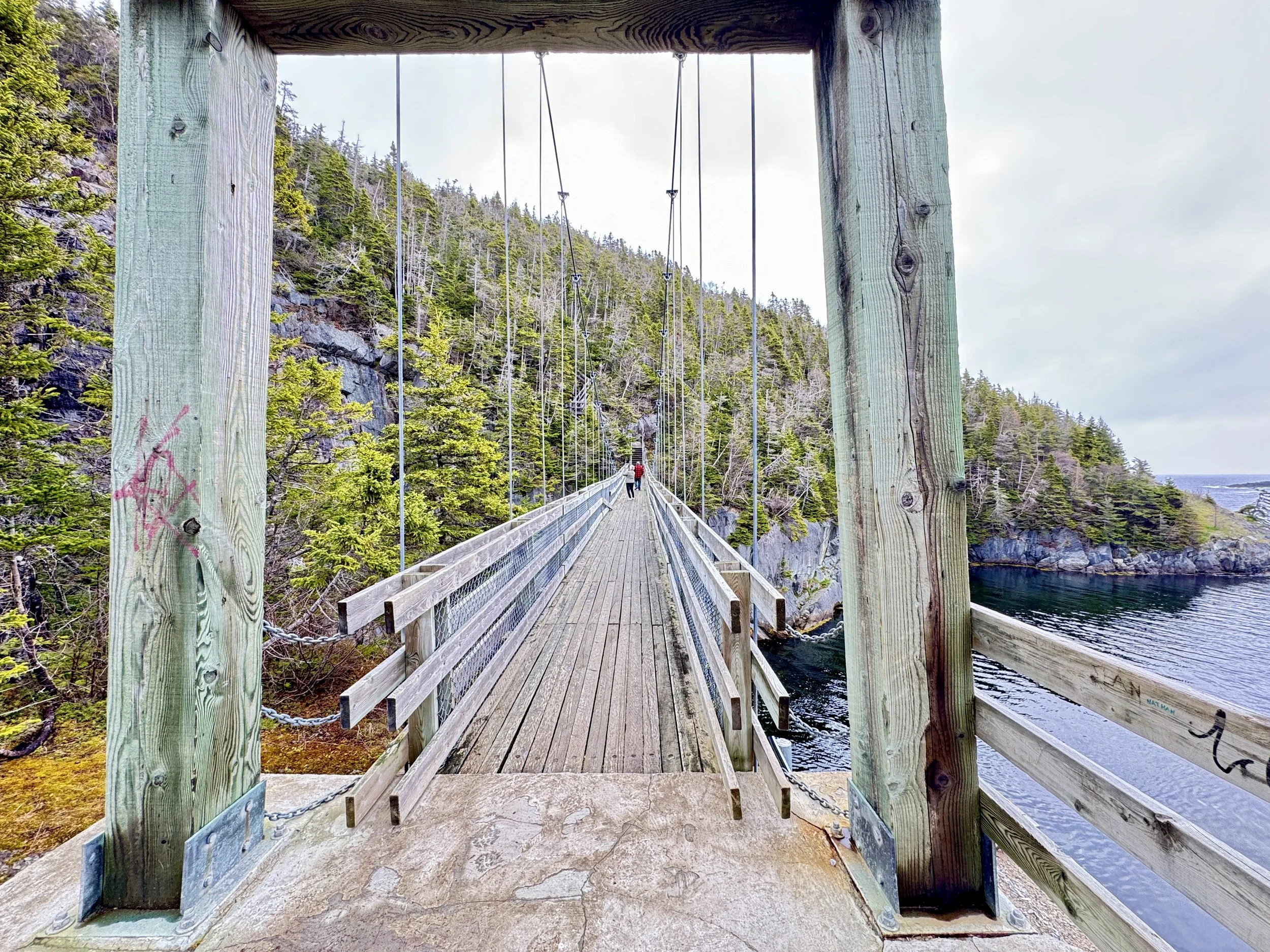
People are drawn to hike to this gorgeous suspension bridge just south of St. John’s, Newfoundland/Jennifer Bain
The French call the English Channel “la Manche” (the sleeve) because of how it narrows and looks like a tapered shirt or coat sleeve. Apparently French fishermen drawn to Newfoundland for its cod used the same name for this small inlet with high sides.
A fellow named George Melvin reportedly became the first permanent settler here when he arrived around 1840 from nearby Burnt Cove. With limited land, La Manche only swelled to 54 by the time Newfoundland joined Canada in 1949.
And then along came a controversial government initiative that relocated some 30,000 people from isolated coastal outports to larger “growth centres” for more affordable modern services.
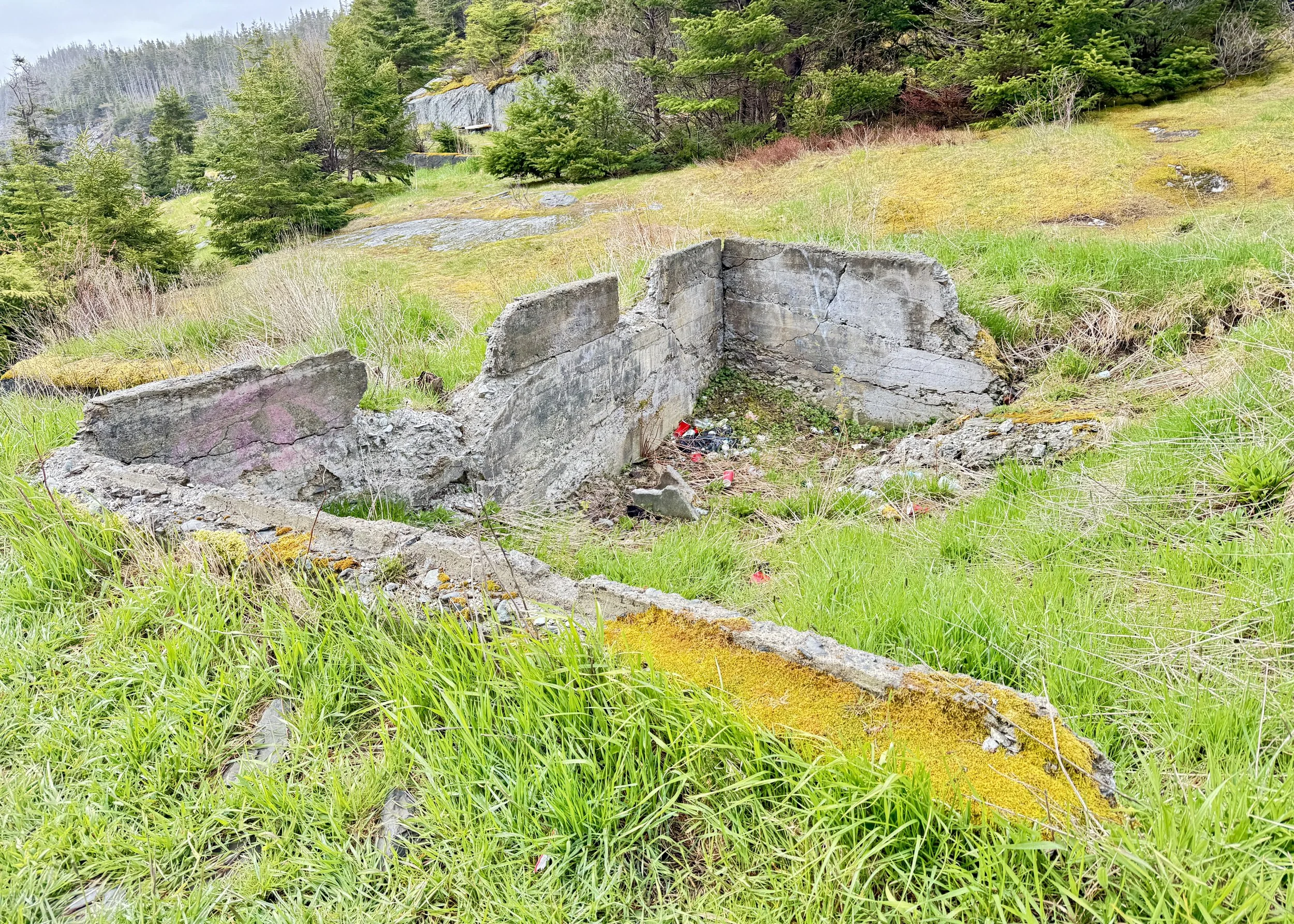
All that’s left of a home or outbuilding that was once used by a fishing family in La Manche village/Jennifer Bain
“Although a majority of residents were apparently opposed to resettlement, the closure of the school and the continuing isolation of the community prompted some to leave,” Memorial University of Newfoundland says of La Manche in its Maritime History Archive.
“By 1961 the population had fallen to 25. Others continued to reject the notion of resettlement, but their resolve gave way in 1966 when a severe storm demolished the community’s extensive network of stages and wharves.”
I’m glad the university helps paint a picture of La Manche because there aren’t any interpretive signs here to tell people why the foundations of a few abandoned homes and outbuildings matter.
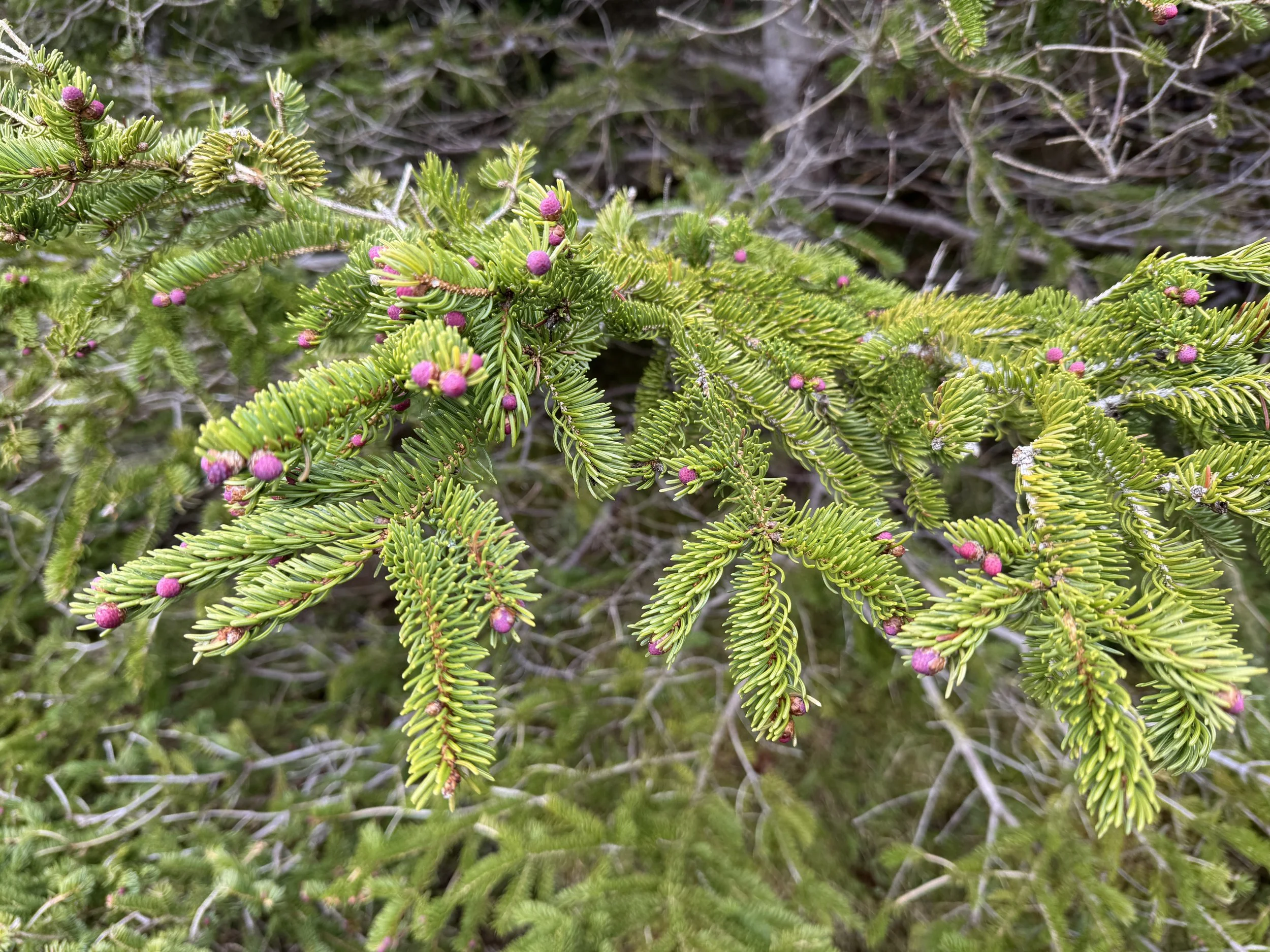
Spruce pine cones can resemble tiny rosebuds when they are budding/Jennifer Bain
“There are things we will never see, unless we walk to them,” said Clark, and I picture the poet thinking his way through Newfoundland’s boreal forests without needing maps and signs like the rest of us to make sense of the world.
Retracing my steps was a cinch now that I knew what to do at the East Coast Trail marker bolted into rock on the forest floor, even though it was at a three-way fork and didn’t also point to the parking lot.
Confident I would find my way, I slowed down and took in more.
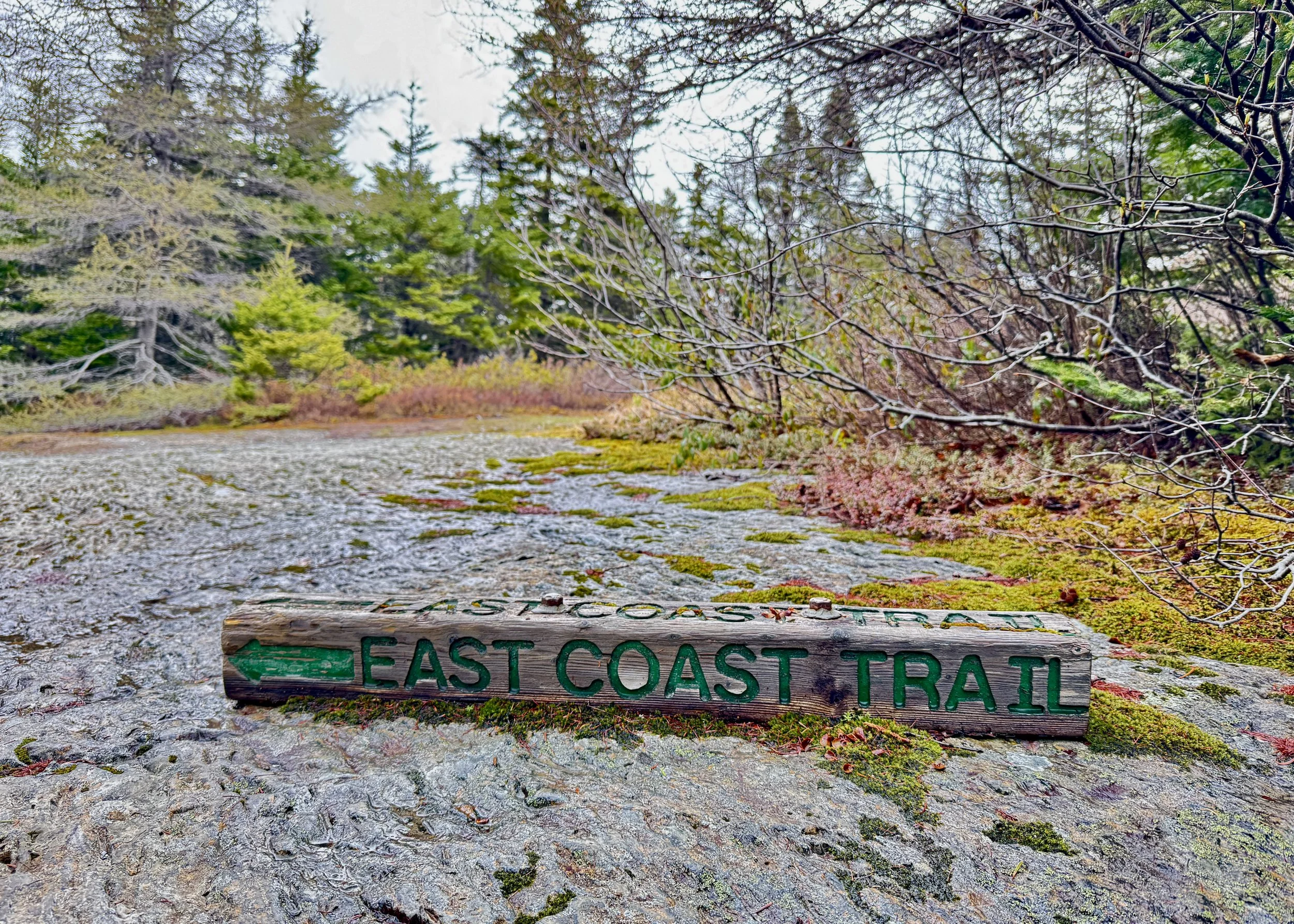
To get to La Manche Suspension Bridge, one option is to start on a provincial park trail and wind up on the East Coast Trail/Jennifer Bain
There were gorgeous baby pink cone budding on spruce trees.
There was a chunk of ice floating in the harbour that could well have been a bergy bit that had broken off a nearby iceberg.
There were American Robins, a song bird that’s so common I almost neglected to stop and admire it.
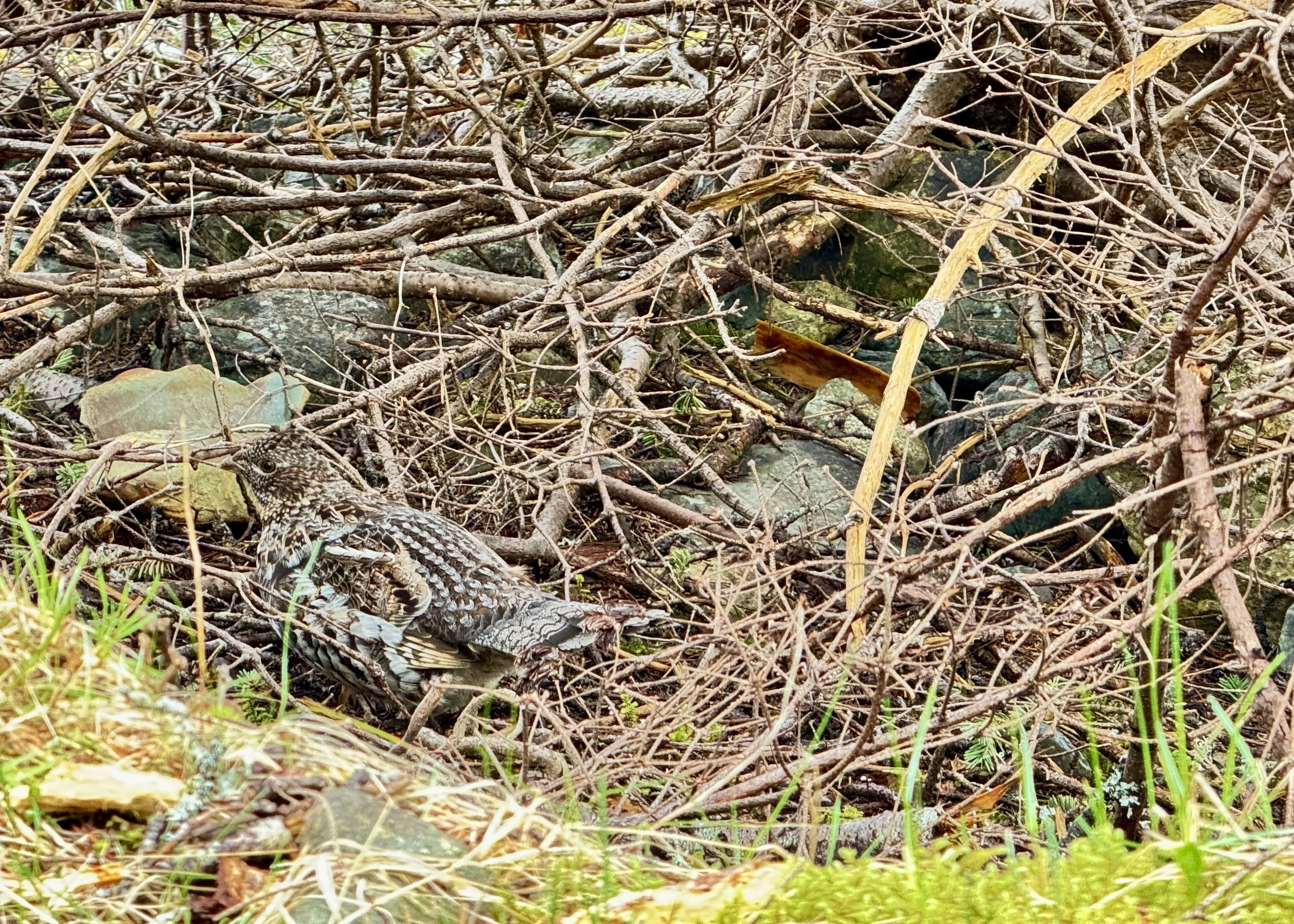
Spot the Ruffed Grouse just steps off the trail. It’s foraging and doesn’t realize how visible it is/Jennifer Bain
My friend Merlin (the bird ID app) told me there were Black-throated Green Warblers in the forest, and while on high alert for moose, I spotted a Ruffed Grouse foraging beside the trail.
It didn’t notice me snapping photos, then blithely wandered into the underbrush waving its fan-shaped tail.
Back at the parking lot, my lone car was now flanked by two others. I had walked for just 75 minutes and seen so much. It was only 9:22 a.m. and the rest of the day beckoned.
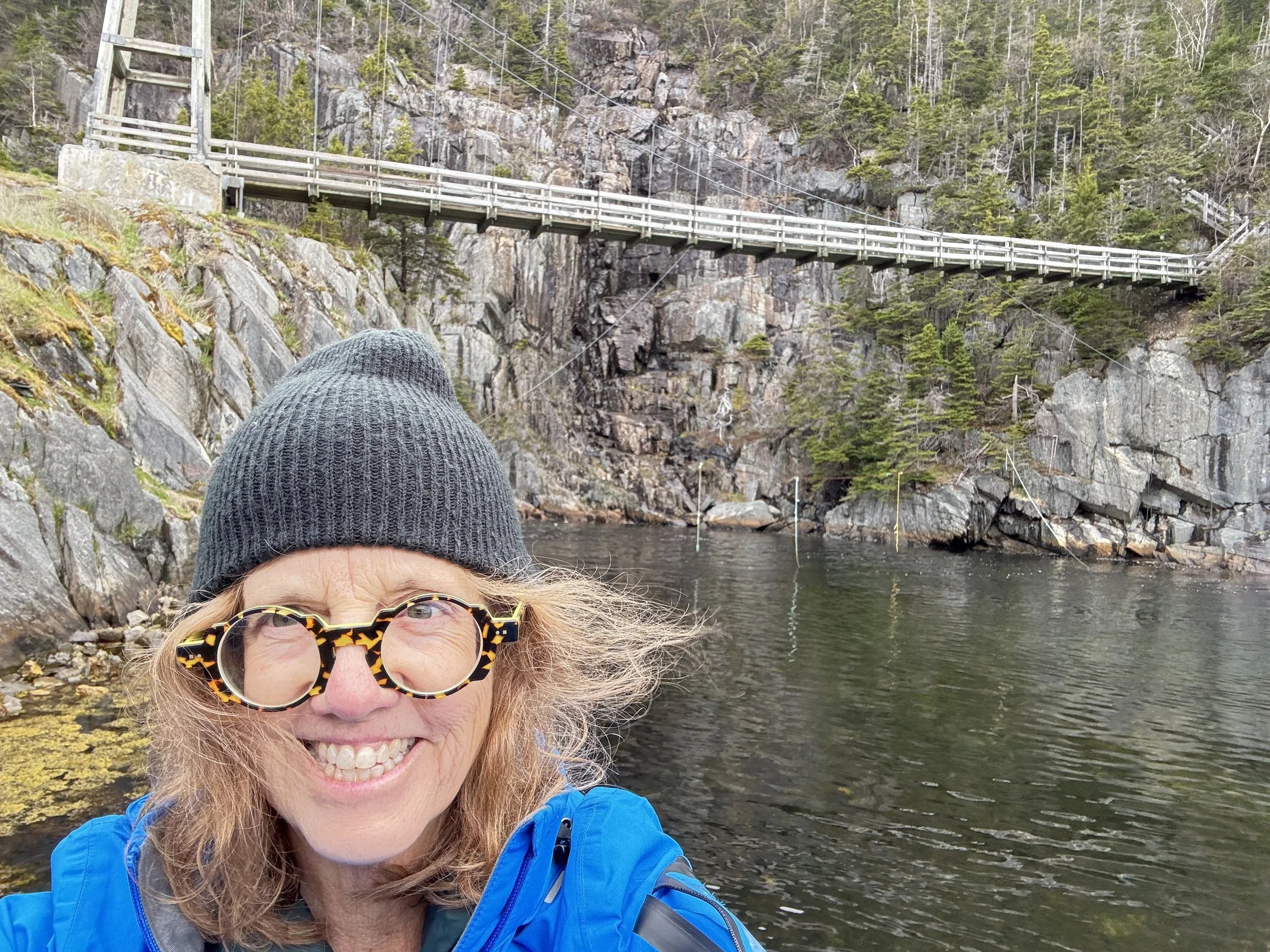
Writer Jennifer Bain stands under La Manche Suspension Bridge on a chilly day in May in Newfoundland/Jennifer Bain