
Bain There, Done That: Making Bagels in Montréal
By Jennifer Bain | Published May 4, 2026
Bain There, Done That is Jennifer Bain’s bi-weekly column about travelling Canada in search of quirk.
Subscribe to the Modern Traveller Newsletter to get terrific travel articles like this one straight to your inbox!
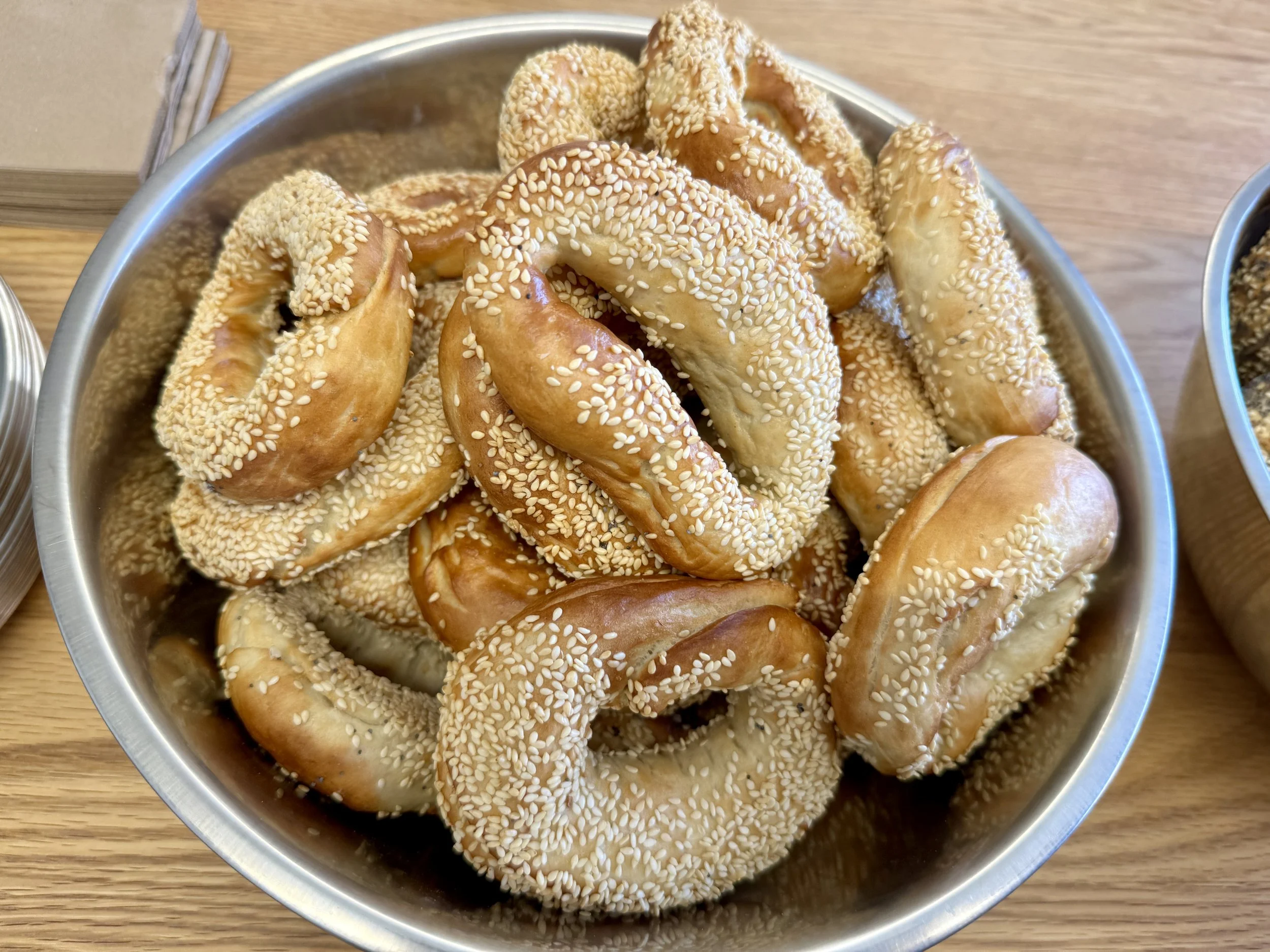
The bowl of beautiful sesame Montréal bagels bagels we made at Will Paquet’s Bagel Class in Montréal this spring/Jennifer Bain
I thought I knew Montréal bagels.
How foolish to think that randomly eating them meant this Torontonian was doing it right. So thanks to Will Paquet for setting me straight, and to my son for finding Paquet’s Bagel Class while Googling what to do in Montréal.
“Have we all tried a Montréal bagel? Done some research?” Paquet said to kick off the two-hour workshop in a historic building where Cadbury once made chocolate. “What was the verdict?”
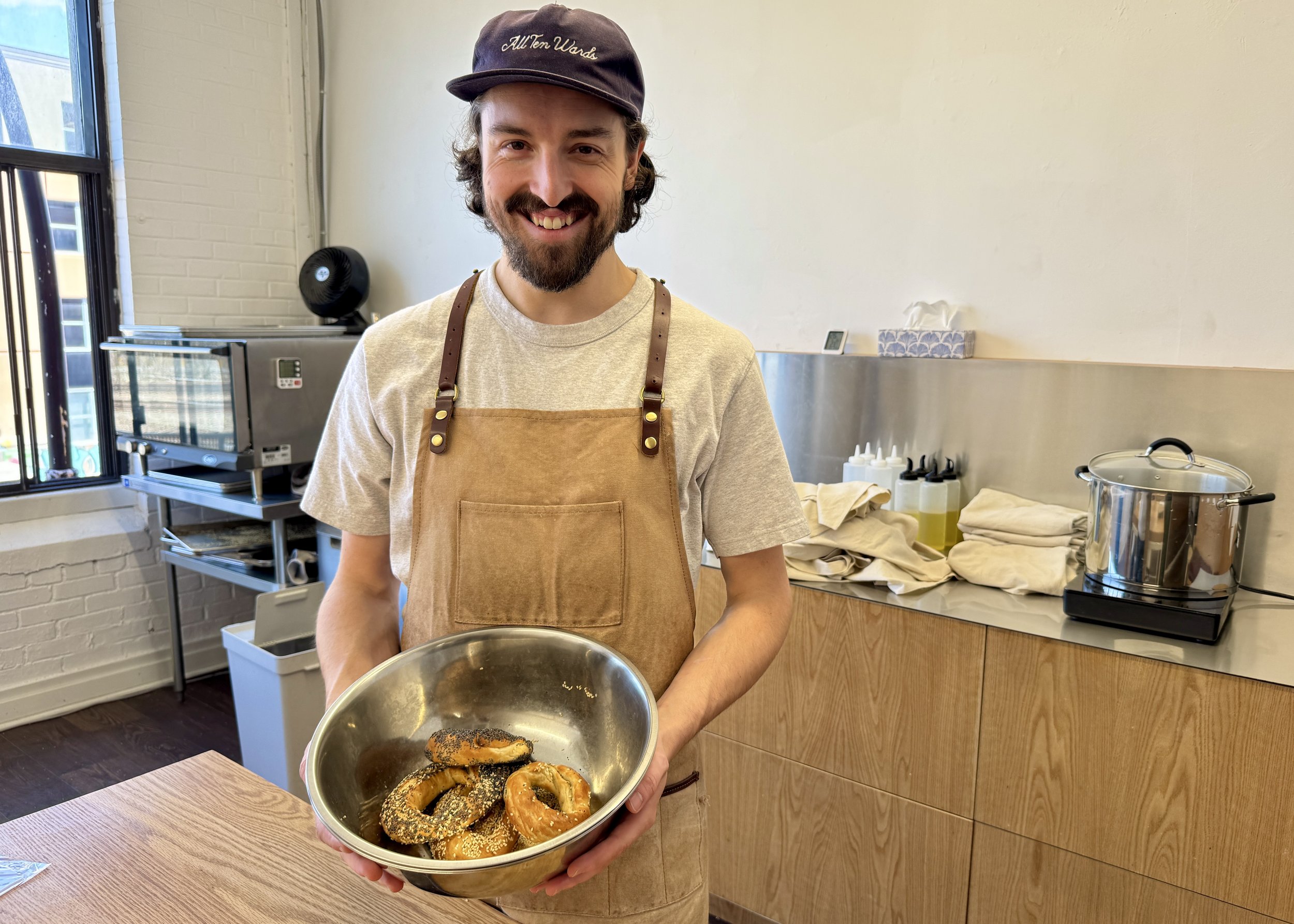
Will Paquet runs the Bagel Class in Montréal, teaching people every morning and every afternoon how to make bagels in just two hours/Jennifer Bain
We were the only Canadians that April morning so held back while two of our American classmates enthused about visiting rivals St-Viateur Bagel and Fairmount Bagel.
“Did you split — one goes to one, the other goes to the other and then you meet in the middle?” Paquet probed. “Because if you pick one up it’s still hot and if you walk to the other, then you pick another up still hot, the second one is going to win.”
The American couple went to the shops consecutively and ate bagels at each while hot — exactly what I’ve always done. I’m often alone but even this time I don’t want to send my kid on a solo bagel mission in a strange city.
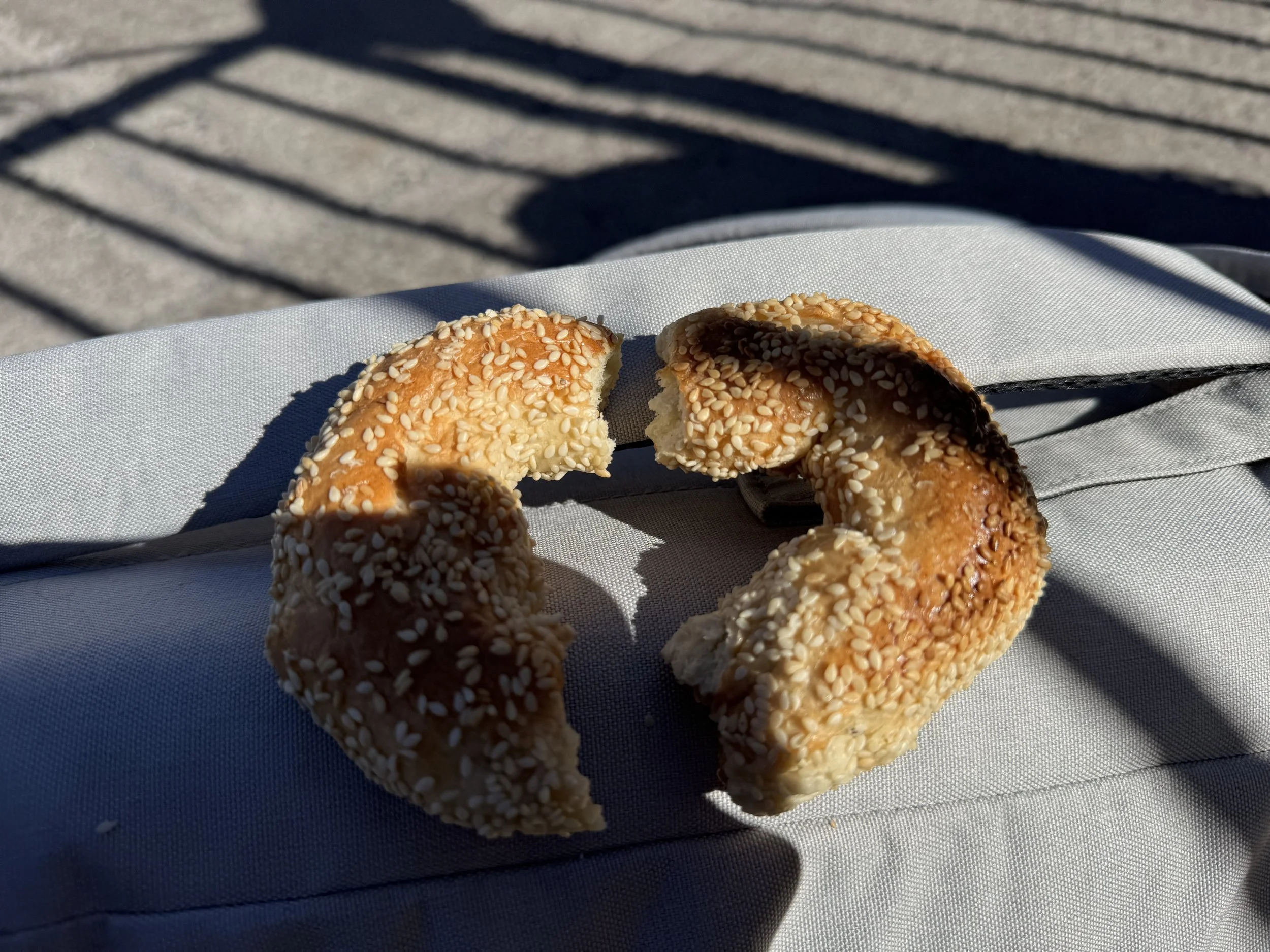
It’s hard to compare a lukewarm St-Viateur bagel (left) with a hot Fairmount bagel (right). The shops are 10 minutes apart/Jennifer Bain
Anyway, Paquet went on to explain that New Yorkers usually buy bagels at delis and expect cream cheese and other toppings that turn them into sandwiches, while Montrealers like them hot out of the oven and treat them like pastries.
“So if you go to the bakery, locals demand to get a bagel that’s still hot and then it’s prime time. You crush it as it is. If you grab a dozen still hot, you crush three or four on the drive home, okay? Once it’s cooled down, you can do whatever you want. But if it’s hot out of the oven — pastry. Okay. Does that make sense?”
Why yes it does.
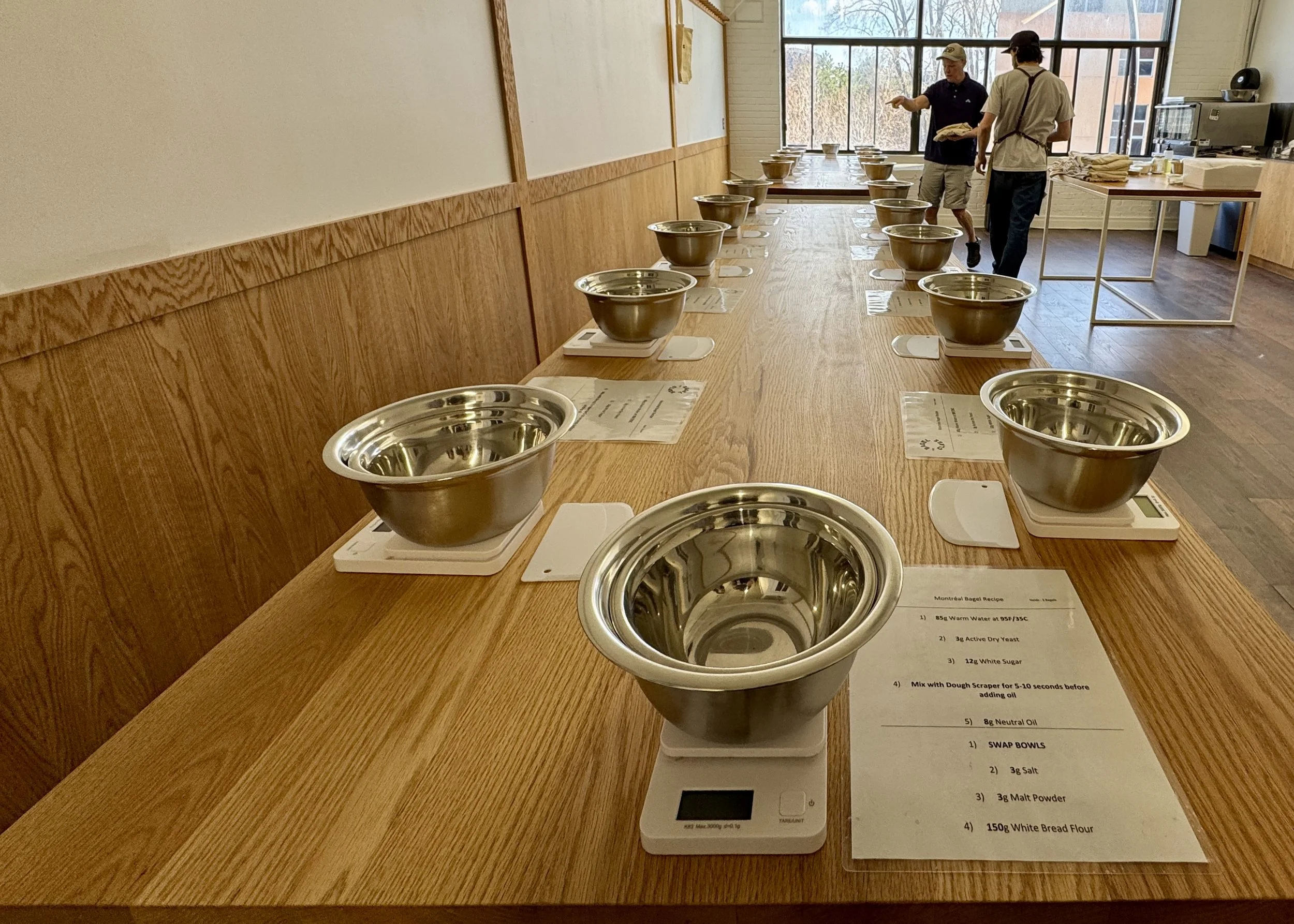
The Bagel Class happens in a sunny loft in a former chocolate factory building. Each student gets a cooking station/Jennifer Bain
Now about the class itself. I’m a newspaper food editor and cookbook author turned travel writer who has taken cooking classes around the world and hates it when they turn out to be demonstrations or — worse — don’t even hand out recipes.
That’s why it was a relief to walk into the spotless and sun-splashed cooking studio and see recipes, mixing bowls, dough scrapers and scales at each cooking station.
“We are individually making three bagels,” Paquet explained. “Take all the bagels with you. Don’t leave me with bagels. I will also leave you with the full recipe at the end. It’ll give you the classic dozen. You can half or double, whatevs.”
He spoke with the confidence of a baking instructor who’s been doing this for eight years and presides over two classes a day. I can’t even fathom how many people he has taught.
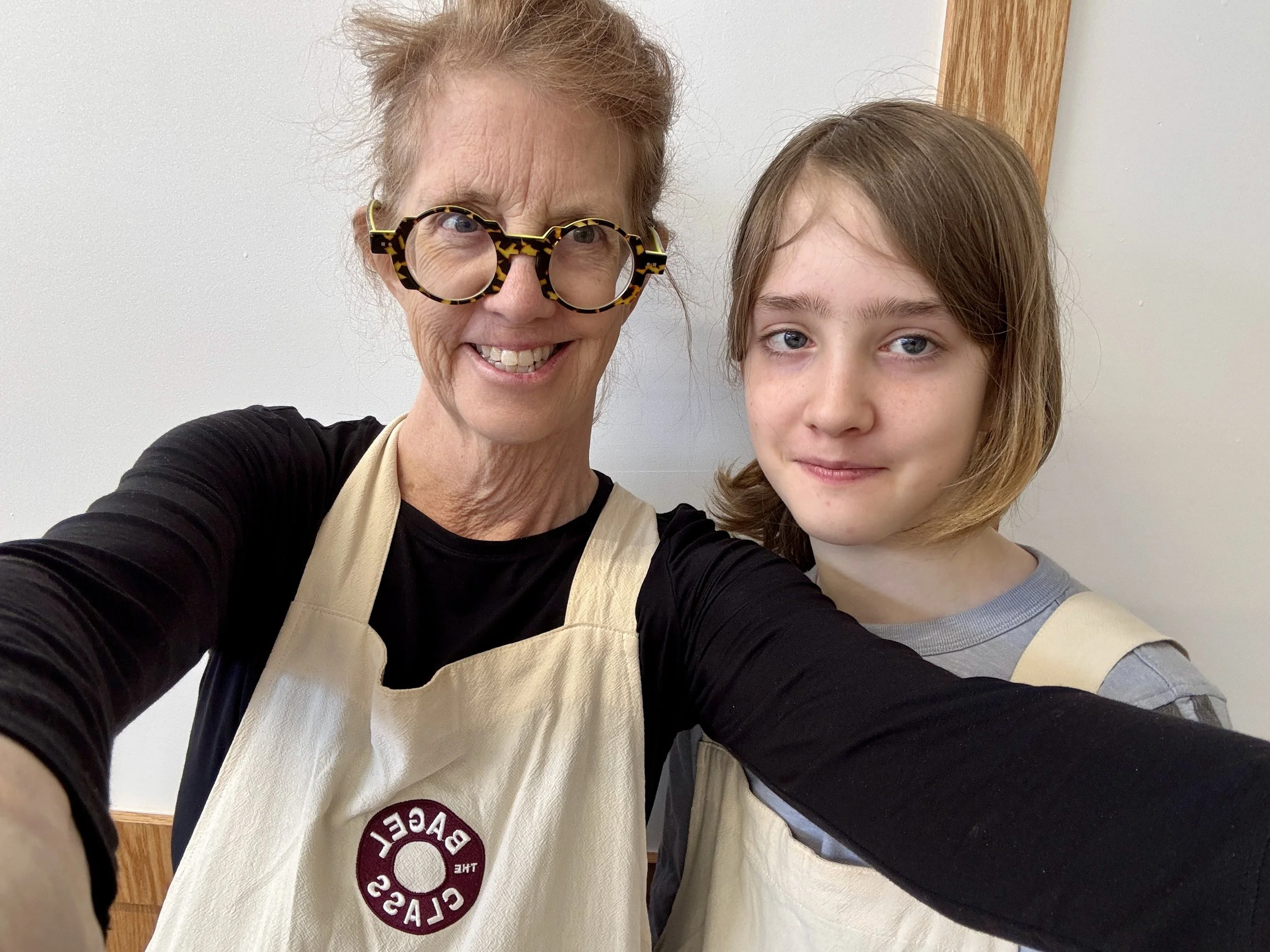
Writer Jennifer Bain (sporting the Bagel Class Japanese-style apron) gets ready to learn with her 13-year-old son/Jennifer Bain
I also appreciated how our bagel boss made everyone tie their hair back and gave informative spiels before each major step.
We heard how white bread flour creates chewiness, why active dry yeast shouldn’t be feared, how neutral oil is for elasticity not flavour, and how granulated sugar gives Montréal bagels a signature sweetness.
“These are sweet. Technically the sweetest of all bagels, okay?” Paquet said. “To me that’s the great divide between New York bagels and Montréal bagels. One’s a little sweet and the other one sucks.” He waited a beat before adding: “They’re both great, okay? I’m just taking shots.”
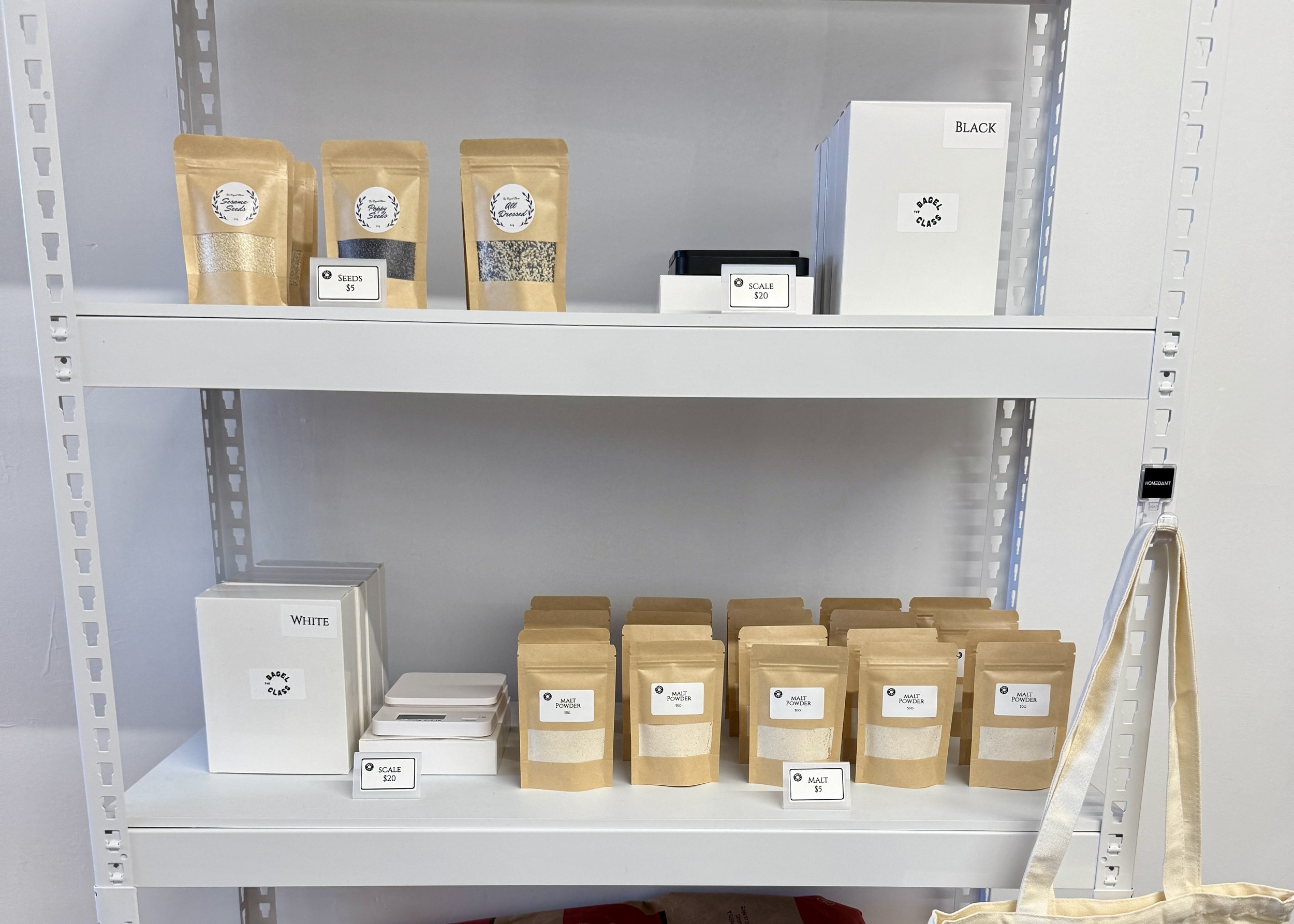
Malt powder, scales, seeds and aprons are some of the things the Bagel Class sells to its guests to make their baking lives easier/Jennifer Bain
It turns out the secret ingredient is the malt powder that provides a hint of beery, boozy flavour and chewiness. South of the border, it’s team malt syrup. Here in Québec, team malt powder can struggle to find the right ingredient so you can buy it after the class (along with Japanese-style cross-back aprons, custom scales with one button, dough scrapers and three kinds of seeds).
“Fifty grams, 50 bagels worth, five bucks,” Paquet explained. “Get some malt powder. If not, whatever, okay. Live your lives. Because, you know, they taught me in business school to create the problem, sell the solution.”
Cue the chuckles.
Did I mention that five of the 13 bagel makers that morning were kids (11 to 15 year olds) on school breaks? What a tasty way to make memories.
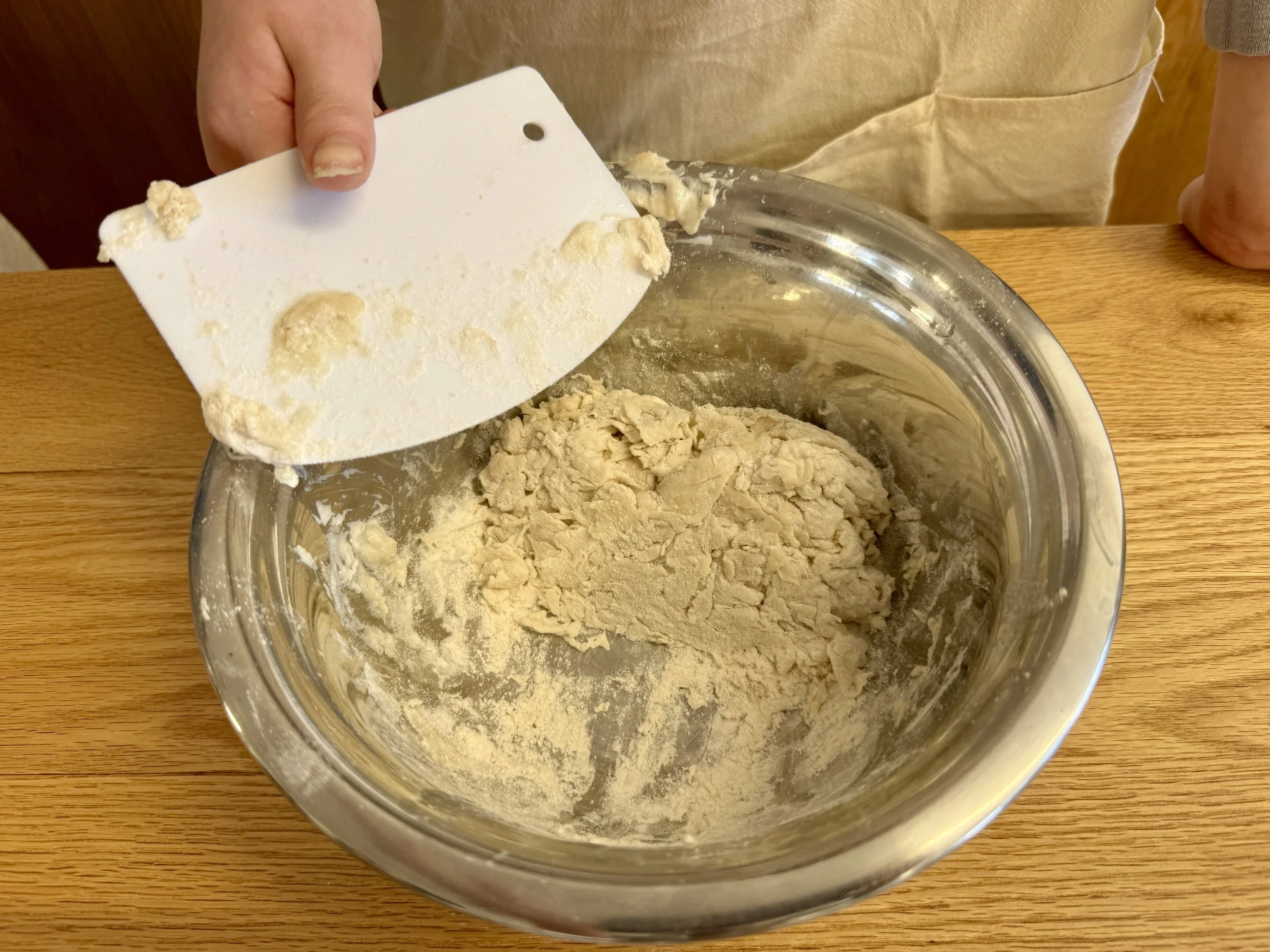
Don’t be fooled into thinking this dry-looking bagel dough needs water. It doesn’t. It just needs patient mixing/Jennifer Bain
Soon it came time to mix and knead our dough, which reminds me of driving standard — easier to do than to explain.
Suffice to say we were warned not to panic over this “pretty dry dough” and just mix it slowly, and then keep kneading it when it became sticky. As Paquet put it: “Two panic stages. Power through.”
He even made up a little ditty to keep us motivated for the long knead ahead.
“Fold, roll, rotate. Fold, roll, rotate. Fold, roll, rotate. Fold, roll, rotate. Fold, roll, rotate. That’s the song. I’m going to ask you to sing together. One happy crew making bagels on a Thursday morning because for some reason no adult in this room is currently at work. Just a bunch of slackers. I like it. And it’s spring break. I like it.”
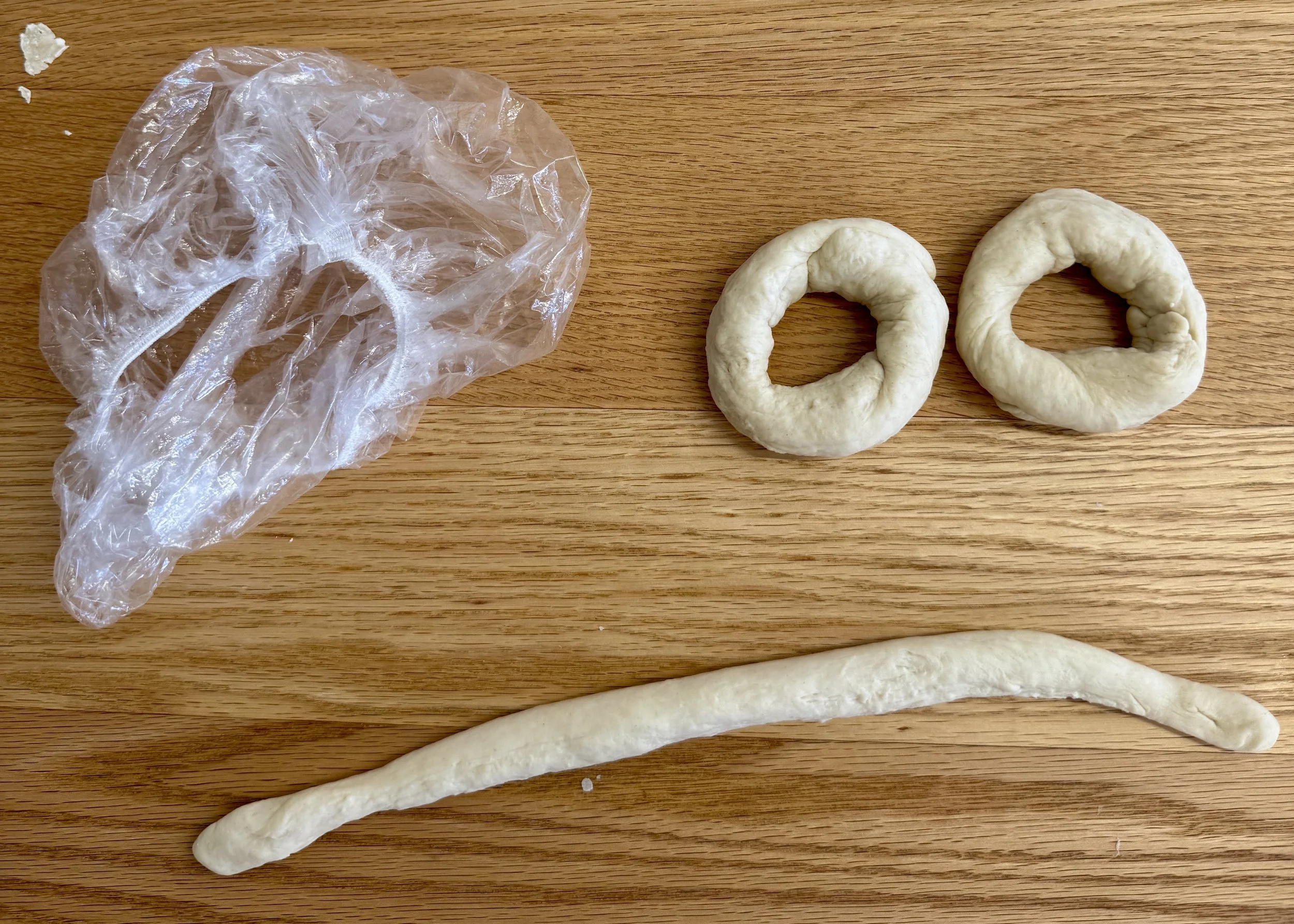
We divided our dough into three portions and made three bagels. The shower cap kept everything moist while we were working/Jennifer Bain
After a few more laughs, it was finally time to turn dough balls into Montréal-style bagels with those famously huge holes that allow for good airflow during fast baking. “Now if you’d like to work in a bagel shop in Montréal, the average time is four seconds,” Paquet confided. “But you can take your time in here — there’s no rush. The average time in here is four minutes.”
The house rule of “love taps not slaps” was easy to follow. But gently rolling and stretching with fingers instead of palms was easier said than done. “You match, you wrap, you overlap” is what Paquet chanted to guide us.
I hung what I’ll call dough snakes around my palms and did my best to create bagels that wouldn’t bust open when boiled.
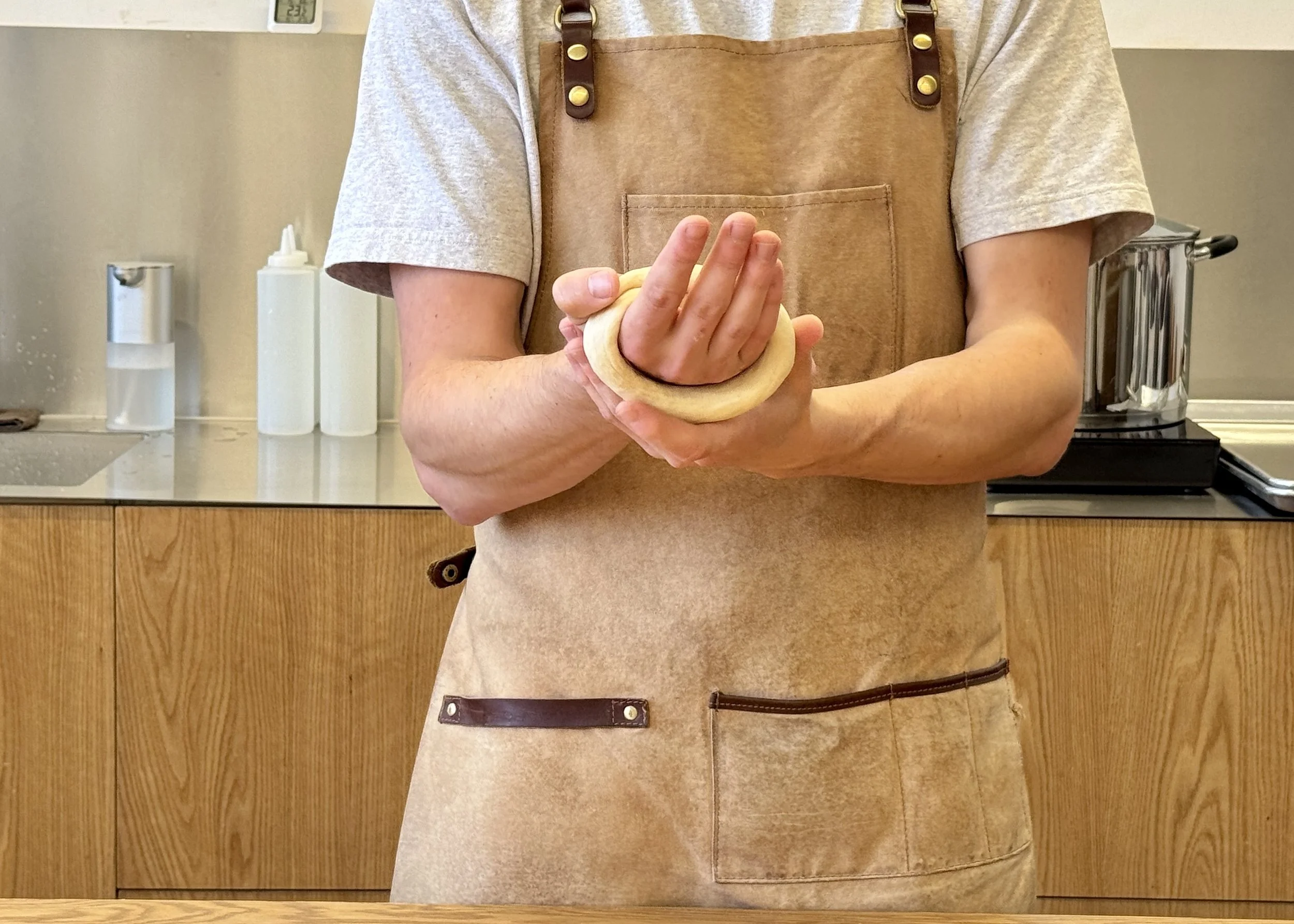
Bagel Class owner Will Paquet shows how easy it can be to gently but firmly form a bagel/Jennifer Bain
Montréal bagels are famously boiled in honey water — something akin to salting pasta water — and then typically baked in wood-fired ovens.
Paquet handled those two steps (with a regular oven) but let us dip our bagels in seeds in between.
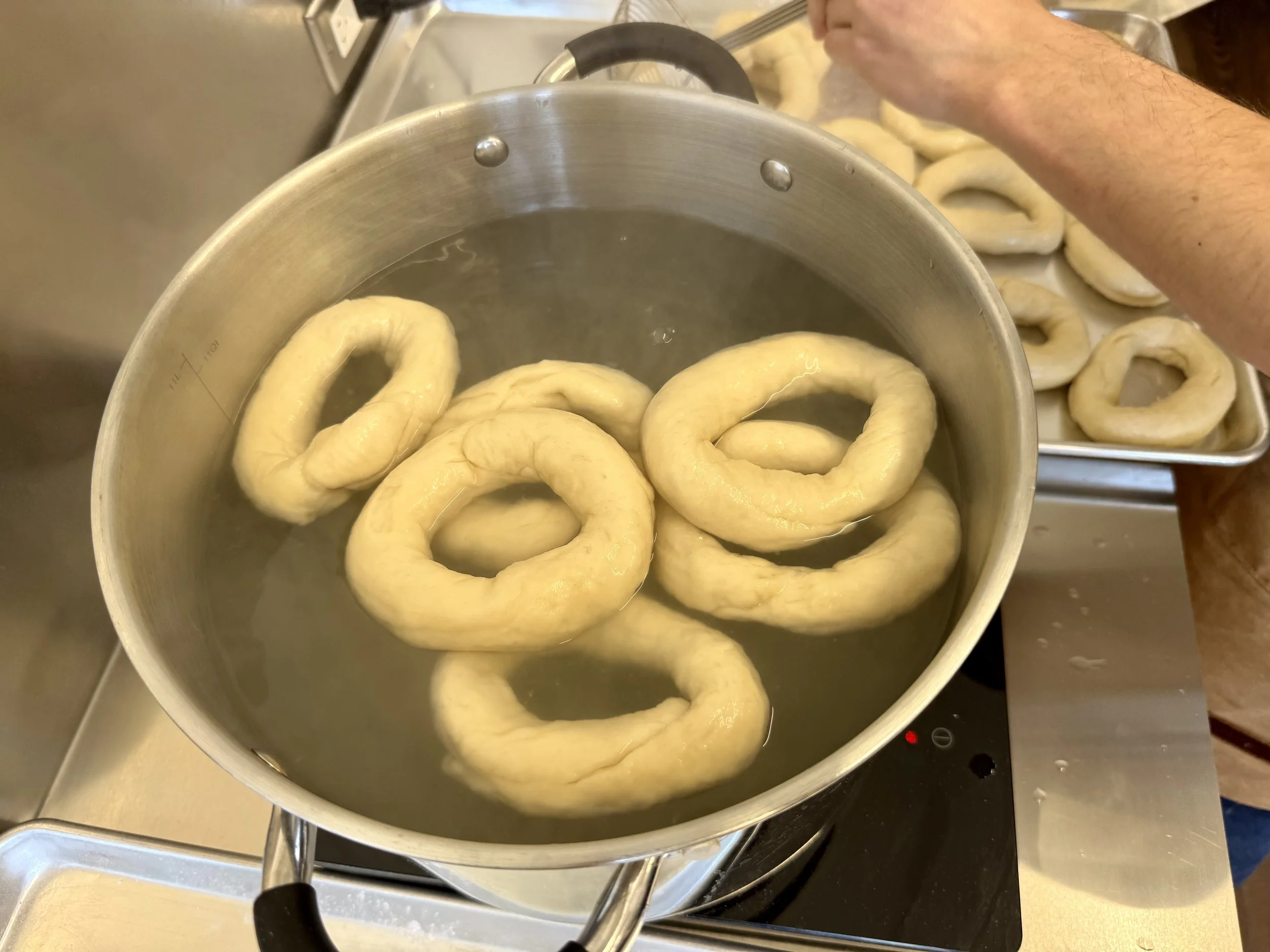
Boiling bagels in honey water is a key step when making Montréal bagels/Jennifer Bain
“And whatever you think is ugly in a bagel now, who cares? Half of it will be covered in seeds,” he advised. “So half of what you thought was ugly now, you’re not going to see later. The other half will make a bagel when you cook it. Embrace the imperfections. All bagels are beautiful. No bagel shaming in my house.”
Paquet walked us through three seed options. Sesame bagels — “the undisputed champion of Montréal” — account for 98.3 per cent of what locals eat. The original poppy seed bagels, with Jewish/Polish origins, are underrated. The “new cool kid in town” is all dressed.
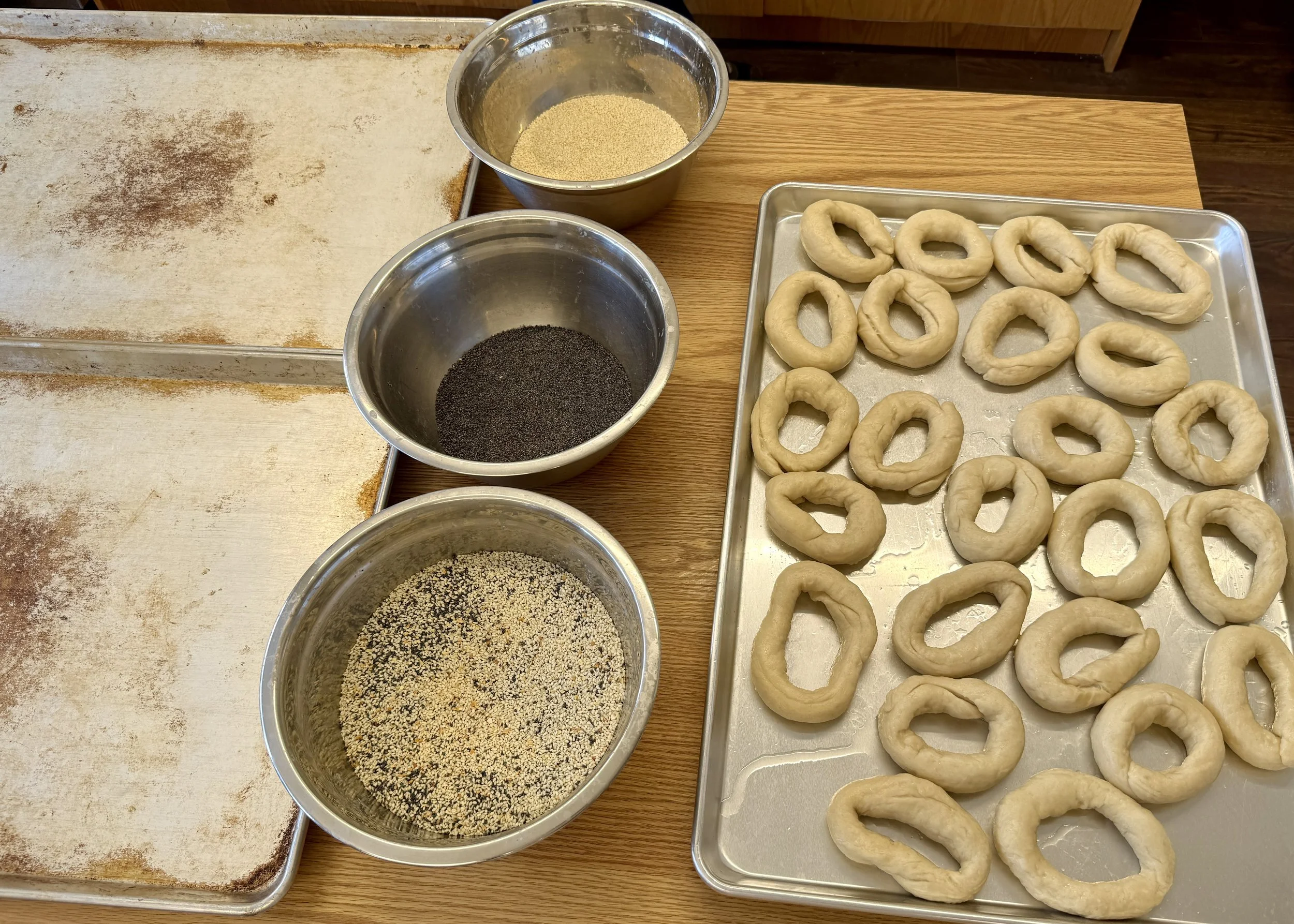
We took boiled bagels and dipped them in a choice of three kinds of seeds before baking them during our workshop/Jennifer Bain
Under strict instructions not to make “pity poppies” if we planned to only eat sesame, we dipped our precious bagels and placed them on two giant sheet pans.
Next came the only moment of the workshop that gave me pause. When those 39 bagels came out of the oven and were piled in bowls, we couldn’t figure out who made what and probably ate someone else’s.
Still, in the words of our baker in chief, “a cooled down bagel is almost like a dead bagel” so there was no time to waste dithering. We stuffed those hot beauties in our mouths and congratulated ourselves on how wonderful they were. With a couple of packs of malt powder in hand, my son and I left vowing we’d start making bagels every weekend once we got home.
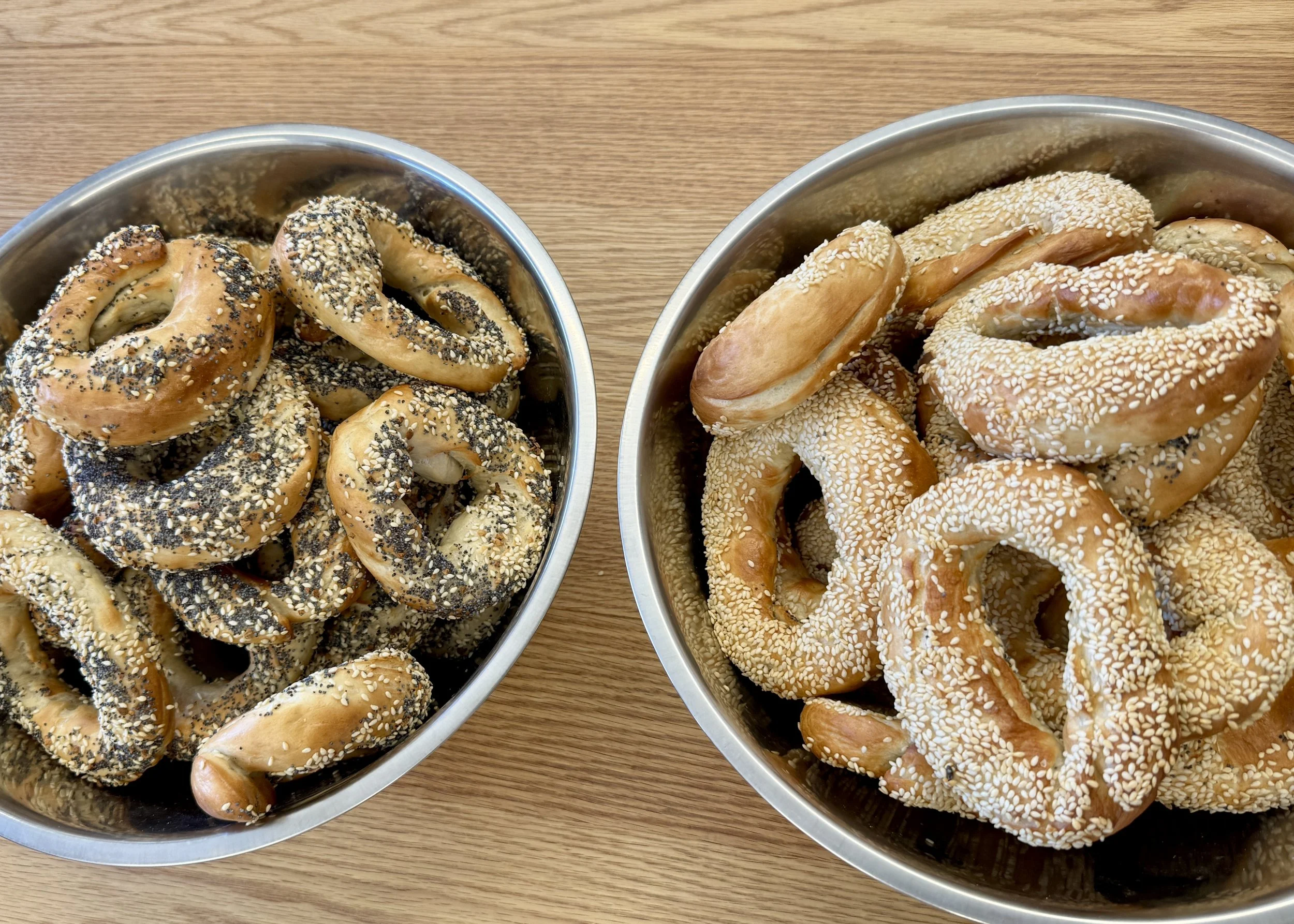
The all dressed and sesame bagels that our class made. The less-loved poppy seed bagels somehow got overlooked for the photo/Jennifer Bain