
Bain There, Done That: Maple Magic in New Brunswick
By Jennifer Bain | Published March 9, 2026
Bain There, Done That is Jennifer Bain’s bi-weekly column about travelling Canada in search of quirk.
Subscribe to the Modern Traveller Newsletter to get terrific travel articles like this one straight to your inbox!
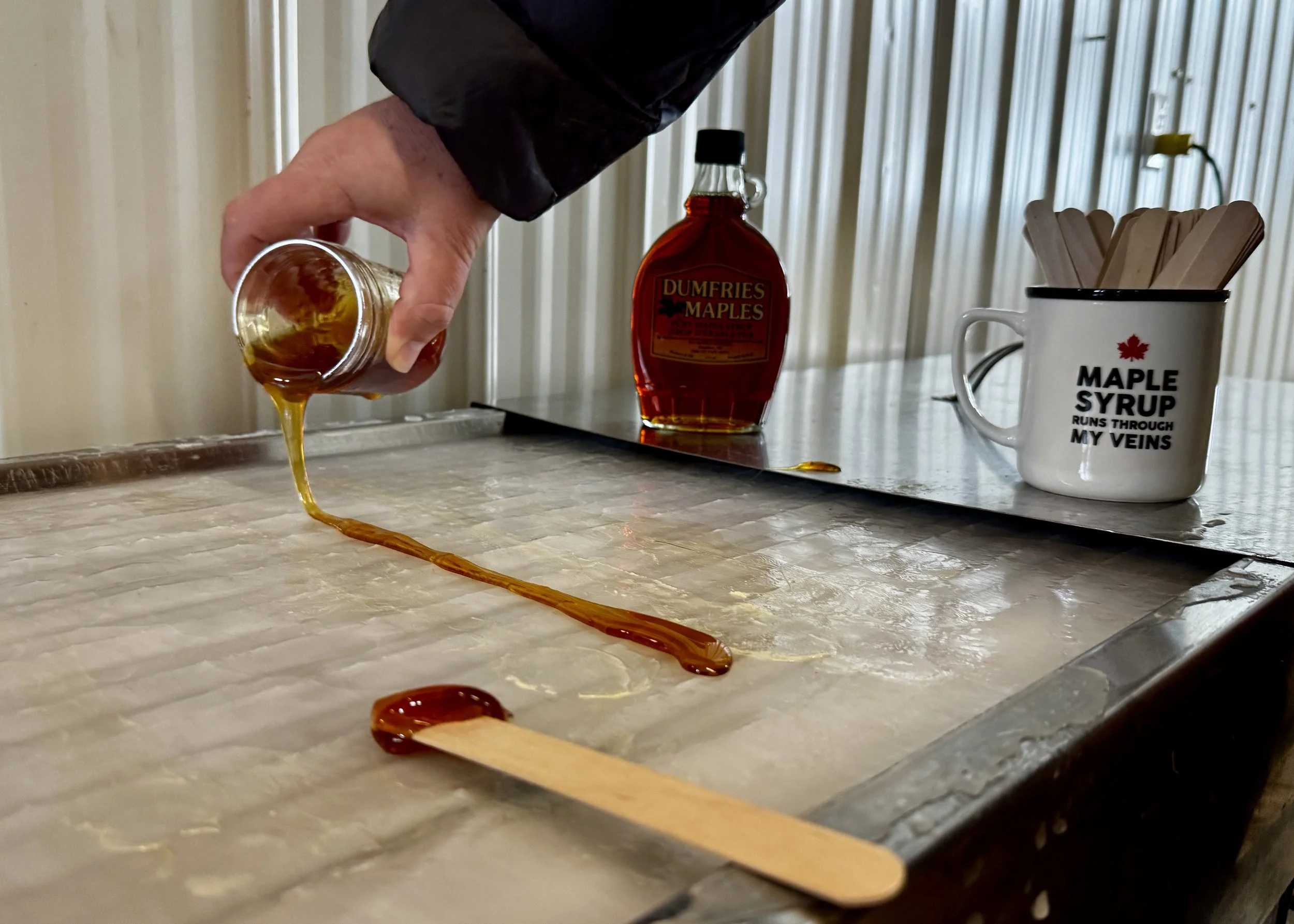
At Dumfries Maples in New Brunswick, maple taffy is now made on a nifty cooling table from Québec instead of on fresh snow/Jennifer Bain
Who knew that New Brunswick ranks second in Canada and third in the world in maple syrup production?
I chew on that unsung stat while eating gooey maple taffy from a tongue depressor at Dumfries Maples outside of Fredericton. The wooden tongue depressor tastes like the ones my pediatrician dad kept around the house and used whenever we had sore throats. The freshly made taffy, though, tastes like childhood, heaven and Canada all mixed together.
“So this is maple syrup that’s been cooked further, right?” says Simon Mitchell, a forester by training and an apprentice at this sweet business. “We’ve got rid of some more water and so instead of 66, 67 per cent sugar we’re at about 85, 87 per cent sugar.”
No wonder maple taffy is so ridiculously good.

Simon Mitchell, left, is an apprentice at Dumfries Maples in N.B., which is co-owned by Jane Scott (centre) and her brother Nathan Scott (right)/Jennifer Bain
It’s the first time I’ve had it made on “a fancy little rink.” Technically it’s a stainless steel maple taffy cooling table from Québec, but the point is that it’s a sensible modern alternative to making taffy on snow.
“We pour a pail of water on it, plug it in and half an hour later, we’ve got a sheet of ice for the day,” Mitchell explains. Now Dumfries doesn’t need to keep chest freezers full of snow to make taffy for summer events.
I’ve never stopped to analyze maple taffy but learn this version is exactly as it should be — amber, free of crystals and achingly smooth. “One of those a day is enough,” says Mitchell, quickly adding “for me” so those reaching for seconds and thirds don’t feel bad.
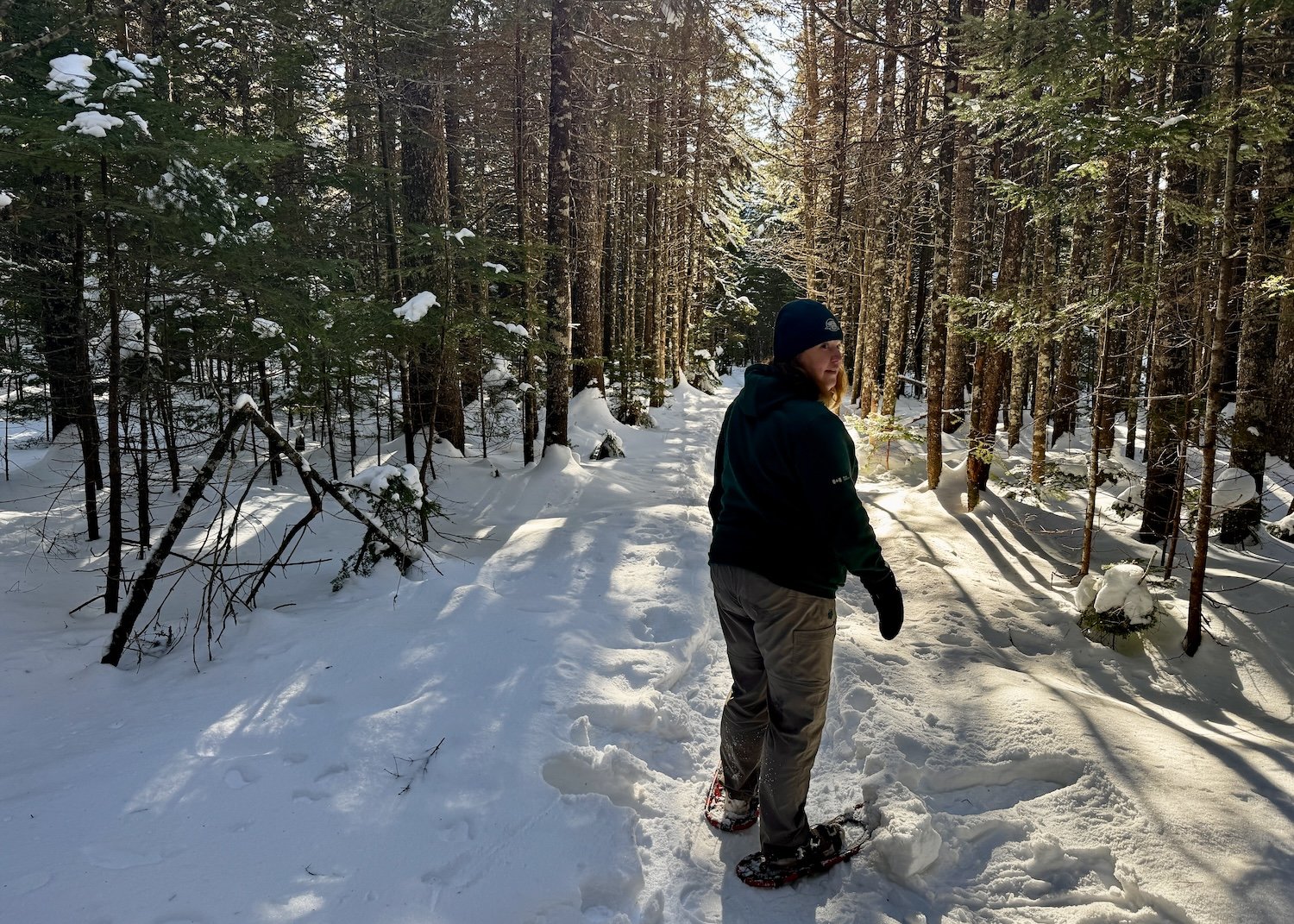
Becky Graham, resource conservation manager for Fundy National Park, snowshoes through the forest along the Caribou Plain trail/Jennifer Bain
I’ve come to New Brunswick in February to embrace winter in a province that is 85 per cent forested. There will be ice fishing, snowshoeing, ski-shoeing, tobogganing, snowmobiling, hiking and sleigh riding plus time to watch pond hockey and explore Fundy National Park.
Since maple syrup is a spring thing, tapping season hasn’t quite started. But that just means we’ve got Dumfries — a 4th generation family business run by Nathan Scott and his sister Jane with help from their dad Don — to ourselves.
“You’re right on the cusp of maple syrup season right now so we’ve been out in the wood for, well, we just started this last week, tapping the trees and getting ready for the season,” says Mitchell, who went to forestry school with Nathan and gave up the corporate life in Ontario to work outdoors in New Brunswick. “The main thing is to be ready so when the tap flows, we’re all good to go.”
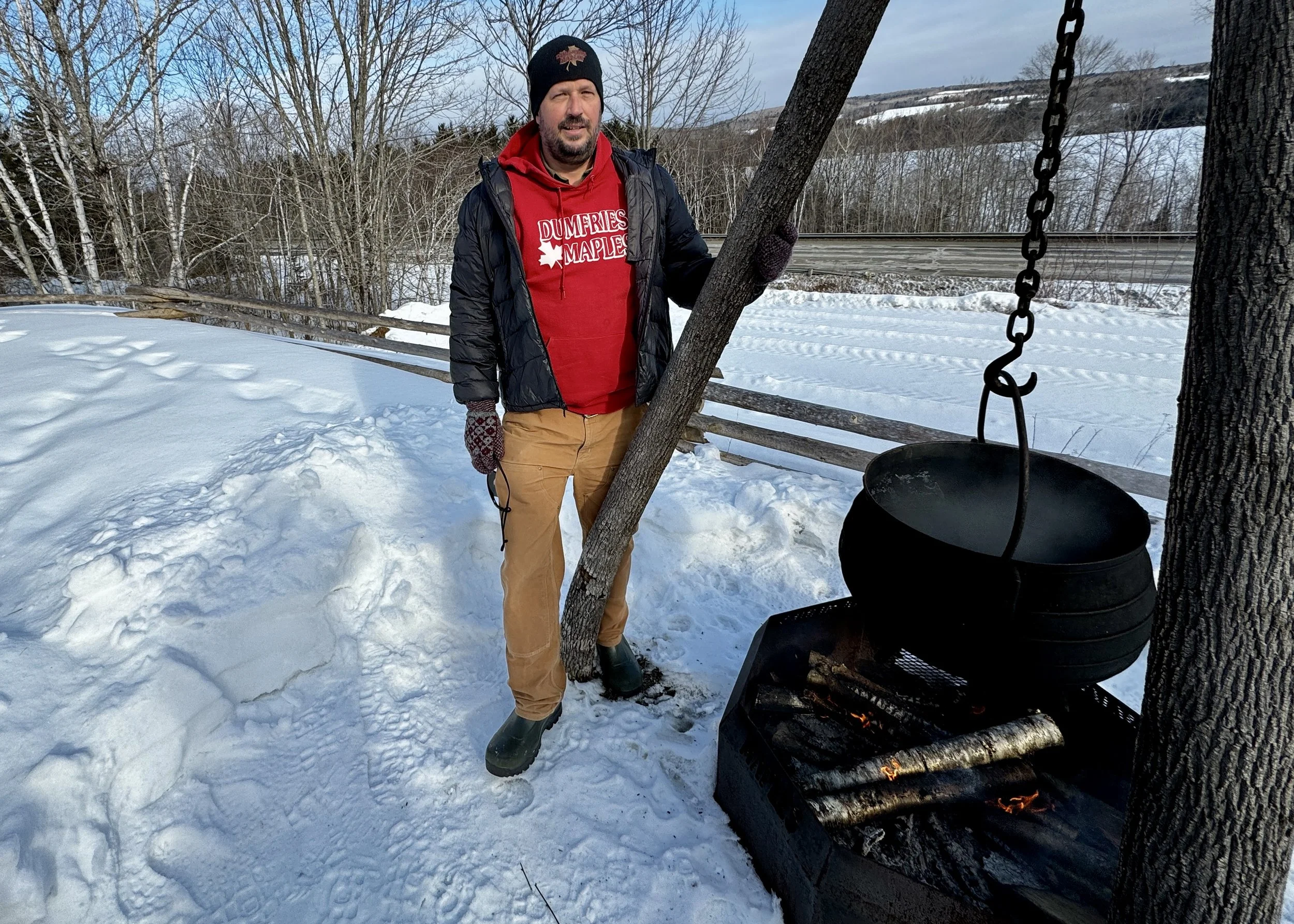
At Dumfries Maples, Simon Mitchell shows off the demonstration cauldron where sap was once boiled and transformed into maple syrup/Jennifer Bain
We chat by a giant cauldron set over a wood fire. It’s actually filled with water, not precious sap, to show how syrup was produced until the invention of stainless steel evaporators.
In the days before Costco, every farm family around here had a “sugarbush” (a forest stand of maple trees) and made their own syrup. They waited for the weather window when it’s minus 5C at night and around 5C by day and the sap starts flowing. Then they collected the sap and boiled it down to syrup.
“The Indigenous people in this area, the Wolastoqiyik also known as the Maliseet, would have been making maple sugar since time immemorial,” Mitchell adds, noting that sugar was portable and didn’t require containers.
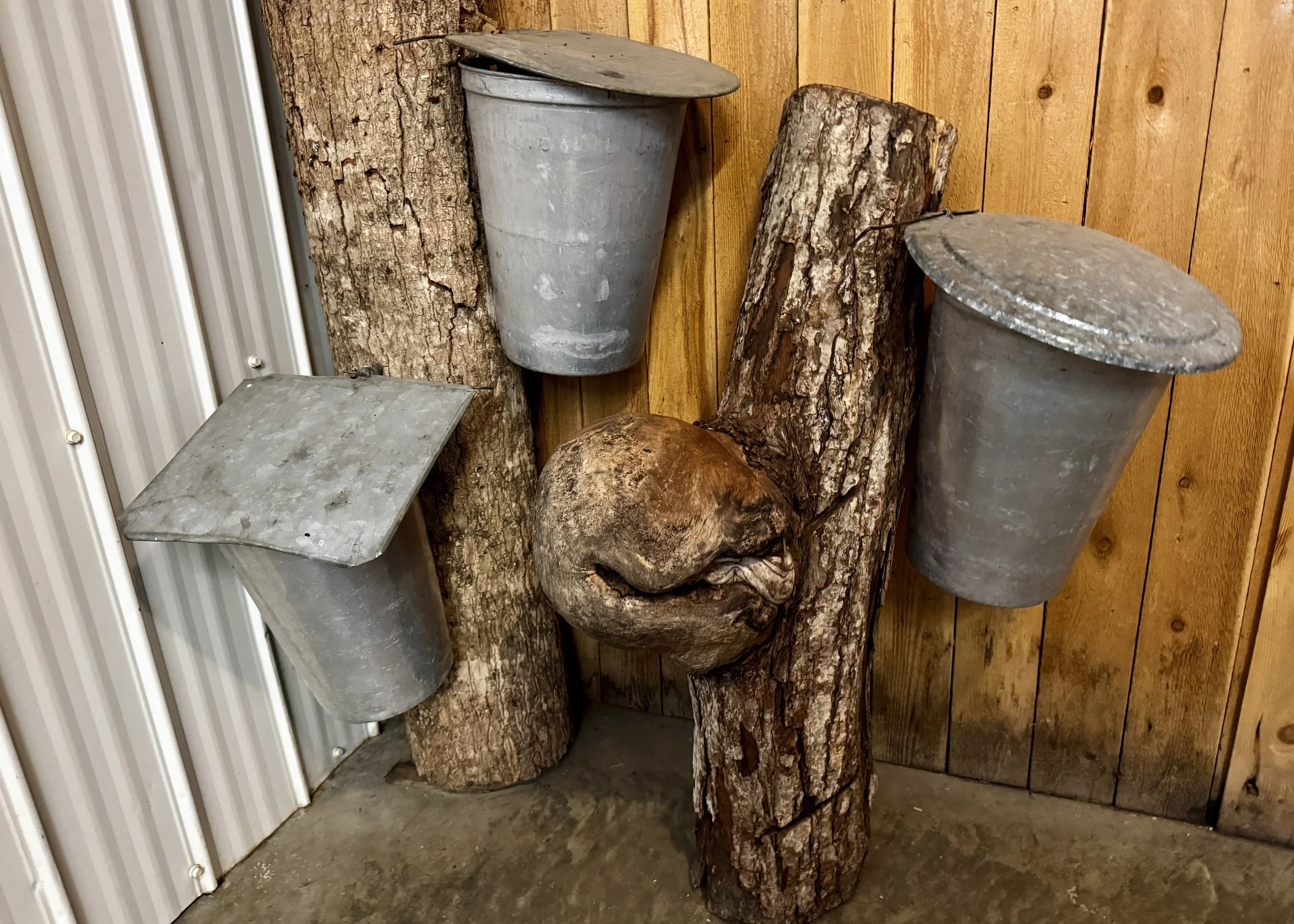
In the sugar shack, you can see how trees are tapped with buckets. You can also see burls, gorgeous but gruesome outgrowths that appear on some trees/Jennifer Bain
When we wander over to a tree to set up a demonstration tap using a drill, spile and bucket, I remember that time back in 2010 when I wrote about how Toronto’s urban forestry department vetoed requests to tap maple trees in city parks because it believed it was detrimental to the trees.
“But really, the tree doesn’t know,” says Mitchell. “We’re not harming it in any way. This is no different than a branch breaking off and sap leaking out. Nobody really knows, but we’re probably taking about 1 to 2 per cent of the sap that’s in the tree.”
It’s also a reserve sap supply left over from when the leaves fall off trees in autumn, sap gets stuck in the trees and migrates to the roots over the winter. Through the winter, Mitchell explains, the cold converts this starch into a sugar, which is why there’s just a narrow window to collect sap in the spring.
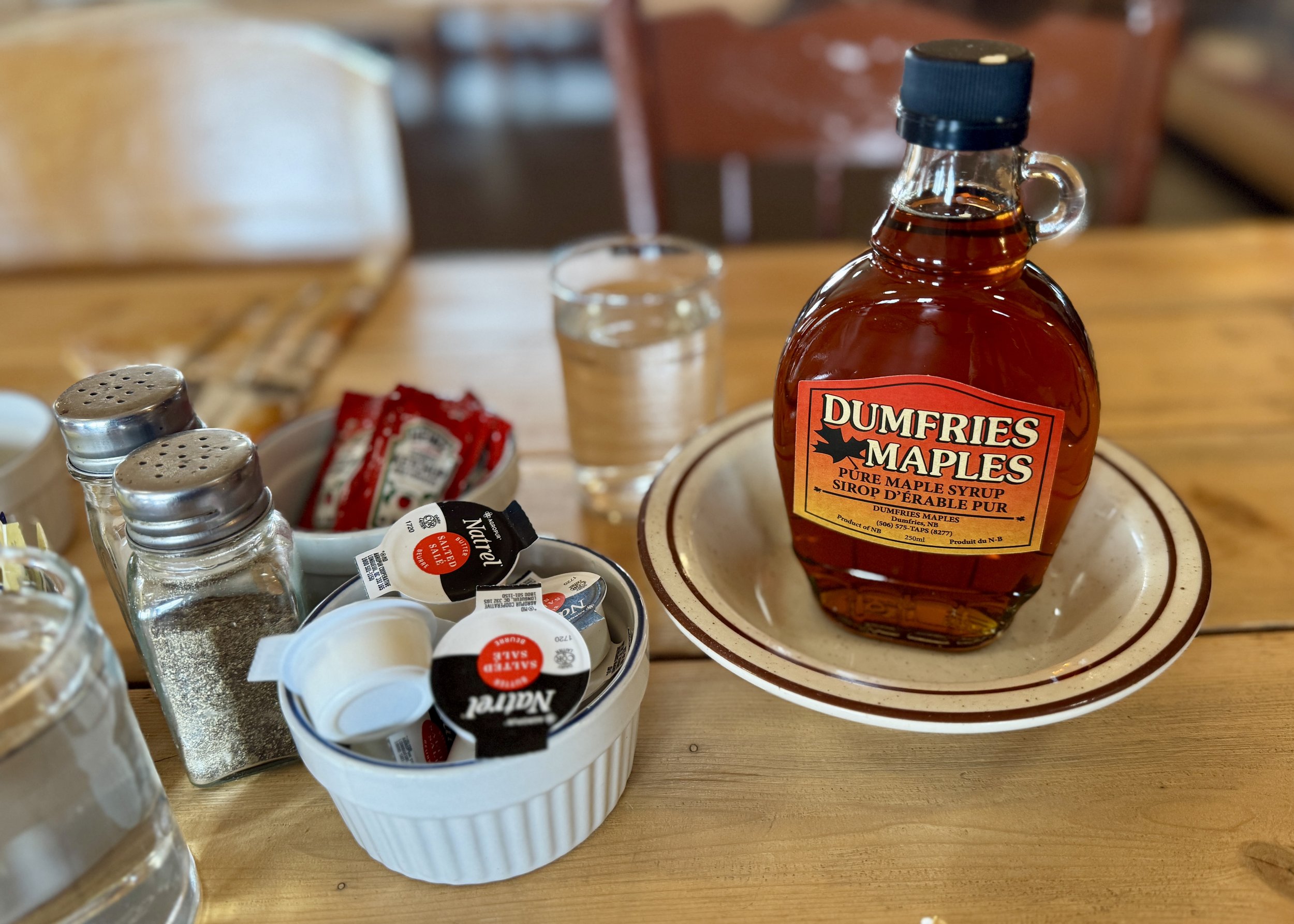
Dumfries Maples sells almost all of its maple syrup to locals who buy it at the farm gate or at the Fredericton Boyce Farmers Market/Jennifer Bain
By the way, producing maple syrup is a year-round occupation. The six- to eight-week sap/tapping season in March and April gets all the attention, but the rest of the year is devoted to forest management and things like maintenance and upgrading the pipelines that now collect sap.
Climate change is a concern. One tropical storm decimated the biggest trees in this sugarbush. A significant drought last summer is expected to have immediate or delayed impacts. This is the second year in a row that Dumfries will be tapping in rubber boots instead of on snowshoes, and that’s not a good thing because the trees could use the extra protection and moisture.
“We are sort of losing spring, right?” says Mitchell. “We seem to go from winter to summer and if we don’t get that minus five/plus five shift — that freeze/thaw cycle to allow the sap to move in the tree — we don’t get sap. And without sap, we don’t get maple syrup. It’s that simple.”
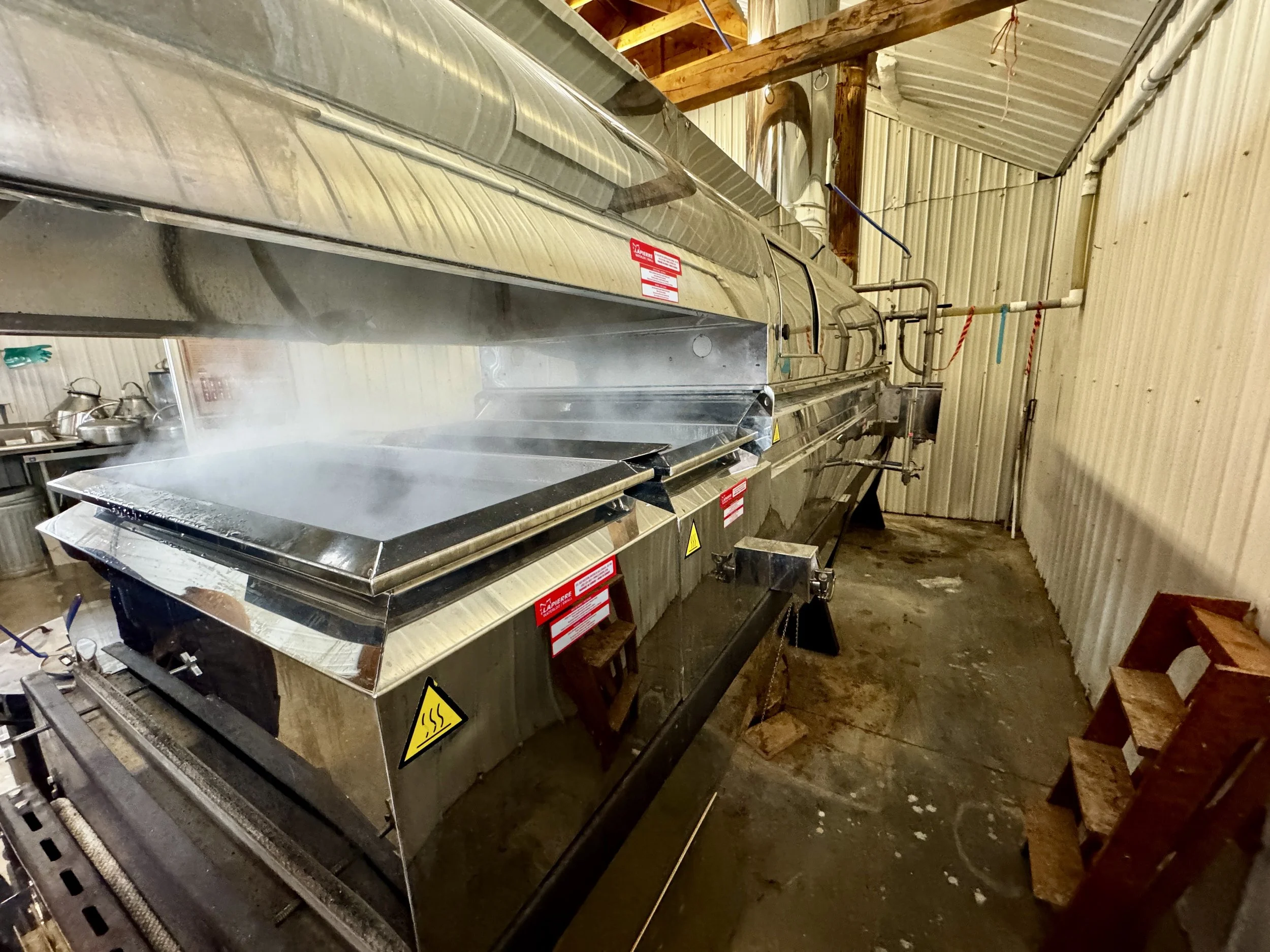
All the magic happens in this wood-fired, gravity-fed evaporator, which transforms maple sap into maple syrup/Jennifer Bain
For now, Dumfries is holding steady. Its sugarbush covers about 80 to 85 acres of a 350-acre private woodlot. The wood-fired evaporator and bottling area are in a “sugar shack” building, and the equally modern “cookhouse” is used to host seasonal pancake brunches.
With 6,000 taps on its trees, most on the pipeline but a couple hundred using pails, the goal is to gather about 250,000 litres of sap and produce “north of 5,000 litres” of maple syrup.
Ninety-five per cent of this liquid bounty will be bottled and consumed within 100 kilometres through sales at the farm gate and the Fredericton Boyce Farmers Market.
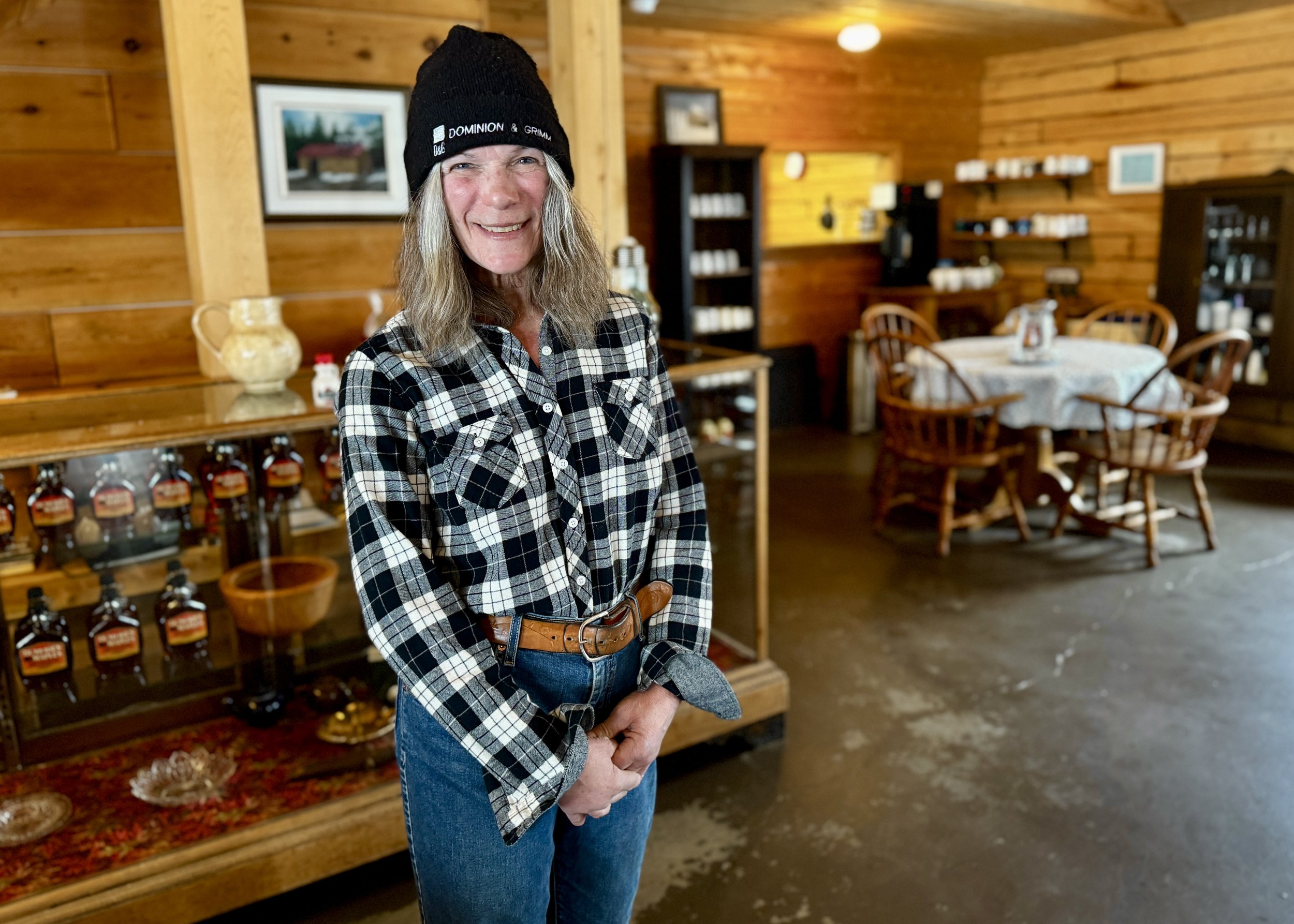
Dumfries Maples co-owner Jane Scott shows off the cozy cookhouse where the public can come for seasonal pancake brunches/Jennifer Bain
Oh and that factoid about New Brunswick being number two and three?
It’s from a New Brunswick Maple Syrup Association report for 2025 that confirms that Quebec produces more than 90 per cent of our supply and roughly 72 per cent of the total world supply. New Brunswick is a distant but still notable second followed by Ontario and Nova Scotia. Globally, the top four maple syrup producers are Quebec, Vermont, New Brunswick and Ontario.
The association has 112 members but most concentrate on production and there are only four places around the province where families, tourists, school groups and new Canadians can go for tours and maple syrup-drenched pancake meals.
“We all grew up, I think, generally speaking, with these experiences and they’re becoming harder and harder to find,” Mitchell laments.
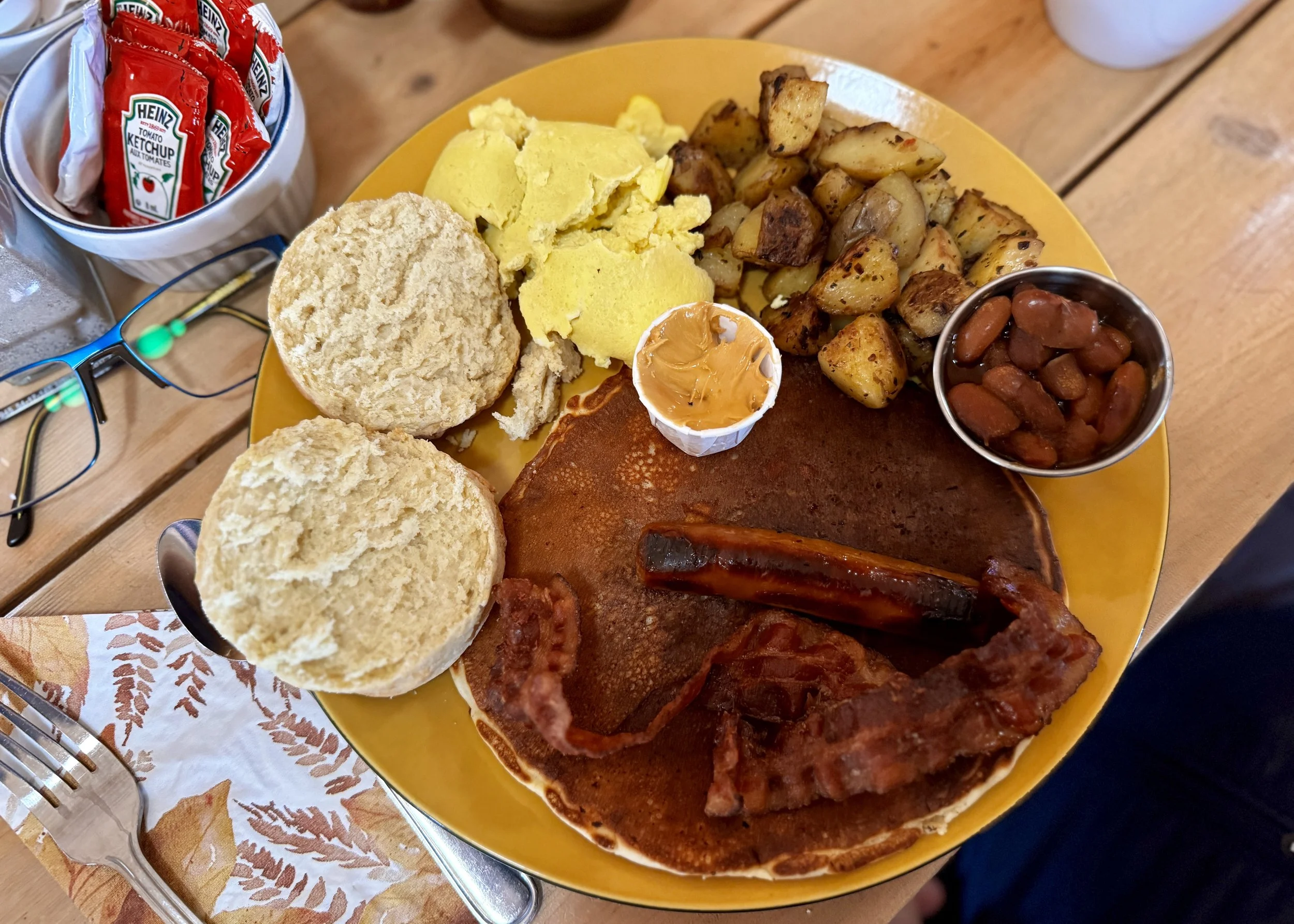
Our brunch at Dumfries Maples included all this plus unlimited maple syrup. The tub in the centre is maple butter aka maple cream/Jennifer Bain
I chew on that sad truth in the cookhouse over pancakes, eggs, bacon, sausage, baked beans, home fries and biscuits served with free-flowing maple syrup and gobs of wickedly delicious maple butter. Usually guests get one plate-sized pancake, but ours a bit smaller and leave room on the plate for all the other goodies.
“In New Brunswick, our pancake stacks are so high they mirror our tides,” quips Tourism New Brunswick’s Neil Hodge, referencing the fact that the Bay of Fundy boasts the world’s highest tides.
“You have to cut them with the World’s Largest Axe,” teases Nathan, referencing a quirky roadside attraction just 13 minutes away.
On a sugar high, we say farewell and drive to Nackawic to see the Big Axe. Rising 15 metres above the Saint John River, it has an impressive stainless-steel head and wooden handle and celebrates the importance of New Brunswick’s forest industry. There’s a giant maple leaf sculpture a few hours away in Saint-Quentin, but nobody’s made the World’s Largest Maple Syrup Bottle yet. Just saying.
Coming March 23: Bain There, Done That goes ice fishing in New Brunswick.
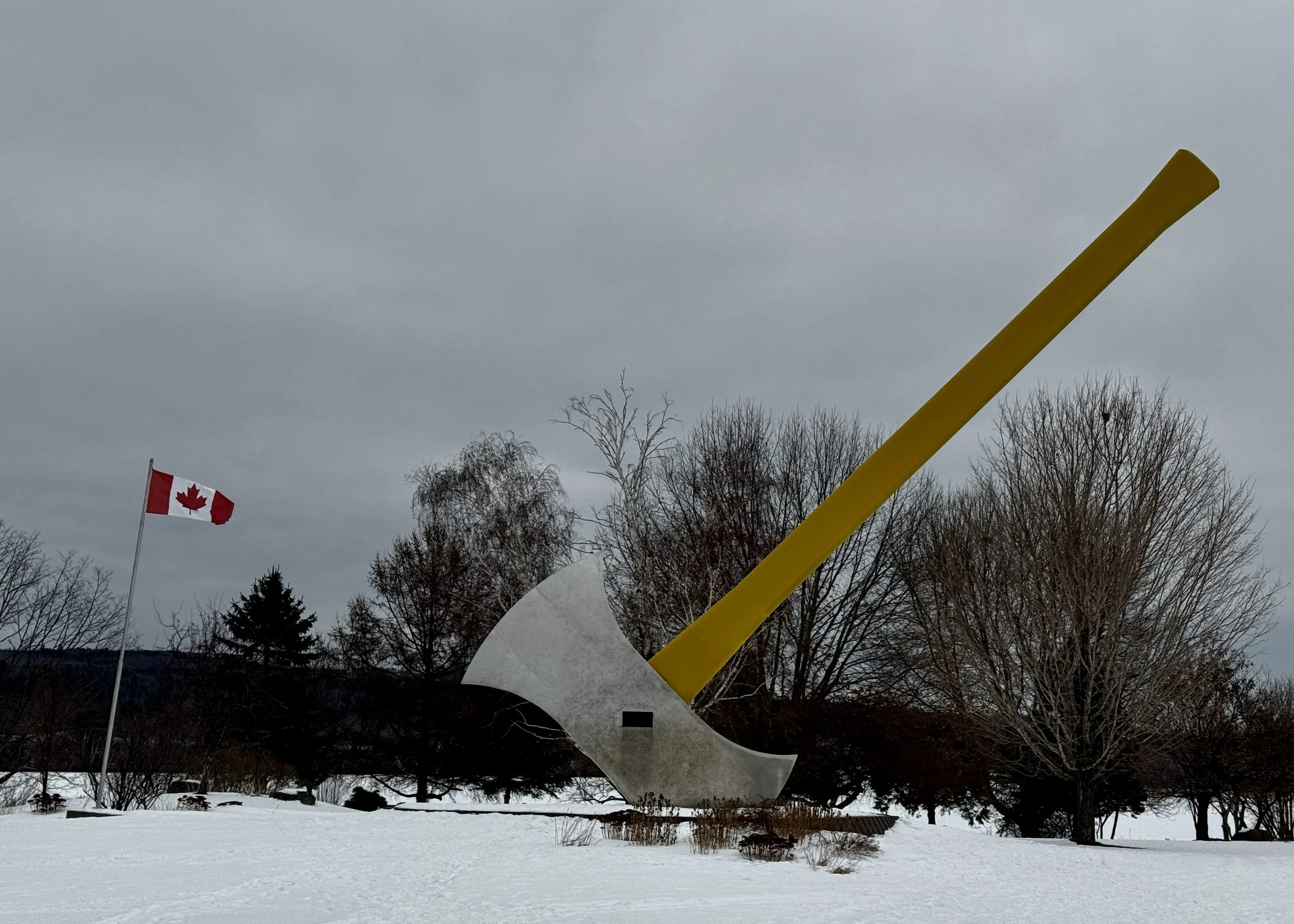
Near Dumfries Maples in the town of Nackawic, you’ll find the World’s Largest Axe, erected to celebrate New Brunswick’s forest industry/Jennifer Bain